Centrale à béton en Éthiopie : centrale fixe HZS60 mise en service à Dire Dawa
· Complet Centrale à béton Solutions
· 32+ Années d'héritage d'ingénierie
Aperçu du projet
Début 2026, nous avons livré une centrale à béton fixe HZS60 en Éthiopie à un entrepreneur en construction desservant la Zone Économique Spéciale de Dire Dawa. Le client avait besoin d'un approvisionnement fiable en béton prêt à l'emploi pour un nouveau groupe d'entrepôts industriels. Notre équipe a réalisé l'installation sur site en 18 jours, suivie d'un essai continu de 72 heures. La centrale a passé tous les contrôles de performance et a commencé la production complète en mars 2026.

| Spécification | Détails |
|---|---|
| Emplacement | Dire Dawa, Est de l'Éthiopie |
| Application | Béton prêt à l'emploi pour la construction d'entrepôts industriels |
| Modèle de centrale | HZS60 Fixe |
| Type de malaxeur | JS1000 Double Arbre |
| Débit nominal | 60 m³/h |
| Volume de Décharge | 1 000 L par gâchée |
| Trémies à agrégats | 4 trémies × 8,38 m³ |
| Précision de Pesage | Agrégats ±2% ; Ciment/Eau/Additif ±1% |
| Hauteur de décharge | 4,1 m |
| Temps d'Installation | 18 jours sur site |
| Date de mise en service | Mars 2026 |
Contexte du Projet : Pourquoi Dire Dawa ?
Dire Dawa se situe dans l'est de l'Éthiopie à environ 1 200 mètres au-dessus du niveau de la mer—bien plus bas qu'Addis-Abeba. Cet emplacement est important pour deux raisons pratiques : la logistique et le climat.
Logistique et demande Dire Dawa est la principale porte d'entrée intérieure entre l'Éthiopie et le Port de Djibouti. Le chemin de fer Addis-Djibouti et le port sec de Dire Dawa traitent une grande partie du fret d'importation et d'exportation du pays. Pour cette raison, le Parc Industriel de Dire Dawa et la Zone Économique Spéciale environnante se sont rapidement développés. De nouvelles usines, routes et installations de stockage nécessitent de grands volumes de béton de haute qualité et constant. Le malaxage manuel sur site à petite échelle ne peut pas suivre cette échelle. Le client avait besoin d'une centrale à béton centralisée et automatisée pour respecter les calendriers de construction dans la zone.
Climat et environnement Dire Dawa est chaud et semi-aride. Les températures estivales dépassent souvent 35°C, et les vents secs transportent la poussière des basses terres environnantes. Sans une conception d'équipement appropriée, le béton peut prendre trop rapidement, et les systèmes de pesage ouverts peuvent perdre en précision à cause du sable et de la poussière. Le client a choisi une centrale entièrement fermée centrale à béton fixe avec dépoussiérage et stockage couvert des granulats pour faire face à ces conditions. La conception fermée protège également l'armoire de commande et les cellules de charge pendant la saison venteuse et sèche.
Conditions du Site et Adaptations Techniques
Dire Dawa se trouve dans une vallée semi-aride à environ 1 200 mètres au-dessus du niveau de la mer. Les températures diurnes atteignent régulièrement 35°C et peuvent dépasser 40°C pendant les mois les plus chauds. Cette chaleur accélère l'hydratation du ciment, nous avons donc ajusté la formule d'adjuvant pour ralentir la prise initiale et permettre un temps de transport adéquat vers les sites voisins.
La région est également venteuse et poussiéreuse pendant une grande partie de l'année. Nous avons gardé les trémies à granulats entièrement fermées et ajouté un dépoussiéreur à jet d'impulsions au-dessus de la plateforme de pesage. L'armoire électrique a été scellée à l'indice IP65 pour protéger l'automate et les transmetteurs de cellules de charge de la poussière fine.
Les granulats locaux sont principalement de la roche volcanique dure et du calcaire, qui sont abrasifs. Le malaxeur JS1000 de cette centrale à béton en Éthiopie a été équipé de pales et de revêtements en alliage à haute teneur en chrome pour prolonger la durée de vie des pièces d'usure. Nous avons également installé un adoucisseur d'eau et un stabilisateur de tension, car l'eau souterraine locale a une dureté élevée et la tension du réseau peut fluctuer.
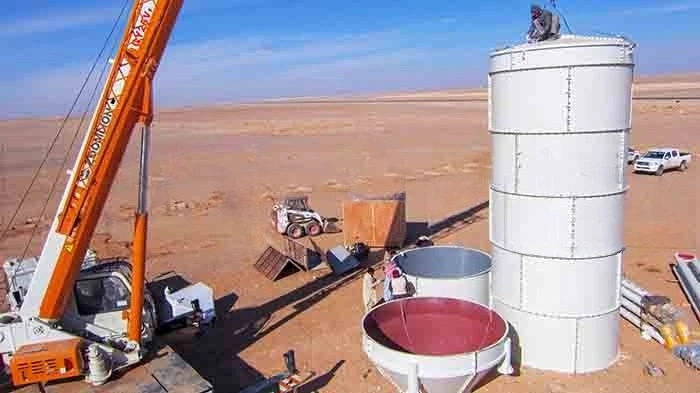
“ Érection sur site d'un silo à ciment boulonné robuste en Éthiopie. Les ingénieurs de CCS supervisent l'assemblage mécanique précis et le levage en toute sécurité de chaque section modulaire pour garantir une résistance maximale au vent et à la structure. ”
Contexte Local et Exécution du Projet
Dire Dawa abrite les communautés amhara, oromo, somali et afar. Sur le site, nous avons travaillé en amharique, oromiffa et anglais, et traduit les listes de contrôle des opérations quotidiennes dans les langues locales afin que l'équipe puisse les suivre sans confusion.
L'Éthiopie utilise son propre calendrier, qui a environ sept à huit ans de retard sur le calendrier grégorien, et les jours fériés majeurs tels que Meskel et l'Aïd peuvent interrompre le travail pendant plusieurs jours. Nous avons intégré ces pauses dans le calendrier dès le départ pour éviter des délais irréalistes.
Nous avons également formé six opérateurs locaux et deux techniciens de maintenance lors de la mise en service. Ce transfert de compétences a satisfait le client et s'est aligné sur les priorités du gouvernement éthiopien en matière d'embauche locale. L'équipement est arrivé au Port de Djibouti et a été transporté à l'intérieur des terres par le chemin de fer Addis-Djibouti jusqu'au port sec de Dire Dawa, puis par camion jusqu'au site. La coordination avec les douanes locales et la direction du parc industriel a permis de maintenir le transfert sur les rails.
Installation et Mise en Service
Le sol local est une argile expansive rougeâtre. Pour éviter les mouvements de fondation entre les saisons sèche et pluvieuse, nous avons coulé la centrale sur un radier en béton armé avec des supports sur pieux plutôt que sur des semelles simples.
L'installation mécanique et électrique a pris 18 jours sur site. Nous avons ensuite exécuté un programme de mise en service de cinq jours : deux jours d'essais à vide, suivis de trois jours de malaxage continu. La centrale a atteint en moyenne 95% de son débit nominal de 60 m³/h pendant l'essai. Les tests d'affaissement et de résistance à la compression sur les mélanges C25 et C30 ont satisfait aux normes de construction éthiopiennes, et l'erreur de pesage est restée dans les limites de conception de ±2% pour les granulats et ±1% pour le ciment.
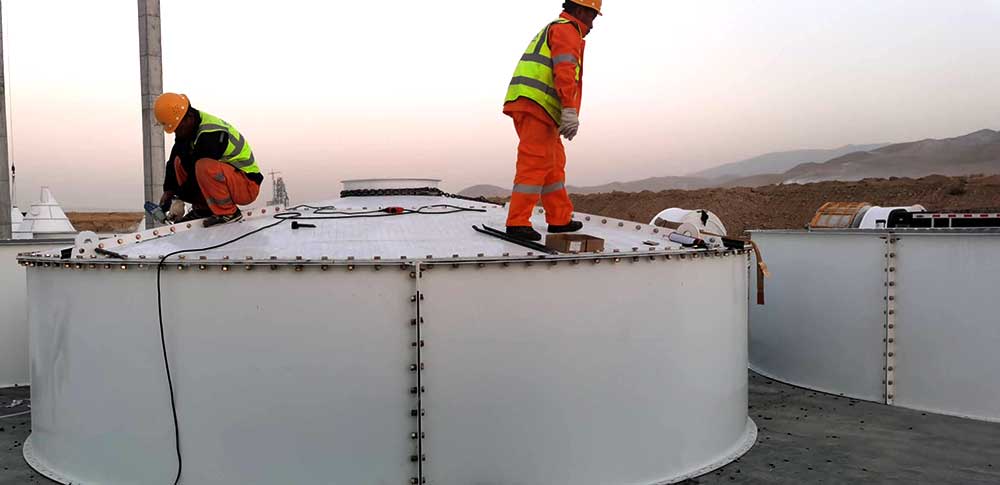
“ L'équipe d'installation de CCS sécurisant le toit supérieur d'un silo à ciment boulonné sur site. Chaque joint boulonné à haute résistance est méticuleusement serré selon des protocoles de sécurité stricts pour garantir un stockage étanche et durable. ”
Résultats et Performance
Depuis sa mise en service en mars 2026, la centrale à béton en Éthiopie a fourni environ 8 000 à 10 000 mètres cubes de béton prêt à l'emploi par mois. Cette production soutient trois projets d'entrepôts actifs dans la Zone Économique Spéciale.
La constance d'une gâchée à l'autre a été solide. L'erreur de proportion du mélange reste dans ±1%, et chaque lot de test de résistance a été réussi. La centrale fonctionne avec le tarif électrique industriel bas de l'Éthiopie, de sorte que le coût énergétique par mètre cube est inférieur à l'estimation initiale du client.
L'emploi direct sur la centrale est de douze employés locaux, avec des chauffeurs et des fournisseurs de granulats supplémentaires qui en bénéficient en aval. Le client a déjà discuté de l'ajout d'une deuxième unité mobile lorsque la zone s'agrandira.
écouter le client

“ Votre centrale a fonctionné de manière fiable pendant la saison chaude, et votre équipe a formé nos opérateurs avec patience — si Dieu le veut, nous nous réjouissons de travailler à nouveau avec vous sur notre prochain projet. ”
Conclusion
Gérer avec succès une centrale à béton en Éthiopie signifie respecter trois choses : la chaleur et la poussière des basses terres de l’Est, le calendrier et la main-d’œuvre locaux, ainsi que la chaîne logistique ferroviaire et portuaire qui relie le site aux lignes d’approvisionnement mondiales. Le projet de Dire Dawa montre que lorsque l’équipement, la formation et la planification sont adaptés à ces réalités, une centrale fixe peut fournir un béton prêt à l’emploi constant et rentable dès le premier jour.
Si vous planifiez un projet de centrale à béton en Éthiopie et avez besoin d’un fournisseur qui comprend les conditions locales du site, contactez-nous pour une proposition et un devis sur mesure.
Vous voulez une centrale conçue pour la chaleur, la poussière et les sols difficiles ? Parcourez notre collection complète de projets de centrales à béton à travers l'Afrique, ou explorez nos études de cas mondiales de centrales à béton provenant de plus de 20 pays.
Pourquoi nous choisir
Avantages de nos centrales à béton.
Expertise Locale et Régionale
Nous concevons chaque centrale en fonction de vos conditions d'exploitation locales, qu'il s'agisse de gérer du sable désertique très abrasif, une humidité tropicale ou un froid alpin. Nos équipes logistiques et d'ingénierie connaissent parfaitement les principaux hubs d'expédition régionaux et les divers cadres réglementaires, garantissant que votre équipement répond aux normes de qualité internationales comme CE et ISO tout en obtenant facilement les permis d'exploitation et environnementaux locaux.
Fiabilité Clé en Main
Pas de coûts cachés ni de surprises inattendues. Nos propositions complètes incluent tout, de la conception personnalisée du plan de site en 3D à la mise en service finale sur site. Pour minimiser vos temps d'arrêt, nous fournissons une assistance technique 24h/24 et 7j/7 par téléphone ou WhatsApp et des diagnostics PLC à distance basés sur le cloud.
Bilan Éprouvé
Avec plus de 32 ans de maîtrise de fabrication dédiée, nous avons mis en service avec succès plus de 100 centrales à béton dans plus de 20 pays. Grâce à nos systèmes de pesage de précision et à nos conceptions nécessitant peu d'entretien, plus de 90% de nos clients commerciaux de béton prêt à l'emploi atteignent un recouvrement complet du capital en 8 à 12 mois d'exploitation.
Correspondance de Projet Évolutive
Nous ne croyons pas au “ modèle unique ”. Nous proposons un portefeuille de produits complet couvrant des capacités allant de centrales compactes de 25 m³/h à des hubs industriels de 240 m³/h. Cette gamme technique nous permet de correspondre à l'échelle exacte de votre projet, que vous lanciez une start-up régionale de béton prêt à l'emploi ou que vous exécutiez un important contrat d'autoroute, de pont ou de barrage financé par le gouvernement, vous évitant ainsi de surinvestir dans une capacité inutilisée.