Startseite » Betonmischanlage zu verkaufen » Transportbetonmischanlage
Transportbetonmischanlage
Kapazität: 25 m³/h ~ 240 m³/h | Typ: stationär, mobil & kompakt | Kosten: $18.000-$350.000
A Fertigbetonwerk ist mehr als nur eine Mischeinrichtung; es ist ein spezialisiertes Produktionszentrum, das für gleichbleibende Qualität und schnelle kommerzielle Versorgung entwickelt wurde. Durch die Zentralisierung des Herstellungsprozesses ermöglicht diese Art von Anlage Bauunternehmern und Transportbetonherstellern, hochspezifizierten Beton mit chirurgischer Präzision an verschiedene Baustellen zu liefern. Der entscheidende Vorteil ist die Fähigkeit, komplexe Mischungsdesigns in großem Maßstab zu verwalten und sicherzustellen, dass jede Charge die genauen Anforderungen des Projekts erfüllt.
Als führender Hersteller mit über 30 Jahren industrieller Erfahrung haben wir die Produktionslogik perfektioniert, die für großvolumige Stadt- und Infrastrukturprojekte erforderlich ist. Unsere Systeme sind darauf ausgelegt, hohen Durchsatz mit unerschütterlicher Konsistenz zu verbinden. Mit einem modularen Design, das sich an unterschiedliche Standortbedingungen anpasst, bietet unsere Ausrüstung die zuverlässige Grundlage für die anspruchsvollsten technischen Meisterleistungen der Welt.
meistverkauft Modelle der Transportbetonmischanlage
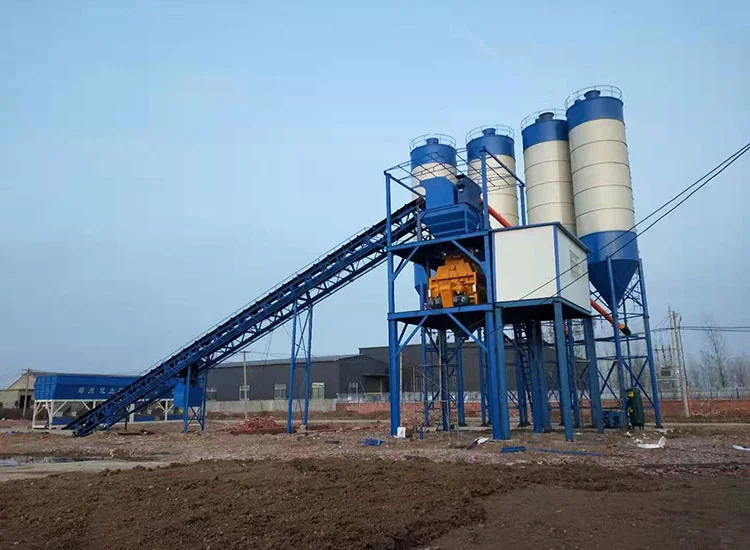
Preisliste für Transportbetonmischanlagen
Bei der Budgetplanung für ein neues Vorhaben fragen Investoren zuerst nach dem Preis der Transportbetonmischanlage. Es ist wichtig zu beachten, dass die Kosten der Maschinen erheblich variieren, basierend auf der theoretischen Kapazität, der Anzahl der Zementsilos und dem Raffinessegrad der automatisierten Steuerungssysteme. Der genaue Preis hängt von der Konfiguration, den Maschinen, der Größe, dem ausgewählten Modell und den Kundenspezifikationen ab. Die von uns angebotenen optionalen Konfigurationen umfassen unter anderem: Anzahl der Zementsilos, Größe der Dosieranlage, Bandförderer, Kübelaufzug, Entstaubungssystem.
Nachfolgend finden Sie eine allgemeine Referenztabelle für FOB (Free On Board) Ausrüstungspreise im aktuellen globalen Markt.
| Beste Produkte | Kapazitätsbereich | Preis | Das Profil |
|---|---|---|---|
| Kleine RMC-Anlage | 25 m³/h bis 50 m³/h | $30.000 – $60.000 | Diese kompakten Einheiten nutzen oft ein platzsparendes Skip-Hoist-Design und sind der perfekte Einstiegspunkt für Start-ups, ländliche Infrastrukturlieferanten oder temporäre Projektstandorte. Der Preis der kleinen RMC-Anlage bietet den schnellsten Weg zur Generierung eines positiven Cashflows mit minimalem Anfangsrisiko. |
| Mittelgroße kommerzielle RMC-Anlage | 60 m³/h bis 120 m³/h | $65.000 – $130.000 | Dies ist der Branchen-“Sweet Spot” für standardmäßige kommerzielle Betriebe. Ein robuster RMC-Anlagenpreis in dieser Stufe umfasst ein kontinuierliches Bandförderer-Beschickungssystem, einen 1 m³ oder 2 m³ Schwerlast-Zentralmischer und eine vollautomatische PLC-Steuerkabine, die mehrere LKW-Flotten gleichzeitig verwalten kann. |
| Mega-Kapazität industrielle RMC-Anlage | 150 m³/h bis 240 m³/h (oder Dual-Mischer-Setups) | $150.000 – $300.000+ | Entwickelt, um lokale Märkte zu dominieren oder nationale Mega-Projekte zu versorgen. Diese Investitionsstufe umfasst fortschrittliche Funktionen wie Impulsstrahl-Entstaubungsanlagen, vollständig geschlossene Umweltschutzverkleidungen und spezielle Dosiersysteme für Zusatzmittel. |
Der Preis dient nur als Referenz. Bitte kontaktieren Sie uns für das aktuellste Angebot.
Wichtiger Hinweis: Die obigen Zahlen repräsentieren den Basispreis der Maschinen. Das gesamte erforderliche Kapital, um ein kommerzielles Transportbeton-Geschäft zu starten, ist höher. Lesen Sie weiter, um einen vollständigen Überblick über die Finanzen zu erhalten.
Transportbetonmischanlagen-Hersteller
Eine Transportbetonanlage ist in Betonmischanlagen üblich und weit verbreitet. Das bemerkenswerte Merkmal der RMC-Betonmischanlage ist, dass die Betonproduktion nicht direkt auf der Baustelle erfolgt, sondern der Transport-LKW den Beton zur Baustelle transportieren muss, was auch der Grund ist, warum sie Transportbetonmischanlage genannt wird. Wir bieten Ausrüstung und Modelle wie mobile Betonmischanlagen, stationäre Betonmischanlagen, und kompakte Betonmischanlagen. Wir können auch personalisierte oder kundenspezifische Lösungen nach den Bedürfnissen der Kunden entwerfen.
(1) Stationäre Transportbetonmischanlage
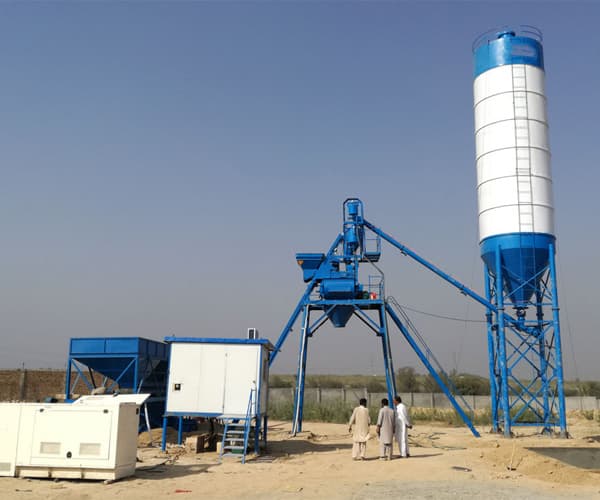
Skip-Trichter-Typ
| HZS25 – HZS75
| Konzipiert für kompakte Baustellen und kosteneffiziente Abläufe. Das Kübelhubsystem benötigt weniger Grundfläche und erfordert einfachere Wartung. Ideal für Kapazitäten von 25 m³/h bis 75 m³/h.
- Kleiner Platzbedarf: Benötigt 1/2 bis 1/3 weniger Landfläche im Vergleich zu Bandtypen.
- Kosteneffizient: Geringere Anfangsinvestition und einfachere Fundamentanforderungen.
- Einfache Wartung: Einfacher Seilhubmechanismus gewährleistet Haltbarkeit und einfache Reparatur.
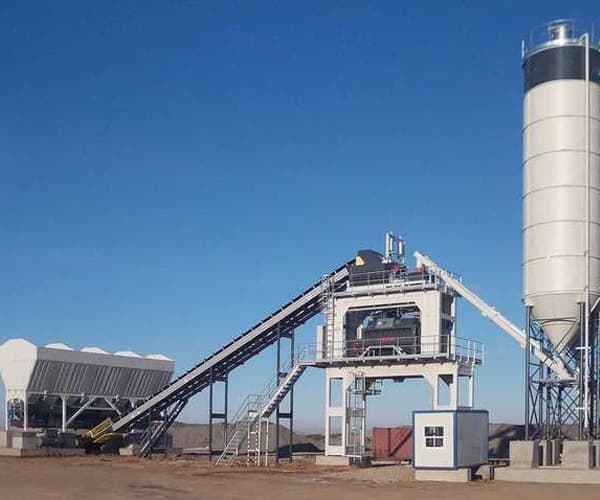
Bandtyp
| HZS60 – HZS240
| Entwickelt für hocheffiziente Großproduktion. Das Bandfördersystem gewährleistet eine kontinuierliche Gesteinskörnung-Zuführung mit hoher Stabilität. Perfekt für Schwerlastprojekte, die 60 m³/h bis 240 m³/h.
- Hohe Effizienz: Kontinuierliche Zuführung verkürzt die Mischzykluszeit erheblich.
- Große Kapazität: Ideal für hohe Volumenanforderungen (bis zu 240 m³/h) und Langstreckenförderung.
- Ganzjahresbetrieb: Geschlossene Abdeckung schützt Gesteinskörnungen vor Regen und Staub.
(2) Mobile Transportbetonmischanlage
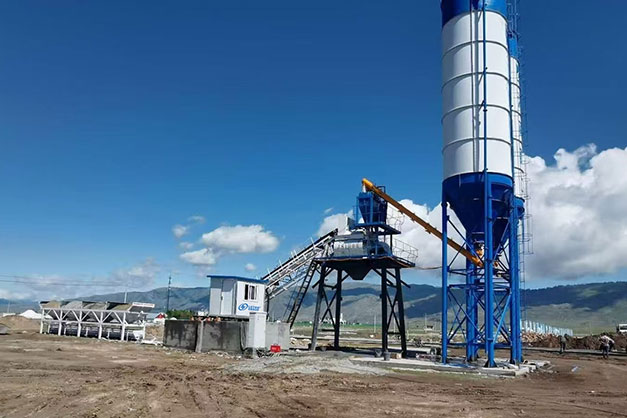
| YHZS25 – YHZS120 | Entwickelt für maximale Mobilität. Alle Kernkomponenten sind auf einem transportablen Fahrgestell vorverdrahtet, was eine schnelle Montage und Umsetzung ohne aufwendige Gründungsarbeiten ermöglicht.
(3) Kompakte Betonmischanlage
Containerisierte Betonmischanlage
Verfügt über ein modulares, geschlossenes Design für einfachen Versand und Umweltschutz. Alle Komponenten sind in Standard-Containerabmessungen integriert für eine schnelle Montage.
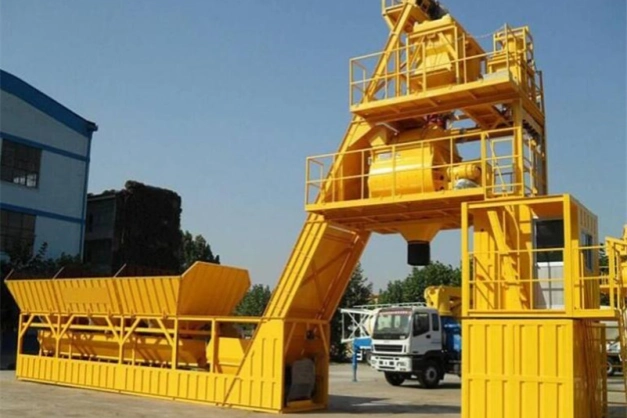
Fundamentfreie Betonmischanlage
Erfordert keine schweren Tiefbau-Fundamentarbeiten. Dieses Design reduziert Installationszeit und -kosten erheblich und ist ideal für temporäre Projekte oder Baustellen mit schwierigen Bodenverhältnissen.
Parameter der Transportbetonmischanlage
Es gibt viele Arten von Transportbetonanlagen, von denen die meisten für bestimmte Standorte oder Situationen ausgelegt sind. Wenn Sie sich nicht sicher sind, wie Sie den Typ der Transportbetonmischanlage auswählen sollen, finden Sie hier einige effektive Referenzen für Sie.
· Standortfläche
Die mobile Betonmischanlage benötigt eine kleine Fläche und eignet sich für Projekte mit kleinen Bauflächen;
Die stationäre Betonmischanlage benötigt eine größere Stellfläche;
Kompakte Betonmischanlagen-Ausrüstung ist kompakter und für kleine Bauprojekte geeignet.
· Installation und Demontage
Mobile Betonmischanlagen und kompakte Mischanlagen sind bequemer zu installieren und zu demontieren, und mobile können leicht bewegt werden, im Vergleich zu stationären Betonmischanlagen, bei denen die Installationszeit länger ist und die nach der Installation an einem Ort befestigt werden und sich nicht bewegen.
Nachfolgend finden Sie Beispiele für Parameter, die wir Ihnen für stationäre Betonmischanlagen, mobile Betonmischanlagen und kompakte Betonmischanlagen zur Verfügung stellen.
Betonmischanlage mit Kübelhub
| Typ | HZS25 | HZS35 | HZS50 | HZS75 | HZS100 | HZS150 | HZS200 | |
| Theoretische Produktionskapazität (m³/h) | 25 | 35 | 50 | 75 | 100 | 150 | 200 | |
| Betonmischer | Typ | JS500 | JS750 | JS1000 | JS1500 | JS2000 | JS3000 | JS4000 |
| Austragskapazität (L) | 500 | 750 | 1000 | 1500 | 2000 | 3000 | 4000 | |
| Gesteinskörnung Größe (Kies/Schotter) (mm) | 80/60 | 80/60 | 80/60 | 80/60 | 80/60 | 80/60 | 80/60 | |
| Passender Gesteinskörnung-Dosierer | PLD800 | PLD1200 | PLD1600 | PL2400 | PLD3200 | PLD4800 | PLD6400 | |
| Wiegegenauigkeit | Gesteinskörnung (KG) | 1500 kg ±2% | 2000 kg ±2% | 3000 kg ±2% | 4500 kg ±2% | 4500 kg ±2% | 6000 kg ±2% | 9000 kg ±2% |
| Zement (KG) | 300 kg ±1% | 450 kg ±1% | 900 kg ±1% | 1500 kg ±1% | 1500 kg ±1% | 3000 kg ±1% | 3000 kg ±1% | |
| Flugasche (KG) | 500 kg ±1% | 600 kg ±1% | 600 kg ±1% | 600 kg ±1% | 1500 kg ±1% | 1500 kg ±1% | 1500 kg ±1% | |
| Wasser (KG) | 200 kg ±1% | 300 kg ±1% | 600 kg ±1% | 600 kg ±1% | 1000 kg ±1% | 1000 kg ±1% | 1000 kg ±1% | |
| Zusatzmittel (KG) | 20 kg ±1% | 30 kg ±1% | 100 kg ±1% | 100 kg ±1% | 100 kg ±1% | 100 kg ±1% | 100 kg ±1% | |
| Austragshöhe (M) | 3,8 m | 3,8 m | 3,8 m | 4,1 m | 4,1 m | 4,1 m | 4,1 m | |
Betonmischanlage mit Bandförderer
| Typ | HZS60 | HZS90 | HZS120 | HZS180 | HZS240 | ||
| Theoretische Produktion (m³/h) | 60 | 90 | 120 | 180 | 240 | ||
| Betonmischer | Typ | JS1000 | JS1500 | MAO3000/2000 | MAO4500/3000 | MAO6000/4000 | |
| Leistung (KW) | 18.5 | 65.5 | 74 | 110 | 150 | ||
| Austragskapazität (L) | 1000 | 1500 | 2000 | 3000 | 4000 | ||
| Gesteinskörnung Größe (Kies/Schotter) (mm) | 80/60 | 80/60 | 80 | 150 | 150 | ||
| Gesteinskörnung Behältervolumen (m³) | 2/3/4×8,38 | 2/3/4×12 | 2/3/4×20 | 2/3/4×30 | 2/3/4×40 | ||
| Bandförderkapazität (t/h) | 300 | 450 | 550 | 650 | 900 | ||
| Wiegegenauigkeit | Gesteinskörnung (KG) | 3000 kg ±2% | 4500 kg ±2% | 4500 kg ±2% | 6000 kg ±2% | 9000 kg ±2% | |
| Zement (KG) | 900 kg ±1% | 1500 kg ±1% | 1500 kg ±1% | 3000 kg ±1% | 3000 kg ±1% | ||
| Flugasche (KG) | 600 kg ±1% | 600 kg ±1% | 1500 kg ±1% | 1500 kg ±1% | 1500 kg ±1% | ||
| Wasser (KG) | 600 kg ±1% | 600 kg ±1% | 1000 kg ±1% | 1000 kg ±1% | 1000 kg ±1% | ||
| Zusatzmittel (KG) | 100 kg ±1% | 100 kg ±1% | 100 kg ±1% | 100 kg ±1% | 100 kg ±1% | ||
| Austragshöhe (M) | 4,1 m | 4,1 m | 4,1 m | 4,1 m | 4,1 m | ||
YHZS-Serie
| Typ | YHZS25 | YHZS35/40 | YHZS50/60 | YHZS75/90 | YHZS100/120 | |
| Theoretische Produktionskapazität (m³/h) | 25 | 35 | 50 | 75 | 100 | |
| Betonmischer | Typ | JS500 | JS750 | JS1000 | JS1500 | JS2000 |
| Austragskapazität (L) | 500 | 750 | 1000 | 1500 | 2000 | |
| Gesteinskörnung Größe (Kies/Schotter) (mm) | 80/60 | 80/60 | 80/60 | 80/60 | 80/60 | |
| Passender Gesteinskörnung-Dosierer | PLD800 | PLD1200 | PLD1600 | PL2400 | PLD3200 | |
| Wiegegenauigkeit | Gesteinskörnung (KG) | 1500 kg ±2% | 2000 kg ±2% | 3000 kg ±2% | 3000 kg ±2% | 3000 kg ±2% |
| Zement (KG) | 300 kg ±1% | 450 kg ±1% | 900 kg ±1% | 1500 kg ±1% | 1500 kg ±1% | |
| Flugasche (KG) | Optional | |||||
| Wasser (KG) | 200 kg ±1% | 300 kg ±1% | 600 kg ±1% | 900 kg ±1% | 500 kg ±1% | |
| Zusatzmittel (KG) | 20 kg ±1% | 30 kg ±1% | 30 kg ±1% | 50 kg ±1% | 100 kg ±1% | |
LTY-Serie
| Spezifikationen | Einheit | LTY-60A | LTY–60B | |
| Mischer | Zentralmischer-Typ | m3/h | 50-60 | 50-60 |
| Trommelmischer | JZM1500 | JZM1500 | ||
| Motorleistung | KW | 11×2 | 11×2 | |
| Mischzeit | S | 40 | 40 | |
| Vollautomatische Siemens SPS mit Fernsupport | m | 1.3 | 1.3 | |
| Dosieranlage | PLD1600 | PLD1600 | ||
| Vorratsbehälter | M3 | 5×2 | 5×3 | |
| Motorleistung | KW | 4×2 | 4×3 | |
| Dosieranlage | Sensor | kg | 2000×3 | 2000×3 |
| Zylinder | 100*250 | 100*250 | ||
| Bandgröße | mm | 3600-600 x 1 9000-600×1 | 10400-500×24200-500×19000*600×1 | |
| Aufgabenhöhe | mm | 3200 | 3200 | |
| Zementwägesystem | Wiegegenauigkeit | ±1% | ±1% | |
| Wasser-Wiegesystem | Wiegegenauigkeit | ±1% | ±1% | |
| Wasserpumpe | KW | 3 | 3 | |
| Zusatzmittel-Wiegesystem | Wiegegenauigkeit | ±1% | ±1% | |
| Additive Pump | 1.1 | 1.1 | ||
| Chassis | Größe | mm | 8410*2000*780 | 11100*2000*780 |
| Reifen | mm | 1000 | 1000 | |
| Steuerungssystem | Elektronische Komponenten | ZHENG TAI | ZHENG TAI | |
| Steuerungssystem | PLY 1000 halbautomatisch | PLY 1000 halbautomatisch | ||
Modularer Typ oder Containertyp
| Spezifikationen | HZS-60C | HZS-90C | HZS-120C | HZS-180C |
| Theoretische Produktivität (m3/h) | 60 | 90 | 120 | 180 |
| Mischer-Austragsvolumen (L) | 1000 | 1500 | 2000 | 3000 |
| Mischer-Einzugsvolumen (L) | 1600 | 2400 | 3200 | 4800 |
| Mischer-Motorleistung (kW) | 18,5×2 | 30×2 | 37×2 | 55×2 |
| Austragshöhe (m) | 4.1 | 4.1 | 4.3 | 4.3 |
| Zuschlagstoff-Materialmenge (m3) | 7×4 | 15×4 | 15×4 | 20×4 |
| Zykluszeit (s) | 60 | 60 | 60 | 60 |
| Max. Zuschlagstoffgröße (mm) | 80/100 | 80/100 | 80/100 | 80/100 |
| Zementsilo (t) (optional) | 2×100 | 3×100 | 4×100 | 4×100 |
| Zuschlagstoff-Wiegesystem | ±2 % gewährleisten | ±2 % gewährleisten | ±2 % gewährleisten | ±2 % gewährleisten |
| Pulvermaterial-Wiegesystem | ±1% | ±1% | ±1% | ±1% |
| Wasser-Wiegesystem | ±1% | ±1% | ±1% | ±1% |
| Zusatzmittel-Wiegesystem | ±1% | ±1% | ±1% | ±1% |
| Installationsleistung (kW) | = 110 | = 160 | ^220 | ◎290 |
| Beschickungsart | Skip-Hopper und Bandförderer | |||
| Steuerungsmodus | Vollautomatische Computer-PC-Steuerung | |||
Freier Fundamenttyp
| Spezifikationen | FHZS-25 | FHZS-35 | FHZS-50 | FHZS-75 |
| Theoretische Produktivität (m3/h) | 25 | 35 | 50 | 75 |
| Mischer-Austragsvolumen (L) | 500 | 750 | 1000 | 1500 |
| Mischer-Einzugsvolumen (L) | 800 | 1200 | 1600 | 2400 |
| Mischer-Motorleistung (kW) | 18.5 | 30 | 18,5×2 | 30×2 |
| Zuschlagstoff-Materialmenge (m3) | 3×3 | 5×3 | 8×3 | 12×3 |
| Zykluszeit (s) | 60 | 60 | 60 | 60 |
| Max. Zuschlagstoffgröße (mm) | 80/100 | 80/100 | 80/100 | 80/100 |
| Zementsilo (t) (optional) | 50×1 | 50×1 | 100×1 | 100×2 |
| Zuschlagstoff-Wiegesystem | ±2 % gewährleisten | ±2 % gewährleisten | ±2 % gewährleisten | ±2 % gewährleisten |
| Pulvermaterial-Wiegesystem | ±1% | ±1% | ±1% | ±1% |
| Wasser-Wiegesystem | ±1% | ±1% | ±1% | ±1% |
| Zusatzmittel-Wiegesystem | ±1% | ±1% | ±1% | ±1% |
Parameter dienen nur als Referenz, bitte konsultieren Sie uns für Details.
Kernkomponenten der Transportbetonmischanlage
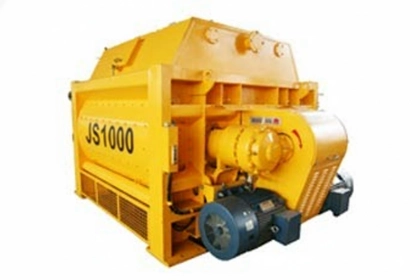
Mischer
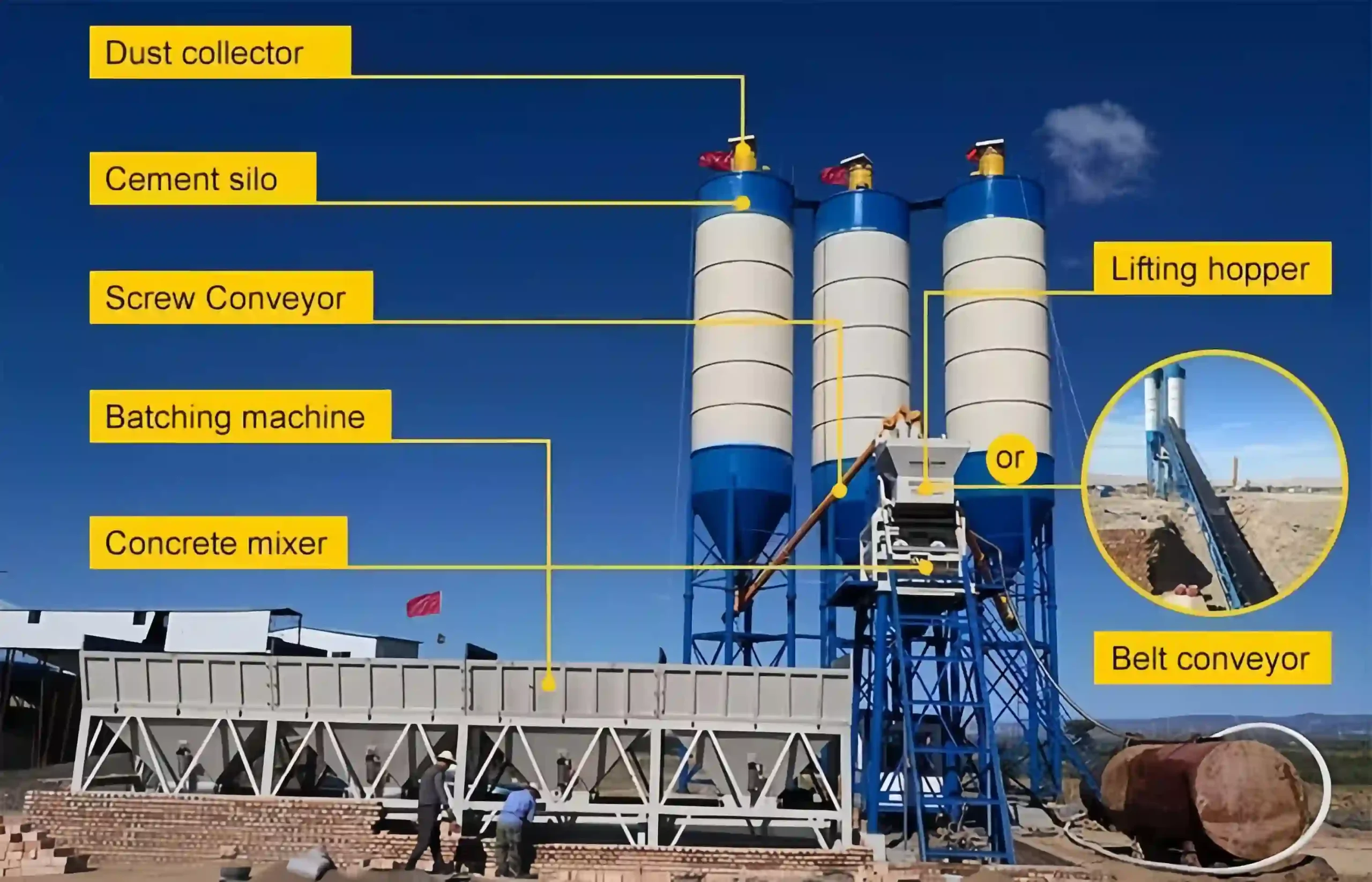
Der horizontale Doppelwellen-Zwangsmischer hat eine starke Mischfähigkeit, er kann die Materialien gleichmäßig und effektiv mischen. Er kann Beton mit unterschiedlichen Ausbreitmaßen und Rohstoffverhältnissen mischen. Seine Mischflügel und Auskleidungsplatten bestehen aus hochchromverschleißfester Legierung. Die externe Wellenendabstützung und spezielle Wellendichtung gewährleisten eine lange Lebensdauer des Mischers. Planetenmischer als optionale Wahl.
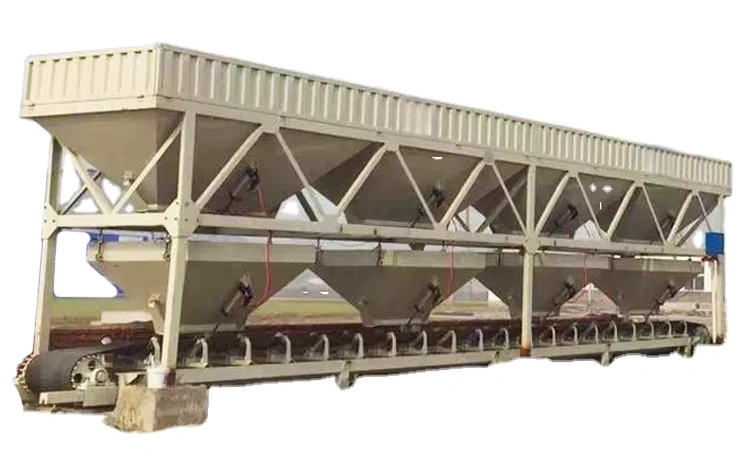
Dosieranlage
Großvolumige Betriebe erfordern Mehrkammer-Zuschlagstoffbehälter (typischerweise 3 bis 6 Kammern). Diese Einheiten verwenden industrielle Pneumatikzylinder und Präzisions-Wägezellen, um Sand und Schotter schnell zu messen.
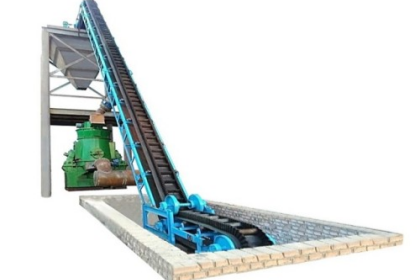
Gesteinskörnung-Fördersystem
Nach dem Wiegen wird die Gesteinskörnung durch den Hubkübel oder das Bandfördersystem zum stationären Betonmischer befördert.
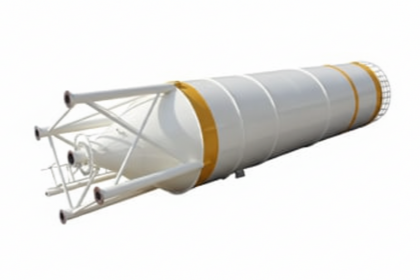
Materiallagersystem
Dient zur Lagerung von Gesteinskörnungen, pulverförmigen Materialien (wie Zement, Flugasche), Zusatzmitteln usw., die für die Betonproduktion benötigt werden. Durchdachtes Design, das eine kontinuierliche und stabile Materialversorgung gewährleistet und die Produktionseffizienz verbessert.
Einschließlich Zementsilo, Gesteinskörnung-Silo, Pulversilo usw., zur Lagerung verschiedener Rohstoffe.
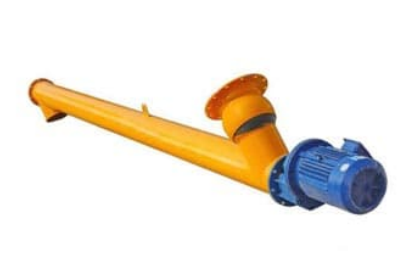
Schneckenförderer
Entwickelt für den staubfreien und schnellen Transport von Zement und Flugasche, gewährleisten unsere Schneckenförderer einen kontinuierlichen und gleichmäßigen Materialfluss von den Silos zum Wiegesystem.
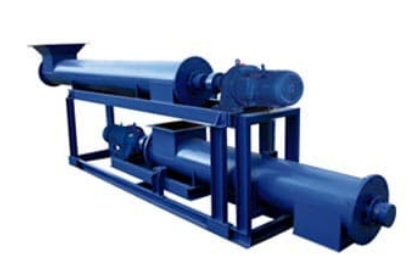
Pulver- und Flüssigkeitswaagen
Über dem Mischer angebrachte, unabhängige Behälter für Zement, Flugasche, Wasser und flüssige Zusatzmittel gewährleisten höchste Präzision. Hochwertige Transportbetonanlagen verfügen über eine automatische Differenzkompensation, um strenge ±1%-Toleranzen einzuhalten.
Automatisierte Steuerungssysteme
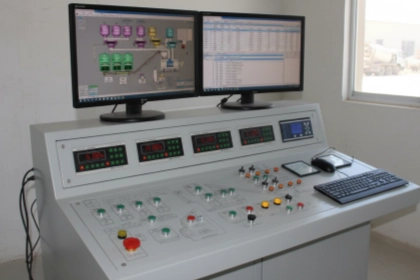
Die gesamte Anlage wird von einem Industriecomputer gesteuert. Dieses System bietet folgende Merkmale: Echtzeit-Datenverarbeitungsfunktion; sowohl automatische als auch manuelle Steuerung sind verfügbar; einfache und bequeme Bedienung. Für das automatische Steuerungssystem ist die SPS die weltberühmte deutsche Marke, die elektrischen Komponenten sind von Schneider aus Frankreich. Es kann alle Daten der Anlage und der Materialzusammensetzung speichern; es kann auch alle Berichte ausdrucken. Der temperaturkonstante Container-Kontrollraum verwendet schall- und wärmeisolierende farbige Riffelplatten, die die Arbeitstemperatur der elektrischen Geräte gewährleisten und dem Bediener eine komfortable Umgebung bieten.
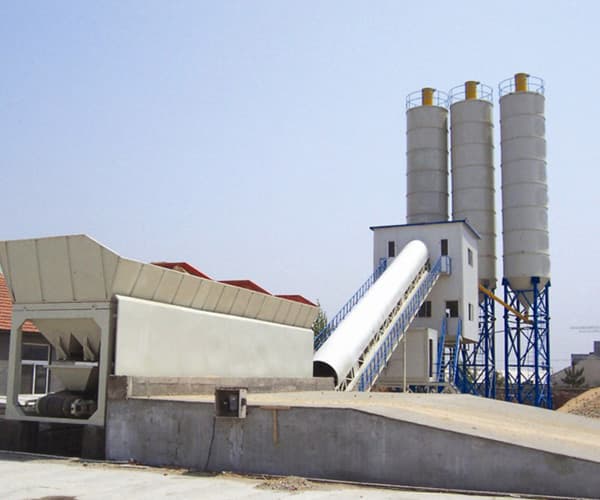
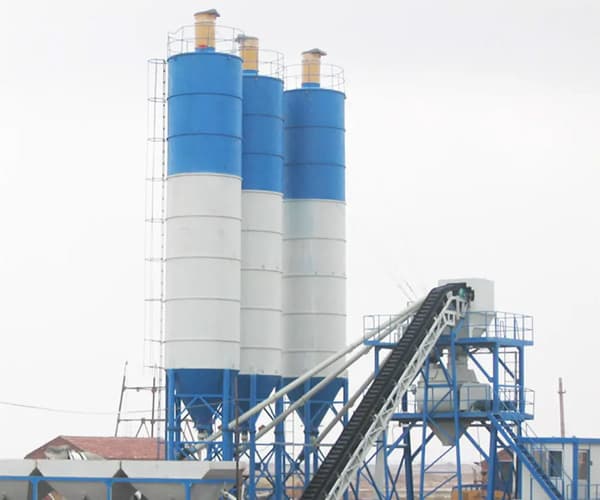
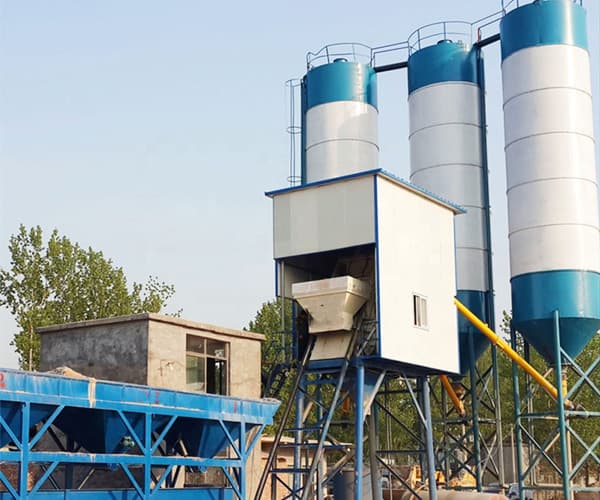
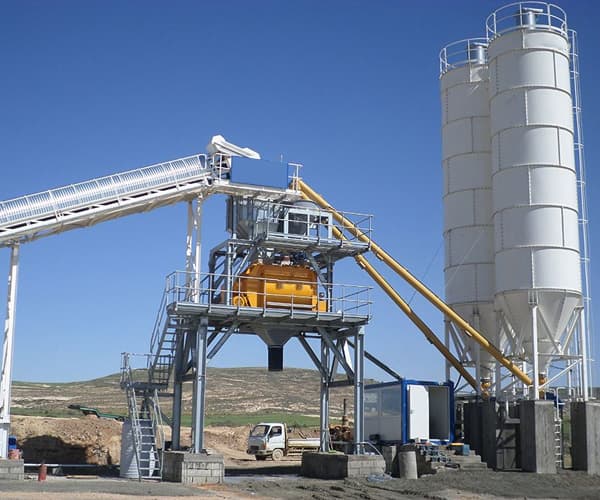
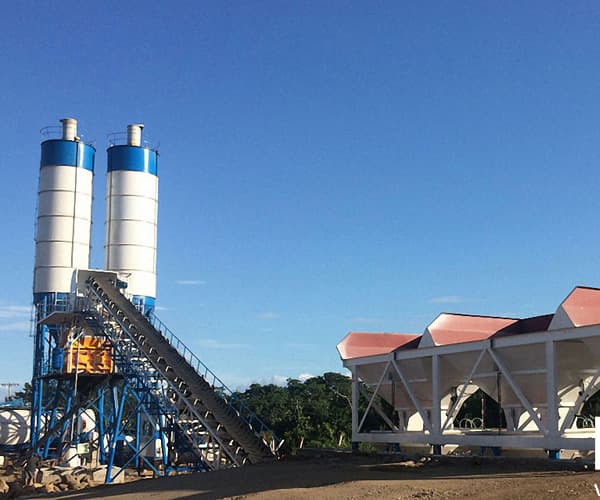
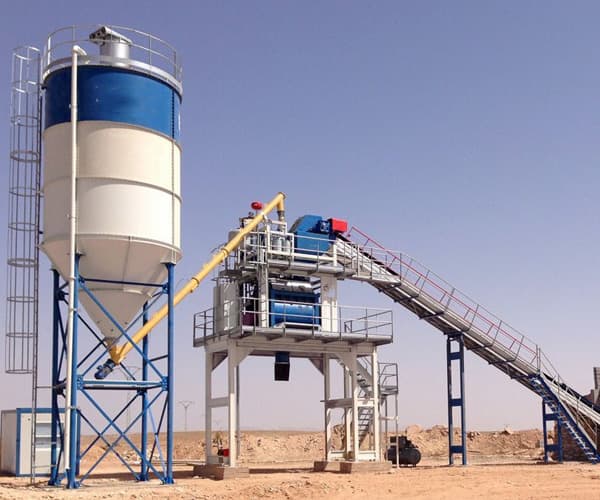
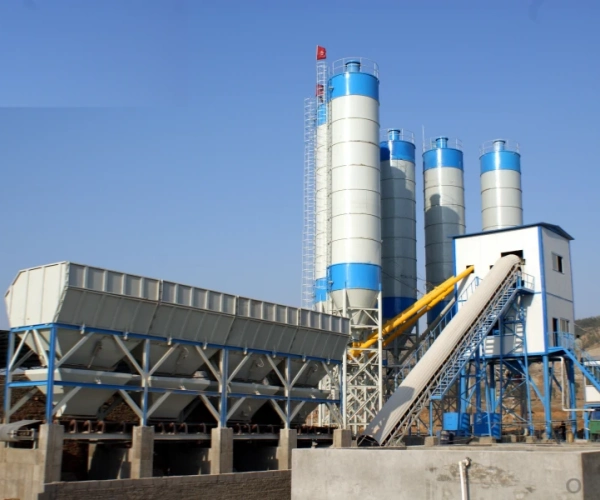
Sie können einige Fotos des Produkts in unseren etablierten Einrichtungen betrachten. Für detaillierte Informationen und Referenzen können Sie unser Verkaufsteam kontaktieren, indem Sie zurückrufen oder das Anfrageformular ausfüllen.
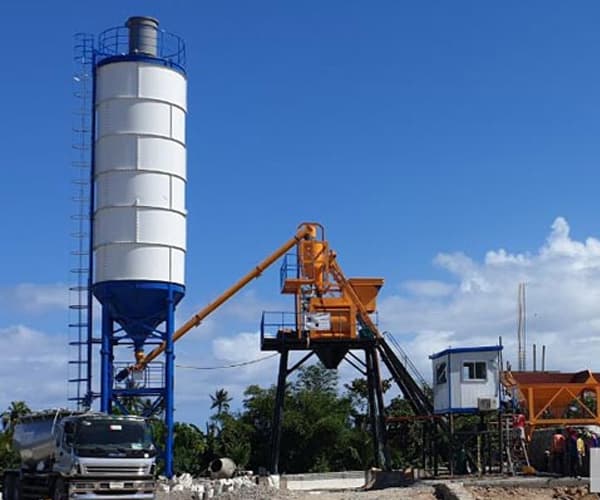
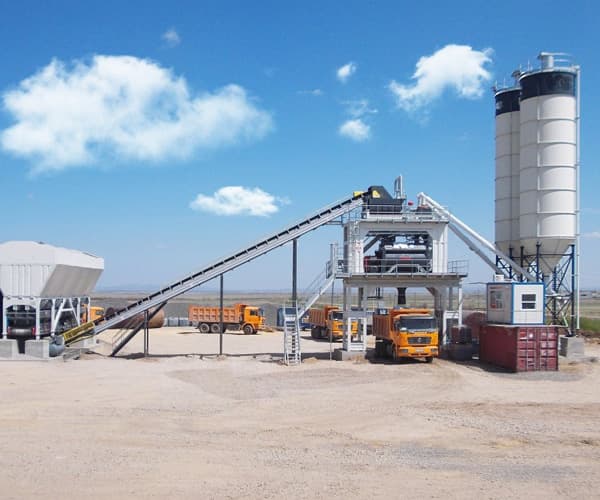
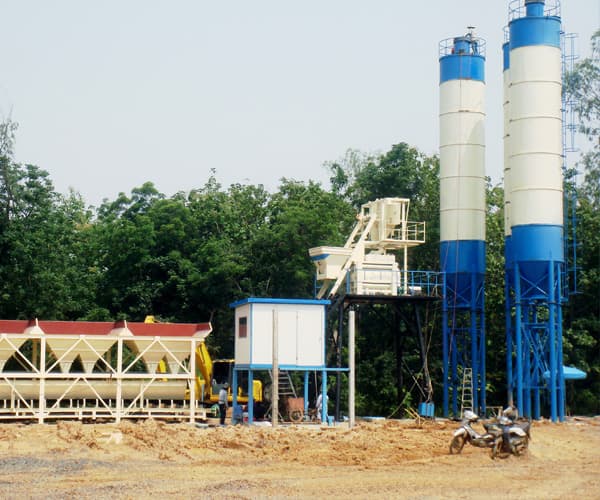
Hauptmerkmale der Transportbetonanlage
Im Gegensatz zu Standardanlagen gibt unsere Anlage gewogene flüssige Zusatzmittel direkt in den Wasserwiegebehälter ab. Dieser Prozess sorgt für eine “sekundäre Auflösung” des Zusatzmittels, bevor es in den Transportbetonmischer gelangt, was zu einer wesentlich homogeneren Betonmischung führt.
Das Wasserabgabesystem verwendet eine Kombination aus einem pneumatischen Absperrventil und einer Druckerhöhungspumpe. Dieses Design beschleunigt nicht nur die Wasserabgabe zur Verkürzung des Chargenzyklus, sondern erzeugt auch einen Hochdruckspray, der die Mischerwelle effektiv reinigt und Betonansammlungen verhindert.
(Für Bandförderermodelle) Unser HZS60-Transportbetonmischturm und größere Modelle verfügen über einen Zwischenbehälter direkt über dem Mischer. Dadurch kann die nächste Charge Gesteinskörnung vorbereitet und gelagert werden, während die aktuelle Charge gemischt wird, was Wartezeiten erheblich reduziert und die Produktionsgeschwindigkeit steigert.
(Für Kippbehältermodelle) Das Ladebehältersystem ist mit einem mechanischen Sicherheitsstiftmechanismus auf der Schiene ausgestattet. Zusätzlich zu den Endschaltern sichert diese physische Verriegelung den Behälter während der Wartung und gewährleistet absolute Sicherheit für das Servicepersonal.
Wir optimieren das Austragssystem des Transportbetonmischers basierend auf der Anlagenkapazität. Kleinere Modelle (HZS25-60) nutzen schnell reagierende pneumatische Austräge, während größere Modelle (HZS75+) mit leistungsstarken hydraulischen Austragssystemen ausgestattet sind, um einen stabilen Klappenbetrieb zu gewährleisten und Verstopfungen bei der Hochvolumenproduktion zu vermeiden.
Das Wiegesystem verwendet branchenführende S-Typ-Zugkraftsensoren. Diese Sensoren sind mit einer flexiblen Aufhängung installiert, isolieren die Wiegebehälter von externen Vibrationen und gewährleisten genaue Messungen für Zement, Wasser und Zuschlagstoffe.
Vorteile von Transportbetonanlage
Warum sollten Sie sich für Ihr Projekt für eine Transportbetonanlage entscheiden? Unsere Transportbetonmischtürme sind darauf ausgelegt, langfristigen Wert zu bieten, indem sie robuste Bauweise mit fortschrittlicher Technologie kombinieren, um maximale Effizienz und Rentabilität zu gewährleisten.
Deutlich gesteigerte Produktionsgeschwindigkeit
Herkömmliche Baustellentrommelmischer erzielen in der Regel nur 4–5 m³/h. Eine gewerbliche RMC-Anlage liefert eine kontinuierliche Leistung von 25 bis 240 m³ pro Stunde. Diese konstante Kapazität beseitigt Engpässe auf der Baustelle und hält Großprojekte strikt im Zeitplan.
Vielseitige Mischeroptionen: Doppelwellen- und Planetenmischer
Hauptsächlich mit robusten Doppelwellenmischern ausgestattet, bieten wir auch hochpräzise 0,5 m³ und 1,5 m³ Planetenmischer an. Diese Flexibilität macht unsere Anlagen ideal für Transportbetonhersteller, Bauunternehmer und insbesondere Fertigteilhersteller, die eine überlegene Homogenität benötigen.
Fähigkeit zur Herstellung von Hochleistungsbeton
Entwickelt für anspruchsvolle Projekte, können unsere Anlagen problemlos spezielle Systeme für Eis, Mikrosilika und verschiedene Zusatzmittel integrieren. Diese Fähigkeit ist entscheidend für die Herstellung von hochfestem Beton für Dämme, Häfen und andere extreme Ingenieuranwendungen.
Präzise Dosierung & Materialeinsparung
Automatisierte Wiegetechnologien überwachen und passen die Chargenparameter kontinuierlich an. Durch die hohe Genauigkeit bei der Dosierung von Rohstoffen und Zusatzmitteln kann die Anlage den Zementverbrauch im Vergleich zu manuellen Methoden um 10% bis 12% senken, was die Materialkosten direkt reduziert und gleichzeitig die erforderliche Betongüte beibehält.
Schwere Konstruktion & Haltbarkeit
Gebaut aus hochfestem Baustahl und Premiumkomponenten, sind unsere Anlagen für den kontinuierlichen, hochintensiven Betrieb ausgelegt. Das robuste Fahrgestell gewährleistet außergewöhnliche Stabilität und Langlebigkeit und reduziert die langfristigen Wartungskosten erheblich.
Ultimatives modulares Design & Flexibilität
Unser ultimatives modulares Design ermöglicht einen einfachen Transport und eine schnelle Installation und bietet die Flexibilität, sich an komplexe Baustellenbedingungen anzupassen und Funktionen nach Projektanforderungen hinzuzufügen. Ob Sie die Kapazität erweitern oder das Layout anpassen müssen, wir bieten skalierbare Lösungen für Ihr Unternehmenswachstum.
Automatisierte Steuerung & Personalreduzierung
Integrierte SPS-Steuerungssysteme erfordern nur minimale manuelle Eingriffe. Ein einziger geschulter Bediener kann den gesamten Chargier- und Mischprozess von der Steuerkabine aus überwachen, was Ihre Lohnkosten optimiert und durch menschliche Ermüdung verursachte Abweichungen eliminiert.
Umweltfreundlich & sichere Wartung
Entwickelt mit fortschrittlichen Staubsammelsystemen und Lärmminderungstechnologie, um Umweltauflagen zu erfüllen. Geräumige Serviceplattformen und Sicherheitswege gewährleisten einen einfachen Zugang für die Wartung, minimieren Ausfallzeiten und erhöhen die Bedienersicherheit.
Der Geschäftsplan & die Kostenanalyse für die Transportbetonanlage
Aufschlüsselung der gesamten Einrichtungskosten (der Projektbericht)
Ein häufiger Fehler neuer Investoren ist die Verwechslung des Maschinenpreises mit den Einrichtungskosten einer Transportbetonanlage. Um ein hochprofitables gewerbliches Unternehmen zu gründen, muss Ihr anfänglicher Geschäftsplan eine umfassende Liste der Investitionsausgaben (CapEx) berücksichtigen.
Unabhängig davon, ob Sie einen Projektbericht für eine Transportbetonanlage für eine Bankfinanzierung oder eine persönliche Investition erstellen, finden Sie hier eine detaillierte Aufschlüsselung der Gesamtkosten, die Sie einplanen müssen:
Grunderwerb & Tiefbauarbeiten
Eine gewerbliche Anlage benötigt Platz. Sie benötigen etwa 1.500 bis 3.000 Quadratmeter Land für die Anlage, Gesteinskörnungsvorräte und LKW-Manöver.
Die Investition
Neben dem Pachten oder Kaufen des Grundstücks fließt ein erheblicher Teil Ihres Budgets in das Gießen massiver, bewehrter Betonfundamente zur Unterstützung des schweren Mischturms und der Zementsilos. Auch die Geländenivellierung, Entwässerungssysteme und der Bau von Stützmauern für die Gesteinsbehälter sind große Ausgabenposten.
Die Logistik & Lieferflotte
Im gewerblichen Betongeschäft kostet die Lieferflotte oft mehr als die Mischanlage selbst.
Die Investition
Sie müssen mindestens 3 bis 5 Fahrmischer kaufen oder leasen, um eine kontinuierliche Lieferung zu gewährleisten. Zusätzlich wird mindestens ein schwerer Radlader vor Ort benötigt, um ständig Sand und Kies in die Mischanlage zu beschicken.
Anfangsumlaufvermögen
Bevor Ihre erste Rechnung bezahlt wird, müssen Sie Rohstoffe beschaffen.
Die Investition
Ihr Die Kostenkalkulation für die RMC-Anlage muss einen Reservefonds (in der Regel 2 bis 3 Monate Betriebskapital) enthalten, um lose Zemente, Schotter, Sand, chemische Zusatzmittel und Dieselkraftstoff zu kaufen sowie die anfänglichen Lohnkosten für Bediener und Fahrer zu decken.
Umweltauflagen & Versorgungsanschlüsse
Die erforderlichen Genehmigungen für den Betrieb einer schweren Industrieanlage in einem städtischen Gebiet erfordern die Einhaltung strenger Vorschriften.
Die Investition
Planen Sie Budget für Industrie-Stromtransformatoren, Hochvolumen-Wasserversorgungsleitungen und Betonwaschbecken (Recycling) ein. Darüber hinaus verlangen viele Gemeinden die Installation von aktiven Druckluft-Pulsstrahl-Entstaubungsanlagen und schalldämmenden Verkleidungen, um Umweltprüfungen zu bestehen.
Kostenanteile & Haupttreiber
Die Investition in eine gewerbliche Fertigbetonwerk erfordert mehr als nur die Bewertung des anfänglichen Ausrüstungspreises. Ein hochprofitables Geschäftsmodell balanciert die anfänglichen Investitionsausgaben (CapEx) mit den langfristigen Betriebsausgaben (OpEx), der Zuverlässigkeit der Komponenten und der Automatisierungseffizienz aus, um die Kapitalrendite (ROI) zu maximieren.
Prozentuale Aufschlüsselung der Gesamtinvestition
Bei der Planung Ihres Projektbudgets können die Ausgaben im Allgemeinen in vier Hauptbereiche unterteilt werden. Es ist wichtig zu beachten, dass eine hohe Anfangsinvestition in hochwertige Ausrüstung (höhere CapEx) oft eine vorhersehbarere und effizientere Kostenstruktur über den Lebenszyklus der Anlage schafft.
- Investitionsausgaben (CapEx) – 50% bis 60%: Die Kernmaschinerie, einschließlich Mischeinheit, Gesteinschargierer, Zementsilos, Förderbänder und automatisierte Steuerungssysteme.
- Standortvorbereitung & Installation – 10% bis 15%: Tiefbau für robuste Betonfundamente, Geländenivellierung, Stromversorgungsanschluss und Montage vor Ort.
- Betriebsausgaben (OpEx) – 25% bis 35%: Die täglich wiederkehrenden Kosten, einschließlich Rohstoffe, Strom, Kraftstoff, Lohnkosten und routinemäßige Verschleißteile.
- Indirekte & Eventualkosten – 5% bis 10%: Genehmigungen zur Einhaltung gesetzlicher Vorschriften, Bedienerschulung und Rücklagen für unvorhergesehene Ausgaben.
Haupttreiber der Anlagenkosten
Ihre spezifischen Projektanforderungen beeinflussen die Verteilung dieser Kosten:
- Anlagentyp und Kapazität: Stationäre Anlagen mit hoher Kapazität (120–240 m³/h) erfordern tiefe Fundamente und größere Silos, was zu höheren Anschaffungskosten führt, aber eine massive kontinuierliche Ausbringung bietet. Mobile oder kompakte Einheiten reduzieren die Kosten für die Baustellenvorbereitung um 10 % bis 20 % aufgrund ihrer fundamentlosen Bauweise.
- Haltbarkeit der Komponenten: Die Auswahl hochwertiger Mischer mit hochchromverschleißfesten Auskleidungen erhöht den Anschaffungspreis, senkt jedoch die langfristigen Wartungskosten erheblich und verhindert teure Produktionsstillstände.
- Automatisierungsgrad: Die Aufrüstung auf ein intelligentes PLC-System mit Echtzeitüberwachung erfordert eine höhere Anfangsinvestition, reduziert aber die betrieblichen Ineffizienzen drastisch.
Maximierung Ihrer Kapitalrendite (ROI)
Der wahre Wert einer Fertigbetonwerk liegt in ihren Effizienzgewinnen. Eine fortschrittliche, automatisierte Anlage beschleunigt Ihre Amortisationszeit direkt durch mehrere betriebliche Einsparungen:
- Materialeffizienz: Hochpräzise Wägesensoren und automatische Feuchtigkeitskompensation reduzieren den Rohstoffabfall (insbesondere teuren Zement) um 10 % bis 20 %.
- Arbeitsoptimierung: Ein zentralisierter, automatisierter Dosierprozess erfordert nur minimale manuelle Eingriffe und reduziert den Personalbedarf vor Ort um 30 % bis 50 %.
- Vorausschauende Wartung: Die Verfolgung von Betriebsstunden und Komponentenverschleiß mittels intelligenter Software kann unerwartete mechanische Ausfälle um bis zu 40%, reduzieren, was höhere Auslastungsraten gewährleistet.
Beispielhaftes Amortisationsszenario
Betrachten Sie eine Anlage mittlerer Kapazität, die an einem normalen 8-Stunden-Tag etwa 560 m³ Beton produziert. Durch die Nutzung der Materialeinsparungen und des reduzierten Arbeitsaufwands durch automatisierte Systeme erzielt die Anlage eine sehr konstante tägliche Bruttomarge. Abhängig von der lokalen Marktnachfrage und den Betonverkaufspreisen erzielen die meisten professionellen Betreiber eine vollständige Kapitalrendite innerhalb von 1 bis 3 Jahren, und verwandeln die anfänglichen Einrichtungskosten in einen leistungsstarken Motor für langfristiges Unternehmenswachstum.
So wählen Sie die richtige Transportbetonanlage für Ihr Projekt
Die Auswahl der idealen Transportbetonanlage ist entscheidend für die Sicherstellung von Betriebseffizienz, gleichbleibender Materialqualität und einer schnellen Kapitalrendite. Um die fundierteste Entscheidung zu treffen, müssen Investoren ihre Gerätewahl an die tatsächlichen Produktionsanforderungen, die Gegebenheiten vor Ort und die langfristigen Geschäftsziele anpassen. Berücksichtigen Sie diese vier wesentlichen Faktoren vor dem Kauf:
Anlagenkapazität an tägliche Produktionsziele anpassen
Raten Sie nicht über Ihren Kapazitätsbedarf. Treffen Sie Ihre Entscheidung auf der Grundlage Ihrer angestrebten Tagesproduktion.
- Betriebe mit geringem Volumen (<400 m³/Tag): Für die ländliche Erschließung oder kleine Wohnprojekte ist eine kompakte Anlage (25–50 m³/h) äußerst kosteneffizient und mit einer begrenzten Mannschaft einfach zu bedienen.
- Kommerzielle Versorgung mit mittlerem Volumen (400–1.000 m³/Tag): Für die standardmäßige kommerzielle Versorgung oder mittelgroße Infrastruktur bietet eine Anlage mittlerer Kapazität (60–90 m³/h) die perfekte Balance zwischen kontinuierlicher Ausbringung und überschaubarer Anfangsinvestition.
- Großprojekte mit hohem Volumen (>1.000 m³/Tag): Die Versorgung von Autobahnen, Hochhauskomplexen oder Start- und Landebahnen erfordert schwere, großkapazitive Anlagen (120–240 m³/h+), um eine kontinuierliche Betonage ohne Versorgungsengpässe zu gewährleisten.
Standortbedingungen und Mobilitätsanforderungen bewerten
Ihr Geschäftsmodell und das verfügbare Land bestimmen den strukturellen Typ der Anlage.
- Permanente kommerzielle Zentren: Wenn Sie ein langfristiges Geschäft an einem festen Standort mit viel Platz aufbauen, ist eine stationäre Anlage die überlegene Wahl. Sie bietet maximale Stabilität und Lagerkapazität, erfordert jedoch robuste zivile Fundamente.
- Häufige Standortwechsel: Wenn Ihre Strategie darin besteht, Autobahnbauprojekten zu folgen oder alle paar Monate zwischen abgelegenen Standorten zu wechseln, ist eine mobile Konfiguration unerlässlich. Diese Einheiten können innerhalb von Tagen demontiert und verlegt werden, was Ausfallzeiten und Logistikkosten erheblich reduziert.
Qualitätskontrolle und Automatisierung priorisieren
Der Verkauf von kommerziellem Beton erfordert die strikte Einhaltung technischer Standards.
Eine professionelle Transportbetonanlage muss mit einem vollautomatischen PLC-Steuerungssystem ausgestattet sein. Ein hohes Automatisierungsniveau eliminiert menschliche Fehler, garantiert eine exakte Chargengleichheit und ermöglicht es den Bedienern, die Mischungsrezepturen in Echtzeit anzupassen, um die unterschiedlichen Anforderungen verschiedener Kunden zu erfüllen.
Budget mit zukünftiger Skalierbarkeit in Einklang bringen
Während eine kleinere Anlage ein geringeres Anfangskapital erfordert, kann sie Ihre Fähigkeit einschränken, in Zukunft äußerst lukrative Großvolumenverträge zu erhalten. Suchen Sie nach Herstellern, die modulare Bauweisen anbieten. Dies ermöglicht es Ihnen, Ihren Betrieb zu erweitern – z. B. durch Hinzufügen weiterer Zementsilos oder Vergrößern der Zuschlagstoffbehälter – wenn Ihr Unternehmen wächst, ohne das gesamte System ersetzen zu müssen.
Unsere Transportbeton-Mischanlagen in Aktion
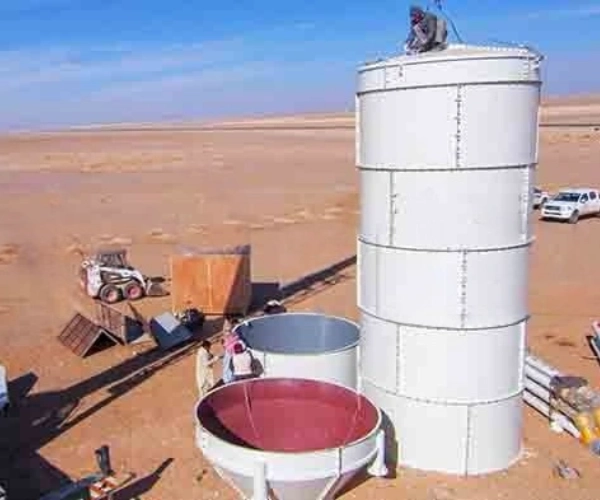
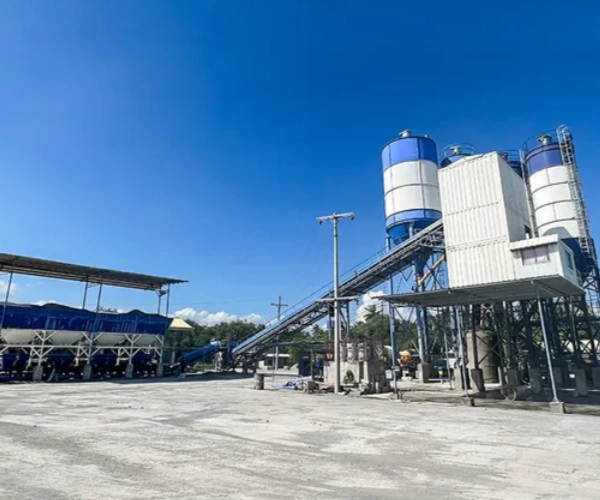
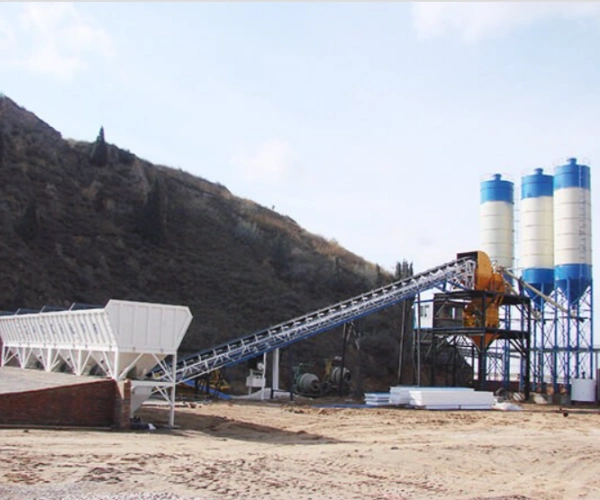
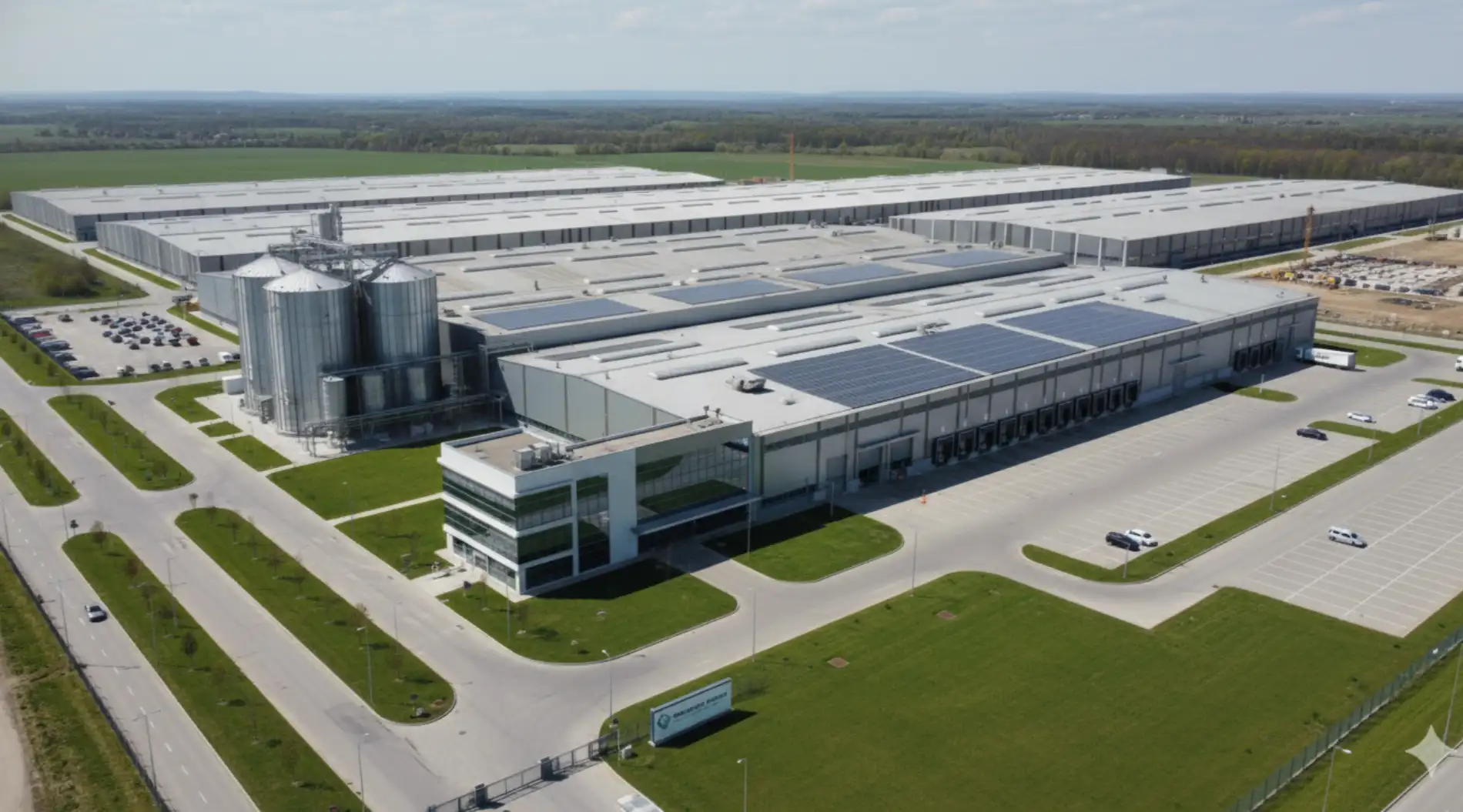
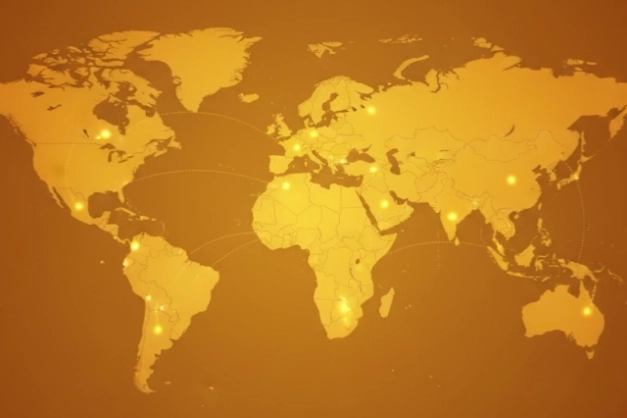
Transportbeton ist ein gewerbliches Liefergeschäft – hier sehen Sie zwei unserer Anlagen, die als vollwertige gewerbliche RMC-Hubs betrieben werden, mit weiteren auf fünf Kontinenten unten.
Ein Lieferant für Hochhaus-Transportbeton benötigte temperaturkontrollierten Beton, der Dubais strenge ≤32°C-Einbaugrenze rund um die Uhr einhält. Wir haben eine HZS180 mit integrierter Flockeneis- und Kühlwasser-Dosierung über dem Doppelwellenmischer angepasst, plus wüstentaugliche versiegelte Schränke und 26% Hochchrom-Verschleißauskleidungen. Der Lieferant führt nun Hochhaus-Betonierungen ohne verworfene Chargen durch:
“Das automatisierte Eisdosiersystem ist unglaublich präzise und hält unseren Beton strikt unter der 32°C-Grenze der Gemeinde. Wir hatten an unseren Hochhausstandorten keine einzige verworfene Charge, und die hochbelastbaren Verschleißauskleidungen haben unsere Wartungsausfallzeiten drastisch reduziert. Der ROI dieser Anlage ist unbestreitbar.”
Ein gewerblicher Transportbeton-Lieferant, der sich für Mega-Infrastrukturprojekte wie den Melbourne Metro Tunnel bewarb, benötigte einen Hochleistungs-Hub, der dennoch die strengen Null-Abwasser-Vorschriften von EPA Victoria einhält. Wir lieferten einen Doppelturm-HZS120 (240 m³/h kombiniert) mit integrierter Betonrückgewinnung für eine 100% Null-Entladungs-Bilanz und einer Schallschutzeinhausung, die den Lärm unter 65 dB hält. Er versorgt die Stadt rund um die Uhr – und wenn ein Turm für Wartungsarbeiten pausiert, hält der andere 120 m³/h:
“Beim Betrieb in Metro Melbourne standen wir vor strengen Null-Entladungs- und Lärmvorschriften. Diese Doppelturm-Einhausungsanlage hat alle unsere Compliance-Anforderungen erfüllt. Wir hatten die gesamte Doppelanlage in nur 14 Tagen voll betriebsbereit, ohne einen einzigen Verdrahtungsfehler, und die integrierte Betonrückgewinnung spart uns Tausende an Wasserkosten und Entsorgungsgebühren.”
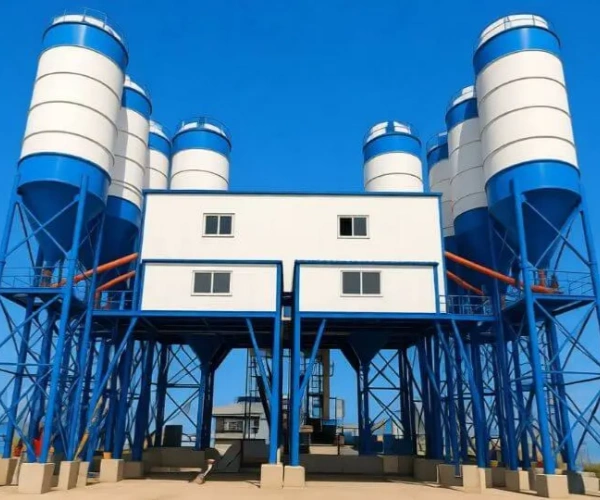
Sie können auch weitere unserer gewerblichen Transportbeton-Hubs nach Region erkunden:
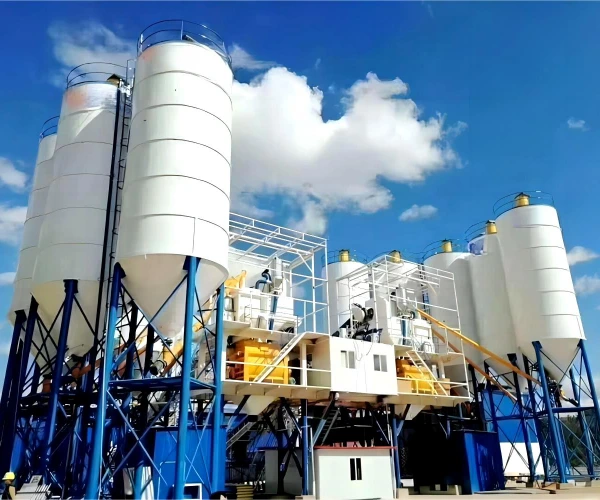
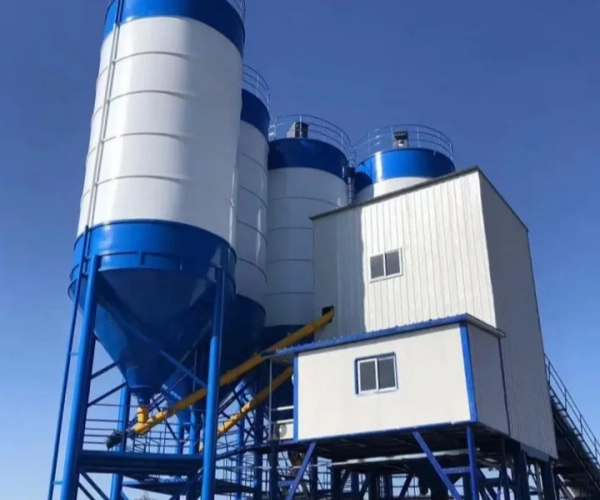
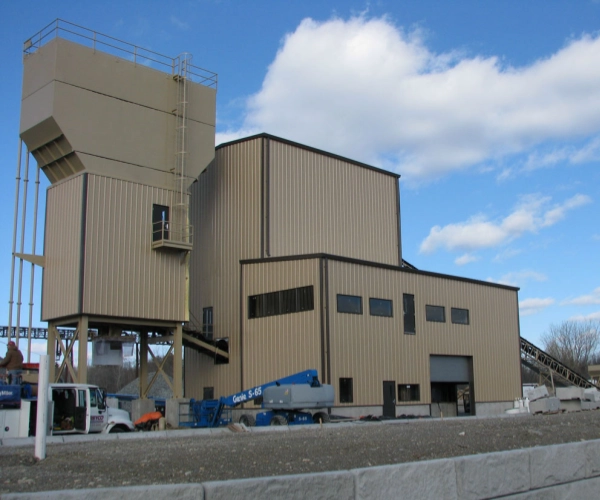
Anwendungsszenarien und maßgeschneiderte Lösungen für Transportbetonanlagen
Unsere Transportbetonanlagen sind so konstruiert, dass sie sich an die unterschiedlichen Anforderungen des modernen Bauwesens anpassen. Durch die Anpassung von Konfigurationen und Steuerungsstrategien gewährleisten wir eine zuverlässige, effiziente Betonproduktion für jeden Projekttyp.
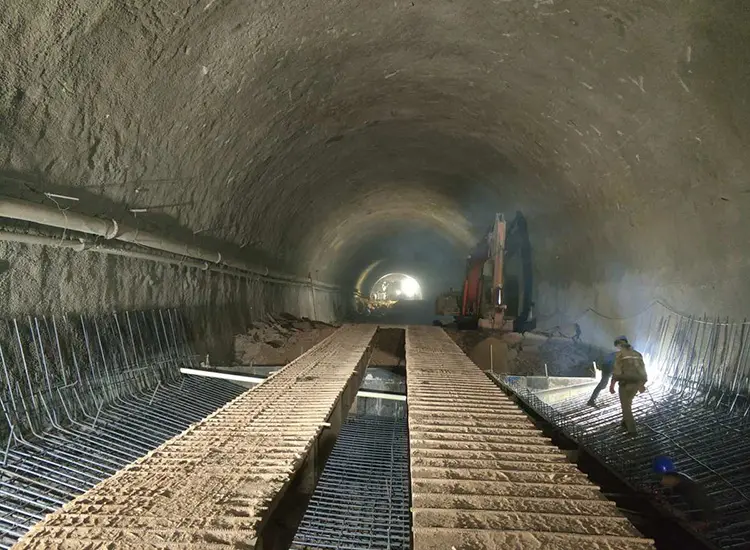
Verkehrsinfrastruktur
- Typische Anwendungen: Autobahnen, Eisenbahnen, Brücken, Tunnel, Flughäfen.
- Kernanforderungen:
- Produktion von hochfestem Beton (C50+) mit strengen Dauerhaftigkeitsstandards.
- Kontinuierliche, leistungsstarke Ausbringung für großflächige Pflasterarbeiten.
- Empfohlene Lösung:
- Großvolumige HZS-Serie (120m³/h+): Ausgestattet mit Doppelwellenmischern für schnelles, homogenes Mischen.
- Hochpräzise Dosierung: Fortschrittliche Gesteinskörnung-Dosierung gewährleistet gleichbleibende Qualität für kritische Tragstrukturen.
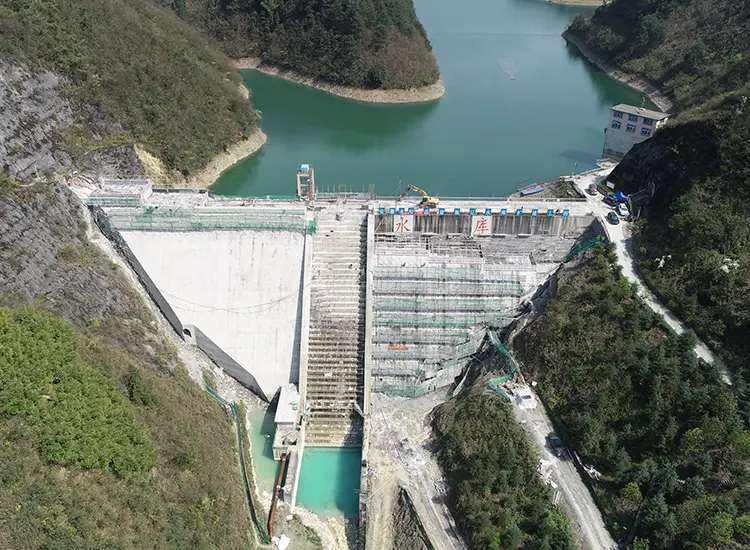
Wasserbau & Meerestechnik
- Typische Anwendungen: Dämme, Wasserkraftwerke, Häfen, Verteidigungsprojekte.
- Kernanforderungen:
- Massenbetonproduktion (z. B. RCC) mit niedriger Hydratationswärme.
- Beständigkeit gegen Erosion und Korrosion in rauen Umgebungen.
- Empfohlene Lösung:
- Integration spezieller Zusatzmittel: Integrierte Systeme für Eis- und Mikrosilika-Dosierung zur Steuerung von Betontemperatur und Dauerhaftigkeit.
- Wetterbeständiges Design: Vollständig geschlossene Struktur mit Korrosionsschutzbeschichtung für langfristigen Außeneinsatz.
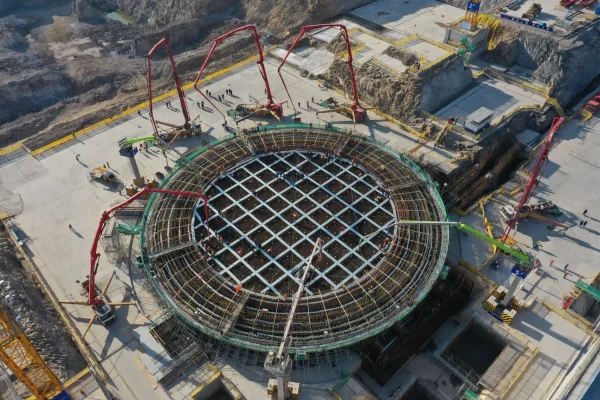
Kernkraft- und Energieanlagen
- Typische Anwendungen: Reaktorsicherheitsbehälter, Strahlenschutzstrukturen.
- Kernanforderungen:
- Produktion von ultrahochdichtem, strahlungsbeständigem Beton.
- Höchste Sicherheitsniveaus und strenge Qualitätskontrolle.
- Empfohlene Lösung:
- Ausfallsichere Automatisierung: Doppelt redundante Steuerungssysteme, die eine einwandfreie Dosierung für kritische Sicherheitsmischungen gewährleisten.
- Schwerlastwägung: Aufgerüstete Wägezellen, die für die genaue Handhabung dichter Abschirmungszuschläge ausgelegt sind.
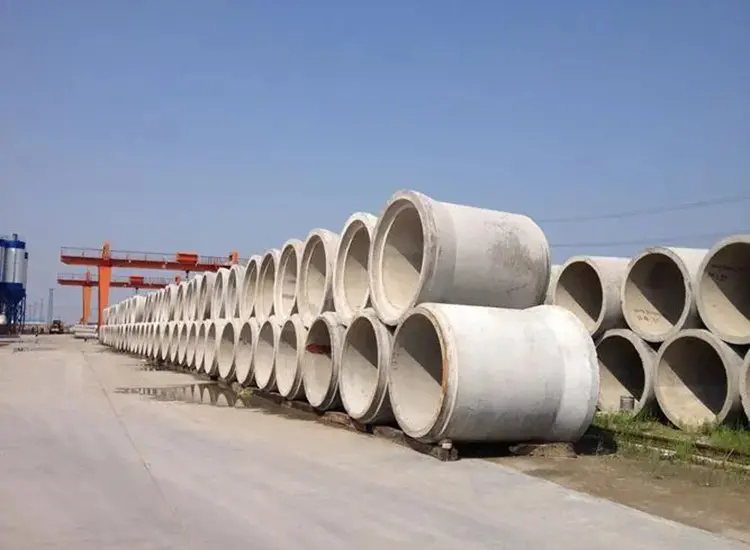
Betonfertigteilherstellung
- Typische Anwendungen: Betonrohre, Hohlkörperplatten, Tunnelfertigteile, kommunale Elemente.
- Kernanforderungen:
- Hochpräzises (±1%) Wiegen für standardisierte Komponenten.
- Gleichmäßiges Mischen von erdfeuchtem (trockenem) und plastischem Beton..
- Empfohlene Lösung:
- Planetenmischer-Option: Gewährleistet überlegene Homogenität für hochwertige Fertigteile.
- Integration automatisierter Produktion: Nahtlose Verbindung mit Fertigteil-Produktionslinien für synchronisierten Betrieb.
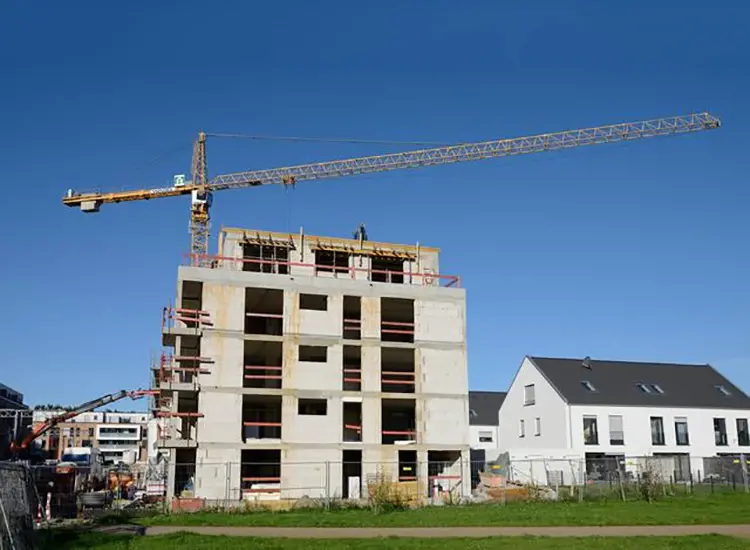
Gewerblicher & Wohnungsbau
- Typische Anwendungen: Wohnungsbauprojekte, Gewerbekomplexe, Industrieanlagen.
- Kernanforderungen:
- Stabile Produktion von normalfestem Beton (C20–C40)..
- Kosteneffizienz und hohe Kapitalrendite.
- Empfohlene Lösung:
- Flexibles modulares Design: Schnelle Installation und einfache Umsetzung für verschiedene Projektphasen.
- Optimierte Kostenkontrolle: Effizienter Materialeinsatz und wartungsarmes Design maximieren die Rentabilität für Transportbetonlieferanten.
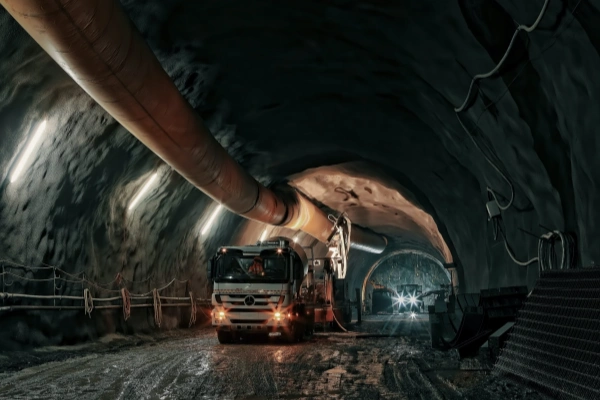
Bergbau und Untertageverfüllung
- Typische Anwendungen: Schachtverfüllung, Stabilisierung von Untertagehohlräumen.
- Kernanforderungen:
- Spezialbeton mit schnellabbindenden, hochfließfähigen und selbstverdichtenden Eigenschaften.
- Kontinuierliche, stabile Ausbringung für den Untertageeinsatz.
- Empfohlene Lösung:
- Spezielle Dosiersysteme: Präzise Integration von Beschleunigern und Fließmitteln zur Steuerung der Fließraten.
- Hochdurchsatzleistung: Kontinuierliche Dosierkonstruktionen, optimiert für nahtlose Betonpumpvorgänge.
Warum CCS Ihr vertrauenswürdiger Hersteller von Transportbetonanlagen ist
Als spezialisierter Hersteller von Betonmischanlagen mit über 32 Jahren globaler Erfahrung verkauft CCS nicht nur Stahl; wir liefern langfristige industrielle Rentabilität. Unser Engagement für fabrikdirekte Qualität macht uns zum bevorzugten Partner für Auftragnehmer in Philippinen, Indien, Saudi-Arabien, Australien und darüber hinaus.
Partner für einen “schlüsselfertigen” Erfolg:
- Fabrikdirekter Wert: Wir eliminieren den 20%-40% Aufschlag von Zwischenhändlern Betonmischanlagen-Lieferanten, und liefern hochwertige globale Komponenten (Siemens, Schneider) zu echten Fabrikpreisen.
- Globale technische Unterstützung: Wir bieten umfassende Projektunterstützung, von 3D-Layoutplanung und Fundamentzeichnungen bis hin zu fachkundiger Installationsüberwachung und 24/7-Fernsoftware-Diagnose.
- Optimierter ROI: Unsere Ingenieursphilosophie ist einfach: Bauen Sie Anlagen, die weniger Zement verschwenden, weniger Energie verbrauchen und weniger Wartung erfordern. Wir helfen Ihnen, vollständige Kapitalrückgewinnung innerhalb von 8 bis 12 Monaten.
Als Full-Service-Organisation geht unser Engagement für Ihren Erfolg weit über den Verkauf hinaus. Wir bieten ein End-to-End-Unterstützungssystem, das darauf ausgelegt ist, Ihre Kapitalrendite (ROI) zu maximieren.
Pre-Sales Engineering & Investitionsberatung
Fachgerechte Installation & Betriebsschulung
24/7 After-Sales-Support & Wartung
💡Experteneinblicke: Navigation durch die Transportbetonmischanlage
Was ist eine Transportbetonmischanlage?
Für Unternehmer und Auftragnehmer, die in den Schwerbaumaterialiensektor einsteigen, ist die grundlegendste Frage oft: Was ist die Technologie einer Transportbetonmischanlage und wie unterscheidet sie sich vom traditionellen Mischen vor Ort?
Eine Transportbetonmischanlage (weit verbreitet als RMC-Anlage abgekürzt) ist eine zentrale, hochautomatisierte Industrieanlage. Sie ist darauf ausgelegt, Rohstoffe wie Gesteinskörnungen, Zement, Wasser und chemische Zusatzmittel präzise zu wiegen und zu einer homogenen Betonmischung zu kombinieren. Nach dem Mischen wird dieses kommerzielle Produkt in Fahrmischer entladen und “just-in-time” zu verschiedenen Baustellen geliefert.
Der entscheidende Vorteil einer automatisierten Transportbetonmischanlage ist ihre unnachgiebige Qualitätskontrolle. Während manuelles Mischen anfällig für menschliche Fehler ist, stellt eine professionelle Anlage sicher, dass jeder Kubikmeter die strengen, hochfesten Standards erfüllt, die von modernen Infrastrukturprojekten gefordert werden. Darüber hinaus ermöglicht die Investition in solche Anlagen den Lieferanten, Hunderte von kundenspezifischen Mischungsdesigns zu verwalten und gleichzeitig mehrere unabhängige Auftragnehmer mit absoluter Konsistenz zu bedienen.
Kernmaschinen und -ausrüstung einer RMC-Anlage
Die langfristige Rentabilität eines kommerziellen Betongeschäfts hängt vollständig von der Haltbarkeit und Genauigkeit seiner Hardware ab. Eine leistungsstarke Anlage erfordert robuste Transportbetonmischanlagen-Maschinen die für kontinuierlichen Schwerlastbetrieb ohne ungeplante Ausfallzeiten ausgelegt sind.
Bei der Bewertung eines Systems müssen Investoren die spezifischen Komponenten einer Transportbetonmischanlage Konfigurationen verstehen, die die Effizienz steigern:
- Die Zentrale Mischeinheit: Dies ist das Herzstück des Betriebs. Die meisten kommerziellen Anlagen verwenden schwere Doppelwellen-Zwangsmischer, die die für schnelles, homogenes Mischen erforderliche hohe Scherkraft liefern. Für spezielle Fertigteil-Anwendungen, die Null-Slump-Beton erfordern, werden oft Planetenmischer eingesetzt.
- Gesteinskörnungs-Dosiersysteme: Großvolumige Betriebe erfordern Mehrkammer-Zuschlagstoffbehälter (typischerweise 3 bis 6 Kammern). Diese Einheiten verwenden industrielle Pneumatikzylinder und Präzisions-Wägezellen, um Sand und Schotter schnell zu messen.
- Pulver- und Flüssigkeitswaagen: Über dem Mischer angebrachte, unabhängige Behälter für Zement, Flugasche, Wasser und flüssige Zusatzmittel gewährleisten chirurgische Präzision. Hochwertige Transportbetonmischanlagen-Ausrüstung verfügt über eine automatische Differenzkompensation, um strenge ±1%-Toleranzen einzuhalten.
- Automatisierte Steuerungssysteme: Moderne Anlagen werden von einer intelligenten SPS-Schnittstelle (Speicherprogrammierbare Steuerung) gesteuert. Diese in einer klimatisierten Kabine untergebrachte Software protokolliert den täglichen Materialverbrauch, verhindert Bedienerfehler und ermöglicht es einem einzelnen Techniker, den gesamten Produktionszyklus reibungslos zu überwachen.
Warum “Transportbeton”?
Transportbeton bezieht sich auf frisch gemischten Beton, der zentral dosiert und als kommerzielles Produkt verkauft wird. Im Vergleich zum Mischen vor Ort bietet er eine stabilere Qualität. Er wird “Transportbeton” genannt, weil er nicht direkt am Produktionsort verwendet, sondern mit Betonmischern zur Baustelle transportiert wird.
Wie funktioniert eine Transportbetonmischanlage? (Arbeitsprinzip)
Der Betrieb einer Transportbetonmischanlage ist ein hochgradig synchronisierter Prozess, der von einem automatisierten SPS-Steuerungssystem gesteuert wird. Der gesamte Arbeitsablauf kann in fünf präzise Schritte unterteilt werden: von der Rohmateriallagerung bis zum Austrag des Frischbetons.
Schritt 1: Materiallagerung & Beschickung
Verschiedene Arten von Gesteinskörnungen (Sand, Kies) werden mit einem Radlader in separate Kammern des Gesteinskörnungs-Dosierers geladen. Gleichzeitig werden Schüttzement und Flugasche in versiegelten Silos gelagert, während Wasser und flüssige Zusatzmittel in dafür vorgesehenen Tanks aufbewahrt werden.
Schritt 2: Präzises Wiegen & Dosieren
Sobald der Bediener das erforderliche Betonrezept in das Bedienfeld eingibt, beginnt der automatisierte Wiegeprozess:
- Gesteinskörnungen: Werden über pneumatische Klappen ausgetragen und auf einem mit Wägezellen versehenen Förderband oder Behälter präzise gewogen.
- Pulver (Zement/Flugasche): Werden über Schneckenförderer in unabhängige Waagen über dem Mischer befördert.
- Wasser & Zusatzmittel: In einzelne Flüssigkeitswaagen gepumpt. Für bessere Homogenität mischen unsere Anlagen oft Zusatzmittel mit Wasser vor (Sekundärauflösung), bevor sie in den Mischer gelangen.
Schritt 3: Transport zum Mischer
Sobald alle Materialien ihre exakten Zielgewichte erreicht haben, werden sie zur zentralen Mischeinheit befördert. Gesteinskörnungen gelangen über ein schräges Förderband (oder einen Kübelaufzug) nach oben, während Pulver und Flüssigkeiten direkt aus ihren Waagen mittels Schwerkraft und Druckpumpen fallen.
Schritt 4: Homogenes Mischen
Das Herzstück der Anlage, typischerweise ein Doppelwellen- oder Planetenmischer, vereint alle trockenen und nassen Zutaten. Die leistungsstarken Mischwerkzeuge des Mischers bewegen die Materialien für eine festgelegte Dauer intensiv und gewährleisten so eine vollständig homogene Mischung mit der gewünschten Festigkeit und Verarbeitbarkeit.
Schritt 5: Austrag & Transport
Nach Abschluss des Mischzyklus öffnet sich die Bodenentleerungsklappe des Mischers pneumatisch oder hydraulisch. Der Frischbeton fällt direkt in einen wartenden Fahrmischer oder einen Betonpumpentrichter, bereit zur Lieferung an die Baustelle.
Layout & Diagramm einer Transportbetonmischanlage
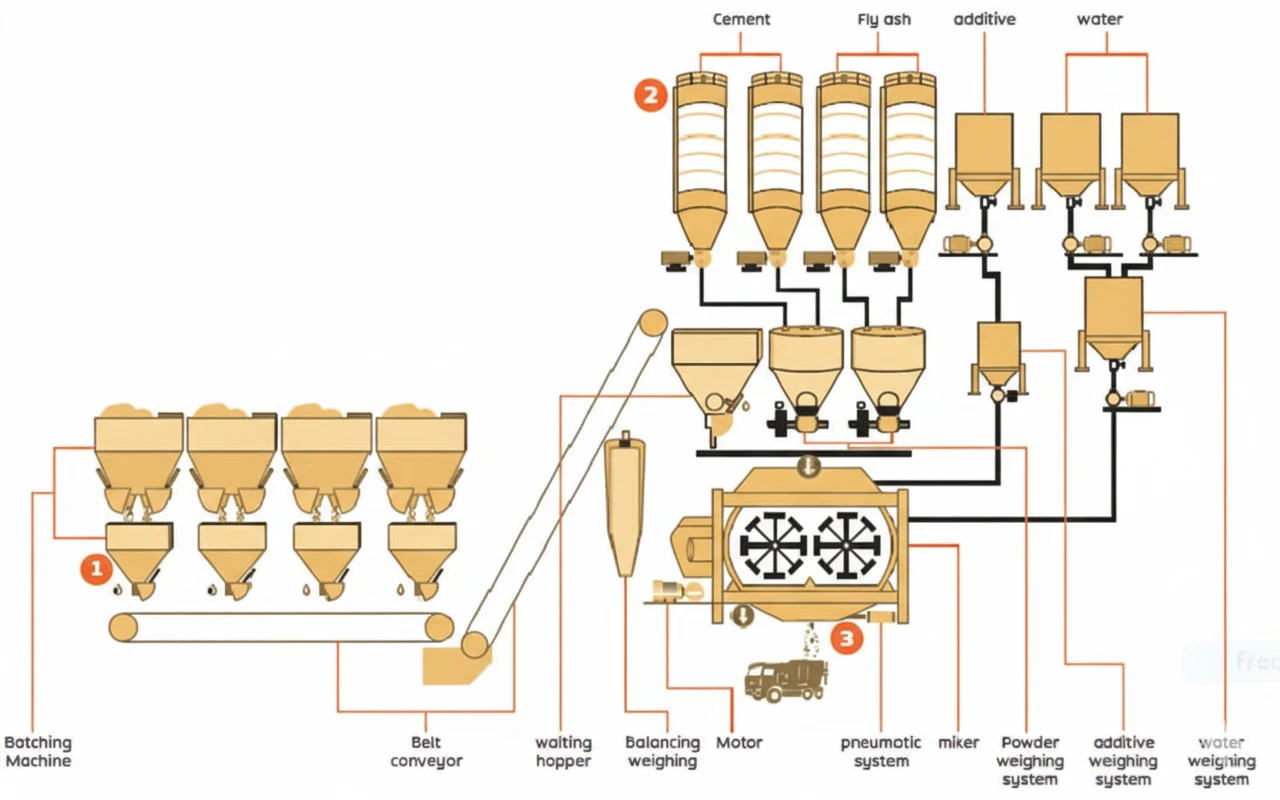
Die Planung eines effizienten Layouts einer Transportbetonmischanlage ist genauso entscheidend wie die Auswahl der Maschinen selbst. Ein schlecht geplanter Standort kann zu Verkehrsengpässen für Fahrmischer, langsamer Rohmaterialnachfüllung und letztendlich zu einer Verringerung Ihrer täglichen Betonproduktion führen.
Unabhängig davon, ob sich Ihre Anlage in einem überfüllten Stadtgebiet oder einem geräumigen Industriegebiet befindet, muss die räumliche Anordnung einen kontinuierlichen Materialfluss und eine sichere Fahrzeugbewegung priorisieren.
Kernzonen in einem Standard-Anlagendiagramm
Bei der Überprüfung eines Diagramms einer Transportbetonmischanlage, werden Sie normalerweise sehen, dass der Standort in vier verschiedene Betriebszonen unterteilt ist:
- Der Hauptmischturm: Im Zentrum des Betriebs gelegen, trägt diese Struktur die Wiegebehälter und den zentralen Mischer. Die Höhe des Austragstors ist entscheidend – sie muss ausreichend Platz (typischerweise 3,8 m bis 4,1 m) bieten, damit Fahrmischer problemlos darunter hindurchfahren können.
- Gesteinskörnungs-Lager- und Beschickungszone: Hinter oder neben dem Mischturm positioniert. Bei einem Bandförderer-Layout benötigt diese Zone eine längere Grundfläche (bis zu 40-50 Meter), um die 18-Grad-Neigung des Hauptbands zu ermöglichen.
- Zementsilo-Feld: Hohe, zylindrische Lagersilos werden gruppiert. Ein gut gestaltetes Layout platziert sie nahe am Mischturm, um die Förderschnecken kurz zu halten, was Verschleiß und Energieverbrauch reduziert.
- Verkehrs- und Logistikschleife: Der wichtigste Aspekt des Designs. Ein professionelles Anlagenlayout gewährleistet einen Einbahnstraßen-Kreisverkehr für Fahrmischer, der vollständig von den schweren Radladern getrennt ist, die die Gesteinskörnungsbehälter befüllen.
Die Wahl der richtigen Layoutform
Professionelle Hersteller bieten in der Regel hochgradig anpassbare Konfigurationen an, um die benötigte Fläche für eine RMC-Anlage zu maximieren:
- Lineares (In-Line) Layout: Die Gesteinsbehälter, das Förderband und der Mischturm sind in einer geraden Linie angeordnet. Dies ist der Industriestandard für Anlagen mit hoher Kapazität und bietet den unkompliziertesten Materialfluss.
- L-förmiges oder T-förmiges Layout: Wenn das Grundstück breit, aber nicht tief ist, kann das Gesteinsbeschickungssystem in einem 90-Grad-Winkel zum Mischturm positioniert werden. Diese modulare Flexibilität stellt sicher, dass die Anlage in unkonventionelle Grundstücksgrenzen passt, ohne die Produktionsgeschwindigkeit zu beeinträchtigen.
Wie wählen: Stationäre vs. mobile Transportbetonmischanlage?
Die Entscheidung zwischen einer stationären und einer mobilen Betonmischanlage ist eine der wichtigsten Wahlmöglichkeiten für jeden Bauunternehmer oder Transportbetonlieferanten. Beide Typen erfüllen die gleiche Hauptfunktion – die Herstellung von hochwertigem Beton –, sind jedoch für sehr unterschiedliche Betriebsmodelle ausgelegt. Um die richtige Entscheidung zu treffen, müssen Sie die Projektdauer, das Produktionsvolumen und die Häufigkeit der Standortwechsel bewerten.
Wichtige Unterschiede, die zu beachten sind
Projektdauer & Standortwechsel
Wählen Sie stationär, wenn: Ihr Projekt (wie ein großer Damm, ein Flughafen oder ein Fertigteilwerk) mehrere Jahre an einem einzigen Standort dauert oder wenn Sie ein gewerbliches Transportbetonunternehmen aufbauen. Stationäre Anlagen benötigen robuste Betonfundamente, was sie schwerer beweglich, aber für den Langzeiteinsatz extrem stabil macht.
Wählen Sie mobil, wenn: Sie an kurzfristigen Projekten (wie Straßenbau oder Windparks) arbeiten, bei denen die Anlage alle paar Monate umgesetzt werden muss. Mobile Anlagen sind auf einem Fahrgestell mit Rädern vorverdrahtet, was einen schnellen Aufbau und eine Installation ohne massive Tiefbauarbeiten ermöglicht.
Produktionskapazität
Vorteil stationär: Sie sind für hohe Ausstoßmengen ausgelegt. Unsere stationären Anlagen können Kapazitäten von bis zu erreichen 240 m³/h
. erreichen. Mit größeren Gesteinsbehältern, größeren Doppelwellenmischern und breiteren Förderbändern bewältigen sie eine kontinuierliche Schwerlastproduktion einwandfrei.
Einschränkung mobil: Aufgrund von Gewichts- und Größenbeschränkungen des Fahrgestells für den Straßentransport liegen mobile Anlagen in der Regel bei maximal etwa 120 m³/h
. Auch ihre Gesteinslagerkapazität ist typischerweise kleiner, was häufigere Nachfüllungen durch Radlader erfordert.
Anschaffungskosten vs. langfristiger ROI
Stationäre Anlagen: Die anfänglichen Einrichtungskosten sind aufgrund umfangreicher Fundamentarbeiten, Standortvorbereitung und längerer Installationszeiten höher. Bei langfristigen Projekten führen jedoch die geringeren Wartungskosten, die höhere Effizienz und die größere Haltbarkeit zu einer deutlich besseren Kapitalrendite (ROI) und niedrigeren Kosten pro Kubikmeter im Laufe der Zeit.
Mobile Anlagen: Bieten geringere anfängliche Installationskosten und sofortige Produktionsfähigkeit. Sie sind äußerst kosteneffizient für Auftragnehmer, die häufig Standorte wechseln müssen, und sparen erheblich bei Transport- und Wiederaufstellungskosten.
Unsere Empfehlung
Investieren Sie in eine stationäre Anlage, wenn Sie eine dauerhafte gewerbliche Transportbetonanlage, ein Fertigteilwerk bauen oder ein mehrjähriges Megaprojekt beliefern, bei dem maximale Kapazität und unerschütterliche Stabilität nicht verhandelbar sind.
Entscheiden Sie sich für eine mobile Anlage, wenn Agilität Ihre Priorität ist und Ihr Geschäftsmodell darauf beruht, von einer mittelgroßen Baustelle zur nächsten zu ziehen.
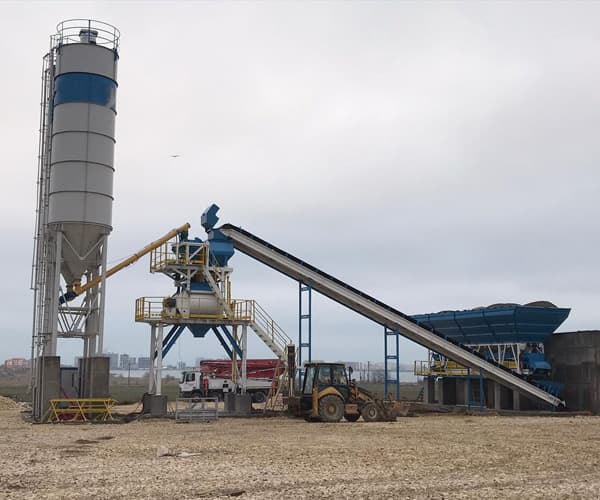
Transportbetonmischanlage vs. Baustellenmischung
Bei der Planung eines Bauprojekts hat die Entscheidung zwischen der Beschaffung von einer zentralen Anlage Fertigbetonwerk und der Abhängigkeit von traditioneller Baustellenmischung erhebliche Auswirkungen auf Ihr Budget, Ihren Zeitplan und die strukturelle Qualität. Nachfolgend finden Sie einen objektiven Vergleich, der Ihnen bei Ihrer Entscheidung helfen soll:
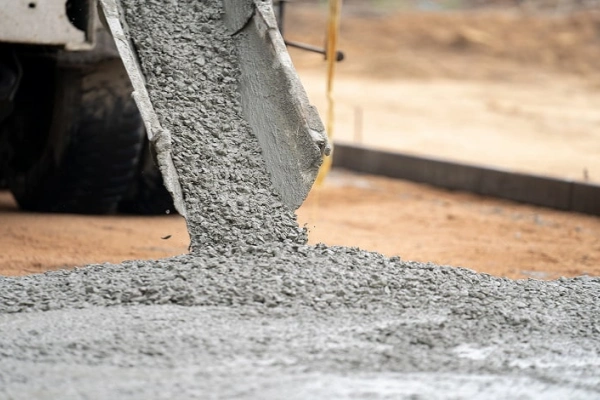
VS
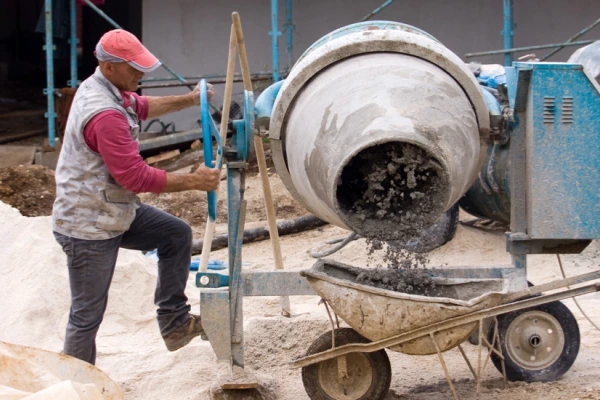
| RMC-Anlage | Typ | Baustellenmischung |
|---|---|---|
| Nutzt automatisierte Dosiersysteme und Präzisionswägezellen. Die Materialien werden in einer kontrollierten Umgebung gewogen, was die strikte Einhaltung der Mischungsrezepturen und eine gleichbleibende Qualität jeder Charge gewährleistet. | Qualitätskontrolle und Konsistenz | Stützt sich stark auf manuelle Beschickung und die Erfahrung des Bedieners. Feuchtigkeitsgehalte und Materialverhältnisse sind schwerer zu kontrollieren, was zu einem höheren Risiko von Festigkeitsschwankungen und Nacharbeit führt. |
| Ausgelegt für kontinuierliche Produktion mit hohem Volumen. Sobald die Logistikkette etabliert ist, kann sie Hunderte von Kubikmetern pro Tag liefern und hält große Projekte strikt im Zeitplan. | Produktionsvolumen und Durchlaufzeit | Die Leistung ist durch die geringe Kapazität der Trommelmischer begrenzt. Sie eignet sich für schnelle Einrichtungen, hat aber Schwierigkeiten, die Anforderungen kontinuierlicher, großvolumiger Betonierarbeiten zu erfüllen. |
| Die zentrale Produktion reduziert den Personalbedarf vor Ort und macht die Anmietung mehrerer kleiner Mischer überflüssig. Optimierte Dosieralgorithmen minimieren zudem Rohmaterialreste und Entsorgungskosten. | Kosteneffizienz und Materialabfall | Erfordert eine größere manuelle Belegschaft für die Handhabung von Zementsäcken und Gesteinskörnungen. Unbenutzte oder falsch gemischte Materialien führen oft zu höheren Abfallraten auf der Baustelle. |
| Erfordert sorgfältige Koordination mit den Fahrmischern. Die Transportentfernung beeinflusst die Verarbeitbarkeit des Betons, weshalb es entscheidend ist, eine Transportbetonmischanlage in meiner Nähe zu finden, um die Transportzeiten zu verkürzen und die Betonleistung zu erhalten. | Logistik und Flexibilität | Bietet null Transportverzögerung und hohe Flexibilität für die Echtzeitanpassung kleiner Chargen. Sie bleibt eine praktische Wahl für abgelegene Standorte oder sehr geringe Bedarfsmengen. |
Für kleine, abgelegene oder sehr unregelmäßige Arbeiten ist die Baustellenmischung ausreichend. Für städtische Entwicklungen, kommerzielle Infrastruktur und Projekte, die standardisierte Qualität erfordern, bietet die Nutzung oder Investition in eine professionelle Anlage Fertigbetonwerk die notwendige Größenordnung und Zuverlässigkeit.
Starten Sie Ihr Betongeschäft: Wesentliche Schritte zum Erfolg
Die Investition in eine Transportbetonmischanlage ist sehr lohnend, aber die langfristige Rentabilität erfordert mehr als nur den Kauf von Ausrüstung. Für Unternehmer und Bauunternehmer, die in den Transportbetonmarkt einsteigen möchten, ist eine klare strategische Roadmap unerlässlich.
Schritt 1 Marktforschung und Geschäftsplanung
Bevor Sie Land oder Ausrüstung kaufen, bewerten Sie die lokale Betonnachfrage. Zielen Sie auf Wohnbauprojekte, gewerbliche Hochhäuser oder staatliche Infrastruktur ab? Entwickeln Sie einen soliden Geschäftsplan, der Ihre Zielkapazität, die Preise der Wettbewerber und die ROI-Prognosen umreißt, um die Finanzierung durch Banken oder Investoren zu sichern.
Schritt 2 Strategischer Standort und Genehmigungen
Wählen Sie einen Standort, der die Logistikkosten minimiert. Er sollte in der Nähe von Rohstofflieferanten (Steinbrüche, Zementwerke) und innerhalb eines Radius von 15-20 km zu Ihren Zielbauzentren liegen. Stellen Sie sicher, dass der Standort über ausreichende Strom- und Wasserversorgung verfügt und die örtlichen Bau- und Umweltvorschriften einhält, bevor Sie Herstellungsgenehmigungen beantragen.
Schritt 3 Investition in die richtige Ausrüstung
Hier werden wir zu Ihrem stärksten Partner. Ihre Anlage ist das Herz Ihres Geschäfts. Für kleine bis mittlere gewerbliche Betriebe bietet eine HZS60 oder HZS90 das perfekte Gleichgewicht zwischen Kosten und Ausstoß. Für die großvolumige Versorgung mehrerer Projekte stellt die Investition in schwere Modelle wie die HZS120 oder HZS180 mit vollautomatischen SPS-Steuerungen sicher, dass Sie hohe Anforderungen ohne Ausfallzeiten erfüllen können.
Schritt 4 Aufbau einer zuverlässigen Lieferkette und Logistikflotte
Eine erfolgreiche Anlage benötigt einen stetigen Fluss von hochwertigem Zement, Sand und Gesteinskörnungen. Arbeiten Sie mit zuverlässigen lokalen Lieferanten zusammen, um Produktionsverzögerungen zu vermeiden. Bauen Sie schließlich ein effizientes Vertriebsnetz auf – sei es durch die Investition in eine eigene Flotte von Fahrmischern oder die Partnerschaft mit vertrauenswürdigen Logistikunternehmen – um sicherzustellen, dass Ihr Frischbeton pünktlich bei den Kunden ankommt.
Überlegungen zur Errichtung einer Transportbetonmischanlage
Lizenzen und Genehmigungen
Stellen Sie sicher, dass Sie die erforderliche Gewerbelizenz und andere notwendige Genehmigungen besitzen. Die Anforderungen können je nach Region variieren, einschließlich Umweltschutz, Qualitätskontrolle und mehr. Es ist entscheidend, die notwendigen Genehmigungen basierend auf den lokalen Richtlinien zu beantragen.
Umweltauflagen
Der Betrieb einer Transportbetonmischanlage kann Lärm, Staub und Abwasser erzeugen, die den lokalen Umweltvorschriften entsprechen müssen.
Sicherheitsproduktionsmanagement
Betonmischanlagen müssen die nationalen und lokalen Gesetze und Vorschriften zur Sicherheitsproduktion einhalten, die Geräteinstallation, Bedienerschulung und Notfallvorsorge abdecken.
Produktqualitätskontrolle
Betonprodukte müssen nationale und lokale Baustoffstandards erfüllen. Es ist wichtig, die relevanten Qualitätskontrollstandards zu verstehen und einzuhalten.
Die Errichtung einer Transportbetonmischanlage ist ein komplexer Prozess. Um Kunden den Aufwand zu minimieren, bieten wir Unterstützung wie Politikauslegung, Sicherheitsproduktionslösungen, Qualitätskontrollhilfe und die Erstellung von Projektantragsunterlagen, um einen reibungslosen und schnellen Start Ihres Projekts zu gewährleisten.
Wesentliche Zusatzausrüstung für Ihr Transportbetongeschäft
Eine Transportbetonmischanlage ist das Herzstück Ihres Betriebs, aber um Ihren Endkunden einen vollständigen und wettbewerbsfähigen Service zu bieten, benötigen Sie die richtige Zusatzausrüstung. Das Anbieten von Liefer- und Pumpdiensten löst nicht nur die logistischen Probleme Ihrer Kunden, sondern erhöht auch Ihre Gewinnspannen erheblich.
Je nach Ihrem Geschäftsmodell sollten Sie die folgende Ausrüstung zu Ihrer Flotte hinzufügen:
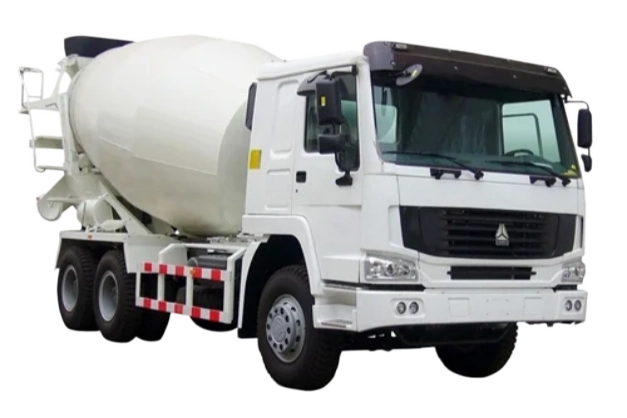
Fahrmischer
Die Lebensader von Transportbeton: Sie können keinen Transportbeton verkaufen, ohne ihn transportieren zu können. Fahrmischer halten den Beton während der Lieferung in Bewegung, um ein vorzeitiges Erstarren zu verhindern.
Empfehlung: Die Größe und Anzahl der benötigten Fahrzeuge hängt direkt von der stündlichen Kapazität Ihrer Anlage und der durchschnittlichen Entfernung zu den Baustellen ab.
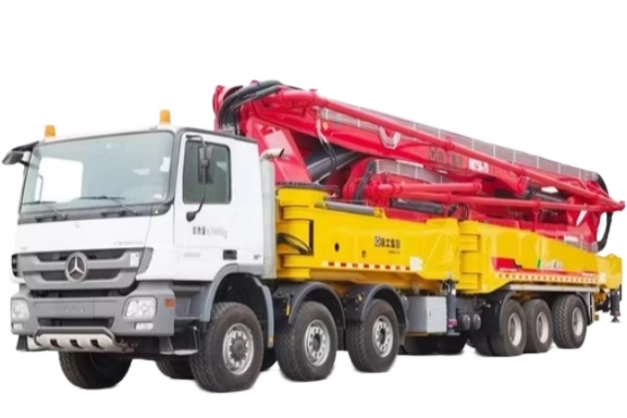
LKW-Aufbau-Betonpumpen
Premium-Service-Angebot: Viele Kunden, die Beton für Hochhäuser oder große Infrastrukturprojekte bestellen, haben keine Möglichkeit, diesen zu verbringen. Indem Sie neben Ihrem Betonverkauf auch einen Pumpenservice anbieten, werden Sie zu einem attraktiven “One-Stop-Shop”.”
Empfehlung: Ideal für Projekte, die eine schnelle, flexible und hochgelegene Betonplatzierung erfordern.
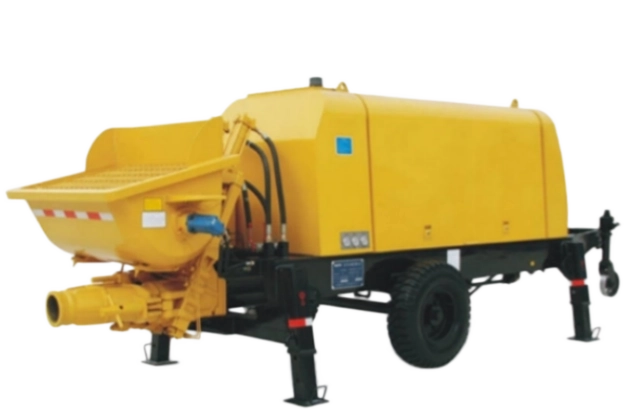
Beton-Anhängerpumpen
Kostengünstige Langzeitlösung: Im Gegensatz zu LKW-Aufbau-Betonpumpen sind Anhängerpumpen stationäre Einheiten, die in der Nähe der Baustelle platziert werden. Fahrmischer entladen direkt in den Trichter der Pumpe, die den Beton dann durch Rohrleitungen auf extreme Höhen oder über weite Entfernungen drückt.
Empfehlung: Eine sehr wirtschaftliche Wahl für langfristige, ortsfeste Projekte wie Hochhäuser.
💡Profitipp zur Gewinnmaximierung
In der Transportbetonbranche erzielen Lieferanten, die sowohl den Beton als auch die Platzierungsausrüstung (Fahrzeuge und Pumpen) bereitstellen, höhere Marktanteile. Sie können diese Dienstleistungen leicht bündeln und die Ausrüstungskosten in Ihren Endpreis pro Kubikmeter einfließen lassen, was eine schnelle Rendite Ihrer Investition gewährleistet.
Best Practices für Betrieb und Wartung einer Transportbetonmischanlage
Die Sicherung einer hochwertigen Anlage Fertigbetonwerk ist nur der erste Schritt. Die richtige Standortinstallation, disziplinierter täglicher Betrieb und strenge vorbeugende Wartung sind die wahren Schlüssel zur Gewährleistung einer gleichbleibenden Betonqualität, Minimierung von Ausfallzeiten und Maximierung der Lebensdauer Ihrer Ausrüstung.
Die Befolgung dieser professionellen Richtlinien wird Ihnen helfen, eine optimale Betriebseffizienz zu erreichen:
Phase 1 Standortvorbereitung und sichere Installation
Eine hochproduktive Anlage beruht auf einwandfreier anfänglicher Tiefbau- und Logistikplanung.
- Fundamentstärke: Stellen Sie sicher, dass der Boden vermessen und verdichtet wurde, um eine ausreichende Tragfähigkeit zu bieten, insbesondere für die hohen Zementsilos und das schwere Mischfahrgestell.
- Logistikfluss: Weisen Sie ausreichend Platz für Rohmateriallager zu und entwerfen Sie einen Einbahnstraßen-Kreisverkehrspfad für die Fahrmischer. Dies verhindert Staus und gewährleistet einen schnellen, unterbrechungsfreien Beladevorgang.
- Versorgungsinfrastruktur: Richten Sie vor Beginn der mechanischen Montage industrielle Stromanschlüsse, eine Wasserversorgung mit hohem Durchsatz und ordnungsgemäße Abwasserentsorgungssysteme ein, um Betriebsverzögerungen zu vermeiden.
Phase 2 Tägliche operative Exzellenz
Eine gleichbleibende Leistung erfordert qualifiziertes Personal und die strikte Einhaltung automatisierter Protokolle.
- Systemnutzung: Schulen Sie Ihre Bediener gründlich in der automatisierten PLC-Software. Sie müssen verstehen, wie man verschiedene Mischrezepte verwaltet, die dynamische Feuchtigkeitskompensation nutzt und nur in Notfällen auf manuelle Übersteuerung umschaltet.
- Kalibrierung & Genauigkeit: Kalibrieren Sie regelmäßig die hochpräzisen Wägezellen an den Waagen für Zuschlagstoffe, Zement und Wasser, um eine strenge Dosiergenauigkeit zu gewährleisten und teuren Materialabfall zu vermeiden.
- Dispatch-Synchronisation: Halten Sie eine klare Kommunikation zwischen dem Kontrollraum und der LKW-Flotte aufrecht, um die Lieferpläne zu optimieren und sicherzustellen, dass frischer Beton genau dann auf der Baustelle ankommt, wenn er benötigt wird.
Phase 3 Vorbeugende Wartung und Fehlerbehebung
Im kommerziellen Betongeschäft können unerwartete Ausfälle Ihre Gewinnmargen zerstören.
- Tägliche Reinigungsroutinen: Implementieren Sie ein strenges Reinigungsprotokoll für das Innere des Zwangsmischers und die Austragsklappen am Schichtende, um zu verhindern, dass Betonablagerungen die Mischarme beschädigen.
- Schmierungsmanagement: Überprüfen Sie routinemäßig die zentrale Schmierstoffpumpe. Die Sicherstellung eines konstanten Fettflusses zu den Wellendichtungen des Mischers ist entscheidend, um zu verhindern, dass abrasive Zementschlämme die Hauptlager zerstört.
- Vorausschauender Austausch: Verfolgen Sie die Betriebsstunden von hochreibungsbelasteten Komponenten wie Mischschaufeln, Innenpanzerungen und Förderbändern. Tauschen Sie diese Verschleißteile während geplanter Wartungsfenster aus, anstatt auf einen katastrophalen Ausfall mitten in der Produktion zu warten.
🤝Keine Sorge, wir sind hier, um zu helfen
Die Einrichtung und Wartung einer Transportbetonanlage mag entmutigend erscheinen, aber Sie sind nie allein. Wir liefern umfassende Fundamentpläne, entsenden erfahrene Ingenieure für die Installation vor Ort und bieten lebenslangen technischen Support. Wir schulen Ihre lokalen Bediener, bis sie sich bei Betrieb und Wartung der Anlage vollkommen sicher fühlen.
Wie man einen zuverlässigen Hersteller von Transportbetonanlagen auswählt?
Die Investition in eine Transportbetonanlage ist eine große finanzielle Entscheidung. Die Partnerschaft mit dem richtigen Hersteller stellt sicher, dass Sie zuverlässige Ausrüstung, robusten technischen Support und langfristigen Wert erhalten. Verwenden Sie bei der Bewertung potenzieller Lieferanten diese fünf Schlüsselkriterien, um einen Branchenführer zu identifizieren:
(1) Nachgewiesene Branchenerfahrung
Worauf Sie achten sollten: Achten Sie auf Hersteller mit jahrzehntelanger spezialisierter Erfahrung. Eine lange Erfolgsbilanz beweist ihre Fachkompetenz in den Bereichen Design, Produktion und Lösung realer technischer Herausforderungen.
Unser Vorteil: Mit über 32 Jahren engagierter Fertigungsexzellenz, wir haben tiefe Wurzeln in der Betontechnik und stellen sicher, dass jede von uns gebaute Anlage kampferprobt und verfeinert ist.
(2) Globale Präsenz & Erfolgreiche Fallstudien
Worauf Sie achten sollten: Ein seriöser Lieferant sollte eine starke globale Präsenz mit erfolgreichen Installationen in verschiedenen Klimazonen und regulatorischen Umgebungen haben. Fragen Sie nach Projektreferenzen.
Unser Vorteil: Unsere Transportbetonanlagen treiben kritische Infrastrukturprojekte in anspruchsvollen Märkten weltweit an, von Australien und Südkorea bis nach Südostasien, dem Nahen Osten und Afrika.
(3) Anpassung & Produktpalette
Worauf Sie achten sollten: Vermeiden Sie “Einheitsgröße”-Ansätze. Ein professioneller Hersteller bietet Flexibilität, von kompakten mobilen Einheiten bis hin zu massiven Transportbetonanlagen, und passt die Konfigurationen genau an Ihr Baustellenlayout und Ihre Mischungsanforderungen an.
Unser Vorteil: Wir bieten ein umfassendes Portfolio (Stationär, Mobil, Trockenmischung) und sind spezialisiert auf Ultimatives modulares Design, das sicherstellt, dass Ihre Anlage perfekt auf Ihre betrieblichen Ziele abgestimmt ist.
(4) Umfassender Kundendienst nach dem Verkauf
Worauf Sie achten sollten: Eine Anlage ist nur so gut wie der Service dahinter. Stellen Sie sicher, dass der Hersteller schlüsselfertige Installation, Bedienerschulung, schnelle Ersatzteillieferung und robuste Garantiebedingungen bietet.
Unser Vorteil: Wir sind eine Full-Service-Organisation. Von der ROI-Prognose bis hin zur 24/7-Fernunterstützung und dem Einsatz von Ingenieuren für die Montage vor Ort – unser Support schläft nie.
(5) Fabriktransparenz & Zertifizierte Qualitätsstandards
Worauf Sie achten sollten: Glaubwürdige Hersteller halten sich an strenge internationale Fertigungsstandards und begrüßen Werksinspektionen. Verifizierte Zertifizierungen sind ein unverhandelbarer Beweis für Qualität, Sicherheit und Umweltkonformität.
Unser Vorteil: Unser Engagement für Exzellenz wird durch weltweit anerkannte Zertifizierungen untermauert, darunter CE, ISO, SGS und BV. Wir verwenden in jeder von uns gebauten Anlage hochfesten Baustahl und erstklassige globale Komponenten. Wir laden Sie ein, unsere Fertigungsanlagen zu besichtigen oder eine Live-Videotour anzufordern, um unsere strengen Qualitätskontrollprozesse aus erster Hand zu erleben.
Kauf einer neuen vs. gebrauchten Transportbetonanlage
Bei der Analyse der Gesamtkosten einer RMC-Anlage sind viele Investoren vom niedrigen Kaufpreis gebrauchter Maschinen verlockt. Während eine gebrauchte Transportbetonanlage zum Verkauf wie ein Schnäppchen erscheinen mag, ist sie oft eine hochriskante Verbindlichkeit.
Warum neue Systeme gebrauchte Maschinen übertreffen?
- Technische Zuverlässigkeit & Garantie: Eine gebrauchte Anlage wird “wie gesehen” ohne Schutz geliefert. Eine Investition in eine neue Anlage ist durch eine vollständige Herstellergarantie abgesichert, die sicherstellt, dass Ihr Produktionszentrum 24/7 betriebsbereit bleibt.
- Präzision und Materialeinsparungen: Ältere Betonmischanlagen leiden unter mechanischem Verschleiß, der die Wägegenauigkeit zerstört (oft über ±5% Fehler). Unsere neuen automatisierten Systeme garantieren ±1% Dosiergenauigkeit, wobei sich die Ausrüstung allein durch Materialeinsparungen bezahlt macht.
- Einhaltung gesetzlicher Vorschriften: Gebrauchte Anlagen haben oft Schwierigkeiten, die modernen Emissions- und Lärmvorschriften von 2026 zu erfüllen, was das Risiko hoher Geldstrafen oder Betriebsschließungen birgt. Unsere neuen Einheiten sind nach den neuesten globalen Umweltstandards gebaut.
FAQ
Wir bieten professionelle Installations- und Inbetriebnahmedienste an, um die korrekte Einrichtung und den Betrieb Ihrer Betonmischanlage sicherzustellen. Und wir bieten Schulungen und Support für technisches Personal, um sicherzustellen, dass Ihr Team ausreichend im Betrieb und der Wartung der Betonmischanlage geschult wird.
Die Installationszeit variiert je nach Anlagengröße und örtlichen Gegebenheiten. Im Allgemeinen dauern die mechanische Montage und die elektrische Verkabelung, sobald das Betonfundament vollständig ausgehärtet ist, etwa 7 bis 15 Tage. Darauf folgt eine 3- bis 7-tägige Inbetriebnahmephase , um die Wiegesysteme zu kalibrieren und die PLC-Automation unter Last zu testen. Wir entsenden erfahrene Ingenieure zu Ihrem Standort, um den gesamten Prozess zu begleiten und einen schnellen, sicheren Start zu gewährleisten.
Wir bieten eine branchenführende Garantie für unsere Produkte, die sicherstellt, dass Sie von keinen Material- oder Verarbeitungsfehlern betroffen sind. Wir sind Qualität und Zuverlässigkeit verpflichtet, und Ihre Investition ist garantiert. Erfahren Sie mehr über unsere Garantiedeckung online oder kontaktieren Sie einen Vertreter für weitere Details.
Mit robusten Schwerstahlkonstruktionen, hochwertigen globalen Komponenten und speziellen verschleißfesten Mischschaufeln sind unsere Transportbetonanlagen auf langfristige Haltbarkeit ausgelegt. Bei ordnungsgemäßer täglicher Wartung und rechtzeitigem Austausch von Standardverschleißteilen arbeiten unsere Anlagen zuverlässig für 10 bis 15 Jahre oder länger, selbst unter kontinuierlicher Hochleistungsproduktion in rauen Umgebungen.
Die Betonqualität hängt vollständig von der präzisen Rohstoffdosierung und dem gleichmäßigen Mischen ab. Unsere Anlagen erreichen dies durch zwei Kerntechnologien:
Erstens, Hochpräzises Wiegen: Wir verwenden unabhängige Wiegebehälter, die mit weltklasse S-Typ-Wägezellen. ausgestattet sind. Dies isoliert die Waagen von den Mischervibrationen und stellt sicher, dass die Messungen von Gesteinskörnung, Zement und Wasser auf ±1% genau sind.
Zweitens, Fortschrittliche PLC-Automation: Das intelligente Steuerungssystem überwacht die Feuchtigkeitsgehalte im Sand und passt das Wasser-Zement-Verhältnis in Echtzeit automatisch an. In Kombination mit unseren hochbelastbaren Doppelwellen- oder Planetenmischern, garantiert die Anlage eine perfekt homogene und hochfeste Mischung bei jeder einzelnen Charge und eliminiert so vollständig menschliche Fehler.
Ja, absolut. Unsere Anlagen sind äußerst vielseitig. Durch den Einsatz von leistungsstarken Doppelwellen- oder Planetenmischern können unsere Anlagen handelsüblichen Normalbeton, hochfesten Beton (C50+), erdfeuchten Trockenbeton und RCC (Walzbeton). herstellen. Darüber hinaus ermöglicht das PLC-Steuerungssystem das Speichern und sofortige Umschalten zwischen Hunderten verschiedener Mischrezepte, um spezifische Projektanforderungen zu erfüllen.
Wir verstehen, dass Ausfallzeiten Umsatzverluste bedeuten. Wir bieten rund um die Uhr technischen Fernsupport zur schnellen Diagnose von PLC- oder Softwareproblemen. Für die mechanische Wartung liefern wir mit Ihrer Erstlieferung ein umfassendes Paket kritischer Verschleißteile. Sollten Sie zusätzliche Teile benötigen, stellt unser globales Logistiknetzwerk eine schnelle Lieferung von Originalkomponenten direkt an Ihren Standort sicher.
Wenn Ihr Standort über eine stabile und ausreichende öffentliche Stromversorgung verfügt, ist ein Generator nicht zwingend erforderlich. Wenn Sie jedoch in einem abgelegenen Gebiet mit unzuverlässigem Netzstrom oder häufigen Ausfällen arbeiten, empfehlen wir dringend die Investition in einen Diesel-Notstromgenerator. Dies gewährleistet eine unterbrechungsfreie Produktion und verhindert, dass Frischbeton bei einem unerwarteten Stromausfall im Mischer aushärtet. Wir beraten Sie gerne über die genaue KVA-Leistung, die für Ihr spezifisches Anlagenmodell erforderlich ist.
Ja, absolut. Unsere Transportbetonanlagen verfügen über eine Ultimatives modulares Design, das außergewöhnliche Flexibilität für zukünftiges Geschäftswachstum bietet.
Wenn Ihre Produktionsanforderungen steigen, müssen Sie keine komplett neue Anlage kaufen. Sie können Ihren Betrieb problemlos erweitern, indem Sie zusätzliche Zementsilos zur Erhöhung der Lagerkapazität hinzufügen, zusätzliche Gesteinskörnungsbehälter-Kammern für komplexere Mischungsdesigns oder die Aufrüstung auf einen leistungsstärkeren Doppelwellenmischer. Unsere Steuerungssoftware ist ebenfalls vollständig skalierbar und ermöglicht die nahtlose Integration neuer Komponenten (wie Eis- oder Mikrosilika-Dosiersysteme), ohne Ihren bestehenden Arbeitsablauf zu unterbrechen.
Verwandte Produkte
Stationäre Betonmischanlage
Kapazität: 25 – 240 m³/h (Modelle: HZS-Serie)
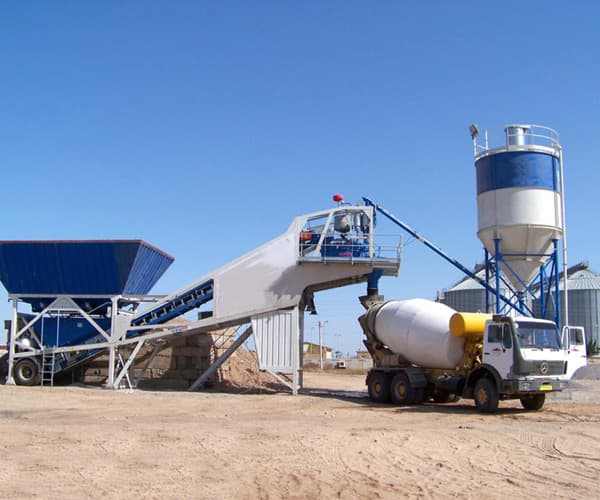
Mobile Betonmischanlage
Kapazität: 25 – 90 m³/h (Modelle: YHZS-Serie)
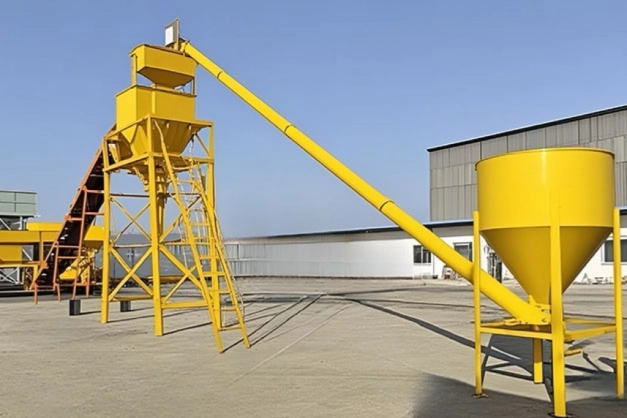
Trockenmörtel-Betonmischanlage
Kapazität: 25 – 100 m³/h (Modelle: HZS-G-Serie)
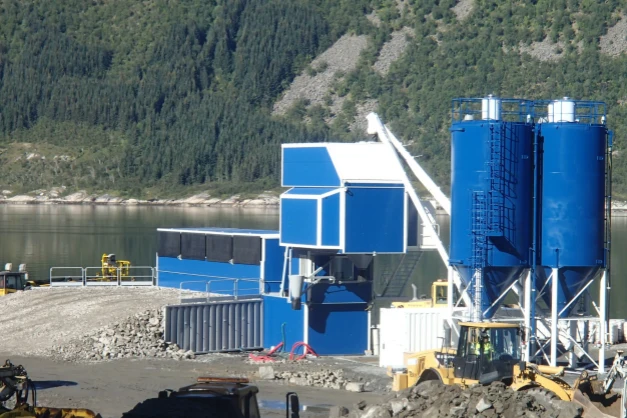
Kompakte Betonmischanlage
Kapazität: 60 – 180 m³/h (Modelle: HZS-C-Serie) 25 – 75 m³/h (Modelle: FHZS-Serie)
Stationäre Betonmischanlage
Kapazität: 25 – 240 m³/h (Modelle: HZS-Serie)
Mobile Betonmischanlage
Kapazität: 25 – 90 m³/h (Modelle: YHZS-Serie)
Trockenmörtel-Betonmischanlage
Kapazität: 25 – 100 m³/h (Modelle: HZS-G-Serie)
Kompakte Betonmischanlage
Kapazität: 60 – 180 m³/h (Modelle: HZS-C-Serie) 25 – 75 m³/h (Modelle: FHZS-Serie)