ready mix concrete plant cost Analysis: Small, Medium, and Mega Projects
If you are planning to enter the highly lucrative construction materials market, the first and most critical question on your mind is likely: “How much does it cost to start a ready mix concrete plant?“
While the initial price tag of the batching machinery is important, savvy investors understand that building a fully operational commercial facility requires a much broader financial perspective. Your total ready mix concrete plant cost encompasses everything from acquiring the land and pouring foundations to purchasing a fleet of delivery trucks and securing local environmental permits.
The Total Investment Breakdown
To give you a realistic expectation for your 2026 business plan, the total ready mix concrete plant cost generally falls into three operational tiers:
- Tier 1: Small Ready Mix Concrete Plant Cost ($100,000 – $250,000+ USD):
Perfect for regional markets, rural development, or budget-conscious entrepreneurs. This budget covers a compact plant (like an HZS50 or HZS60), basic site preparation, and a small fleet of 2 to 3 used or entry-level transit mixer trucks. - Tier 2: Standard Commercial Ready Mix Concrete Plant Cost ($300,000 – $800,000+ USD):
The “sweet spot” for most urban and high-demand areas. This investment includes a high-performance stationary plant (HZS90 or HZS120), extensive civil foundation work, larger cement storage silos, and a robust fleet of 5 to 10 new mixer trucks to ensure continuous, high-volume delivery. - Tier 3: Mega-Capacity Industrial Facilities ($1,000,000+ USD):
Designed for massive infrastructure hubs or dominating a major city’s concrete supply. This requires dual-mixer setups (like two HZS180 plants running in sync), massive land acquisition, fully enclosed eco-friendly structures, water recycling systems, and a massive logistics fleet.
Note: If you are strictly looking for the FOB catalog prices of the machinery itself, please refer to our detailed [Concrete Batching Plant Price Guide].
What is a ready mix concrete plant?
A ready mix concrete plant is a specialized industrial facility where concrete is manufactured under a computer-controlled, automated process. Unlike manual on-site mixing, an ready mix concrete plant accurately proportions aggregates, cement, water, and additives according to precise “recipes” before delivering the fresh mixture to job sites via transit mixers.
The Core Benefits for Your Investment:
Superior Quality & Consistency: Production in a controlled environment ensures the concrete meets strict compressive strength and durability standards required for modern high-speed rail, bridges, and high-rise buildings.
Drastic Waste Reduction: Automated dosing helps reduce cement consumption by 10-12% compared to traditional methods, directly lowering your daily material costs.
Environmental Compliance: Modern ready mix concrete plants utilize dust collection and noise suppression systems, making them far more eco-friendly and easier to permit in urban or sensitive areas.
The following are the specific parameters of our stationary concrete batching plant (skip hopper and belt conveyor), mobile concrete batching plant, dry mix concrete batching plant and compact concrete batching plant (Foundation-Free and Containerized). We have 6 types of concrete batching plants. If you are interested in our concrete mix plants, you can read ready mix concrete plant to find your desired product.
Mobile vs. Stationary Type: Under the same capacity, the price of batching plant mobile type is generally higher than stationary ones because their portability and flexibility enable easy relocation and adaptability to various project sites. The mobility comes with advanced engineering and features that facilitate quick setup and operation, which justifies the higher cost.
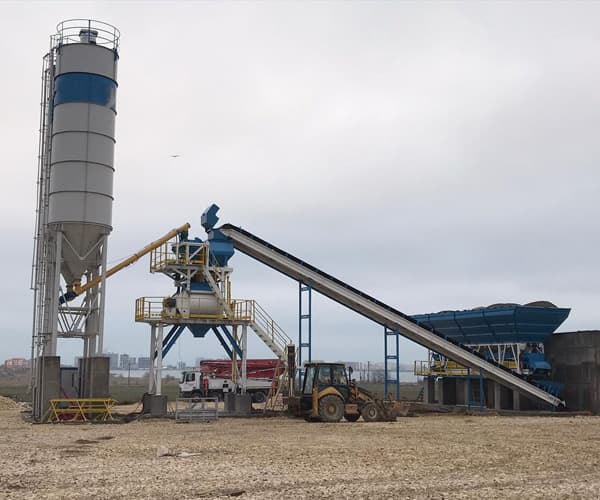
Stationary Concrete Batching Plant
The Backbone of Mega-Projects.
Capacity: 25 – 240 m³/h (Models: HZS Series)
Engineered for massive, long-term infrastructure and commercial ready-mix operations. Available in both space-saving Skip Hopper designs and high-capacity continuous Belt Conveyor configurations to perfectly match your site layout.
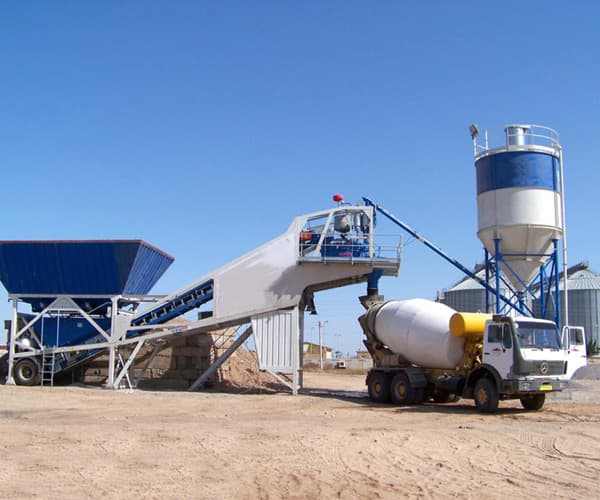
Mobile Concrete Batching Plant
High Production Rates, Anywhere You Need Them.
Capacity: 25 – 120 m³/h (Models: YHZS Series)
Designed for maximum mobility. All core components are pre-wired on a transportable chassis, allowing for rapid assembly and relocation with zero civil foundation work required.
Wet Mix vs. Dry Mix Type: The wet concrete mix plant price is higher due to the need for more complex equipment that facilitates the thorough mixing of water and additives directly into the concrete before it is dispatched. This process requires additional machinery, such as concrete mixers and water dosing systems, which contribute to the overall expense.
Dry mix plants, while generally less costly, may not offer the same level of consistency and control over the concrete mixing process. Thus, if you do not have demands for high-quality concrete, the dry mix plants would be a preferred choice.
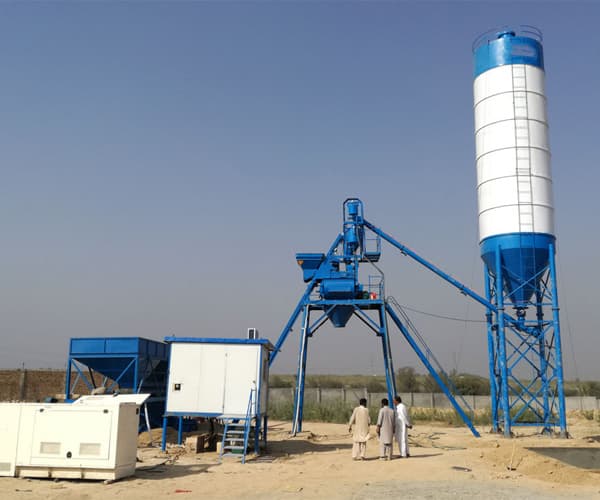
Wet Concrete Batching Plant
Perfect Homogeneity from Start to Finish.
Capacity: 25 – 240 m³/h (Models: HZS Series)
Equipped with heavy-duty twin-shaft or planetary central mixers. These plants guarantee perfectly mixed, high-strength concrete before discharge—essential for precast elements and strict-spec infrastructure.
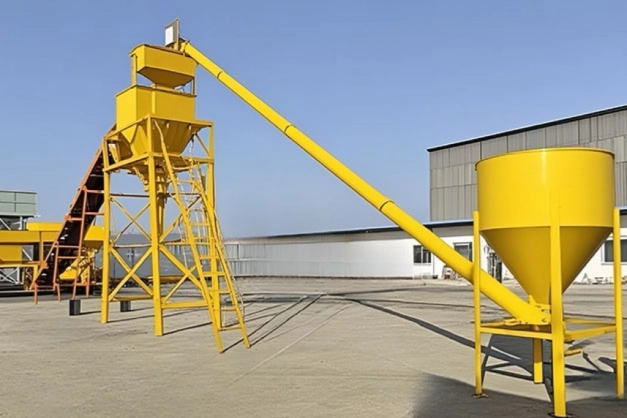
Dry Mix Concrete Batching Plant
Versatile, Fast, and Highly Cost-Effective.
Capacity: 25 – 100 m³/h (Models: HZS-G Series)
For projects where concrete is mixed in the transit truck. With no central mixer, these plants offer rapid batching cycles, extremely low maintenance, and high-volume output for long-distance transport.
Compact Type: The compact type concrete batching plants, present another cost-effective option for specific needs. They are designed to occupy minimal space while still providing efficient production capabilities. Their compact design reduces the need for extensive foundations and civil works, thereby lowering installation costs.
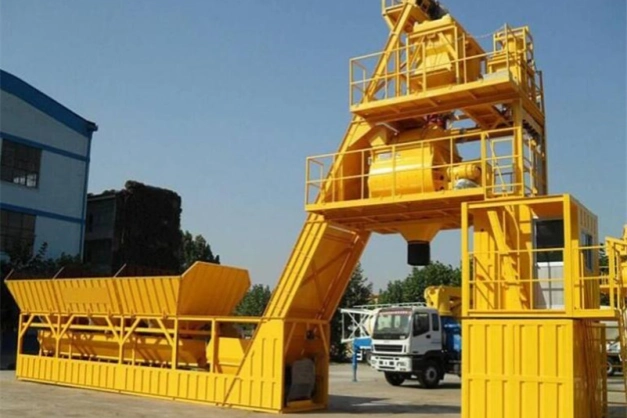
Foundation-Free Concrete Batching Plant
A Small Footprint Designed for Big Business.
Capacity: 25 – 75 m³/h (Models: FHZS Series)
Integrating containerized and foundation-free designs, our compact plants are optimized for limited spaces and cheap international shipping, while delivering state-of-the-art mixing performance.
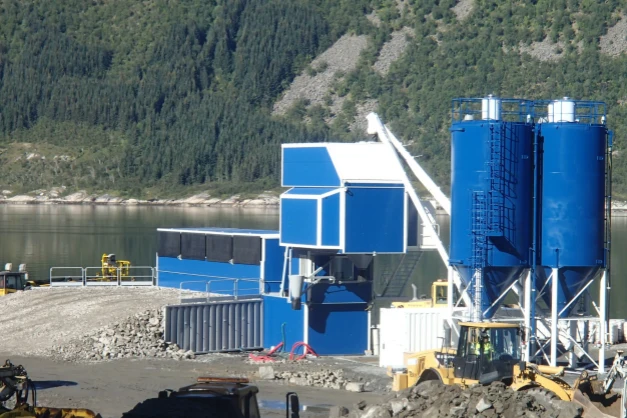
Containerized Concrete Batching Plant
A Small Footprint Designed for Big Business.
Capacity: 60 – 180 m³/h (Models: HZS-C Series)
Integrating containerized and foundation-free designs, our compact plants are optimized for limited spaces and cheap international shipping, while delivering state-of-the-art mixing performance.
Ready-Mix Delivery vs. Batch Plant Investment – Which is Right for You?
Before committing to the total ready mix concrete plant cost, every business owner must answer a fundamental question: “Should I continue buying concrete from a third party, or is it time to invest in my own batching plant?”
Understanding the financial and operational trade-offs will help you determine the best path for your growth.
Ready-Mix Delivery: The Third-Party Model
This is the standard choice for small contractors or short-term projects with low annual volume.
The Pros:
No massive upfront capital investment (CAPEX), no need for land or permits, and no responsibility for raw material sourcing.
The Cons:
High Unit Cost: You will pay a significant premium, often $120 – $200 per cubic meter/yard, which includes the supplier’s profit and delivery fees.
Scheduling Dependencies: You are at the mercy of the supplier’s schedule. Delivery delays can halt your entire job site, leading to expensive labor idle time.
Batch Plant Ownership: The Self-Production Model
For operations requiring consistent, high volumes of concrete—such as large infrastructure contractors or precast manufacturers—ownership is the key to substantial cost savings, better production control, and more stable concrete supply.
- The Financial Impact: Once operational, producing your own concrete can reduce your cost per cubic meter from $150 (buying) to as low as $70 – $90 (producing).
- The Operational Advantage: You gain 100% control over your production schedule and mix designs. No more waiting for trucks; you produce exactly what you need, exactly when you need it.
The “Golden Rule” for Investment: The Break-Even Point
When does it become cheaper to own a plant than to buy concrete?
While it varies by region, the industry benchmark is generally 25 to 30 cubic meters per day. If your projects consistently require more than this volume, the savings on material costs alone will likely cover your entire ready mix concrete plant cost within the first year.
Worried about operational complexity?
We specialize in making plant ownership easy. Our fully automated control systems and turnkey installation support mean you don’t need to be an engineering expert to run a highly profitable concrete business.
Breaking Down the ready mix concrete plant cost
To launch a highly profitable commercial concrete business, your initial Capital Expenditure (CAPEX) goes far beyond purchasing the central mixing unit. A realistic ready mix concrete plant cost must account for land acquisition, heavy civil engineering, a logistics fleet, and environmental compliance.
Here is a detailed breakdown of the five major expenses you must budget for:
The Core Equipment (30% – 40% of Total Cost)
The heart of your operation is the ready mix concrete plant. As a global manufacturer, we provide premium stationary and mobile batching plants tailored to your capacity needs (from 25m³/h up to 240m³/h).
- What this includes: The twin-shaft or planetary mixer, aggregate batching bins, cement silos, screw conveyors, and the fully automated PLC control cabin.
- Pro Tip: While buying a cheap plant saves money upfront, investing in a high-precision, CE/ISO-certified plant from our factory drastically reduces your long-term cement waste and maintenance downtime.
Land Acquisition & Area Required (15% – 25% of Total Cost)
The physical footprint of your facility is a major factor in your ready mix concrete plant cost.
- Area Required for ready mix concrete plant: A standard stationary commercial plant requires at least 1,500 to 3,000 square meters (0.4 to 0.7 acres). You need ample space not only for the plant itself but also for large aggregate stockpiles, cement silo foundations, and a wide turning radius for your transit mixer trucks and wheel loaders.
Civil Works & Foundation Erection (10% – 15% of Total Cost)
Stationary plants are incredibly heavy and vibrate constantly during operation. You cannot simply place them on dirt.
- The Investment: A significant portion of your installation cost goes into pouring massive, reinforced concrete foundations. This ensures the towering cement silos remain stable against high winds and the main mixer chassis does not crack under stress. We provide precise 3D blueprint designs to help your local contractors execute this efficiently.
The Auxiliary Fleet (25% – 35% of Total Cost)
You cannot run a commercial ready-mix business without a way to deliver the product. In many cases, the delivery fleet costs more than the batching plant itself!
What You Need:
- Transit Mixer Trucks: A minimum of 3 to 5 trucks (8m³ to 12m³ capacity) to keep your plant continuously producing.
- Wheel Loaders: At least one heavy-duty loader to continuously feed sand and gravel into the aggregate batching bins.
Environmental Compliance & Permits (5% – 10% of Total Cost)
Modern concrete production faces strict environmental regulations globally.
- The Investment: To secure your plant permit, you must often invest in active pulse-jet dust collectors for your silos, fully enclosed cladding for the main plant to reduce noise, and sometimes a concrete washout recycling system to prevent wastewater discharge. Our plants are designed with dust control, cleaner operation, and easier compliance in mind, helping you meet common environmental requirements from the beginning.
Daily Operating Expenses (OPEX) – What Does It Cost to Run a ready mix concrete plant?
Securing the capital for your initial ready mix concrete plant cost is only half the battle. Once your plant is operational, your profitability depends entirely on how efficiently you manage your daily Operating Expenses (OPEX).
To calculate your true cost of ready mix concrete per cubic meter/yard, you must track four major ongoing expenses:
Raw Materials (70% – 80% of Operating Costs)
The materials you feed into the mixer account for the vast majority of your daily spending.
- The Breakdown: Cement (the most expensive component), coarse aggregates (gravel/crushed stone), fine aggregates (sand), water, and chemical admixtures (plasticizers/accelerators) to achieve specific mix designs.
Pro Strategies to Control Material Costs:
- Alternative Binders: Actively explore using supplementary cementitious materials like fly ash or GGBS (slag). When mixed correctly using a high-shear twin-shaft mixer, these can significantly reduce your reliance on expensive pure cement without compromising concrete strength.
- Preventing Storage Loss: Protect your aggregates from rain and moisture to prevent unpredictable water-cement ratios. Investing in enclosed aggregate bins and high-quality sealed cement silos prevents material deterioration and wind loss.
- Strict Batching Accuracy: This is where a premium plant pays for itself. Our plants utilize dynamic moisture compensation radars and S-type load cells to maintain a strict ±1% accuracy on all materials, completely eliminating cement wastage.
Power & Utility Consumption (5% – 10% of Operating Costs)
A commercial batching plant is a heavy industrial machine that requires a robust power supply.
- The Breakdown: Running twin-shaft mixer motors (often 2x 37kW or higher), massive air compressors for pneumatic gates, water pumps, and incline belt conveyors consumes significant electricity. If your site lacks grid power, you must factor in the heavy diesel consumption of a large backup generator.
Labor & Payroll (10% – 15% of Operating Costs)
Your ready mix concrete plant operator salary and support staff wages are fixed monthly costs, regardless of how much concrete you sell.
- The Breakdown: A standard commercial operation requires a highly trained control room operator, a wheel loader driver (to feed aggregates), a maintenance technician, and several transit mixer truck drivers.
- How to Save Money: Investing in a fully automated plant of us with a smart PLC interface (Siemens/Schneider) can significantly reduce the need for manual intervention and oversight. One operator can easily manage the entire batching, mixing, and discharging process with a single click, allowing you to run a leaner, more profitable crew.
Routine Maintenance & Wear Parts (3% – 5% of Operating Costs)
Concrete is highly abrasive. Friction is the enemy of your equipment.
- The Breakdown: Regularly replacing mixing blades, internal cast-iron liners, conveyor belts, and lubricating the central mixer’s shaft seals.
- How to Save Money: Cheap plants use thin, unhardened steel that requires constant, expensive replacement and causes debilitating downtime. We equip every plant with high-chromium, heavy-duty wear liners designed to process thousands of batches before needing replacement, keeping your ready mix concrete plant maintenance costs remarkably low.
Market Outlook – Is It Profitable to Start a ready mix concrete plant in 2026?
Before diving into the exact profit margins, an investor must understand the macro-economic drivers. According to global construction statistics, concrete costs account for nearly 30% to 50% of an entire project’s budget. This immense demand makes the ready-mix concrete business one of the most resilient and high-growth sectors today.
Three Primary Drivers for Your Investment:
Massive Infrastructure & Urbanization
Governments worldwide are accelerating investments in highways, high-speed railways, airports, and bridges. Simultaneously, rapid urbanization is driving the demand for residential and commercial real estate. As the “liquid gold” of construction, the demand for high-quality concrete is stable and expanding.
Shift Toward Environmental Compliance
New, stricter environmental regulations are forcing many old, polluting mixing plants to shut down. This creates a massive market gap. Investing in a modern, eco-friendly batching plant with advanced dust and noise control gives you a significant competitive edge and ensures long-term operational permits.
Technological ROI
Modern ready mix concrete plants are no longer just “mixers”—they are intelligent production facilities. Our automation improves production efficiency, reduces material waste by 10%+, and slashes labor costs. This allows investors to achieve a typical total business payback period within 3 to 5 years, with individual equipment costs often being recovered much sooner.
Calculating Your ready mix concrete plant Profit Margin & ROI (The Financial Model)
Building on the strong market outlook for concrete demand driven by global infrastructure development and urbanization, the next crucial step in your investment plan is to quantify the financial viability. To truly understand your potential revenue and profit margins, you must apply a concrete financial model to your local market conditions.
This involves calculating your projected ready mix concrete cost per cubic meter/yard and comparing it against local selling prices. Let’s break down the profitability equation:
The Profit Calculation Formula
To understand your potential revenue, you must calculate your profit per cubic meter (or per yard).
- Market Selling Price: Research the current ready mix concrete cost per yard/m³ in your local area. For example, if local contractors are buying standard C30 concrete for $120 per m³.
- Your Production Cost: Add up your OPEX (raw materials, electricity, labor, maintenance). Suppose your highly efficient plant produces that same cubic meter for $85.
- Your Gross Margin: $120 (Selling Price) – $
85(ProductionCost)=∗∗$35 Profit per m³**.
The Power of High-Volume Production
Now, let’s scale those numbers using a mid-range commercial plant. If you install a HZS90 Stationary Plant (producing ~70m³ per hour in real-world conditions) and operate it for 8 hours a day, 25 days a month:
- Daily Production: 8 hours × 70m³ = 560 m³ per day
- Daily Profit: 560 m³ ×
35margin=∗∗19,600 per day** - Monthly Profit: 25 days ×
19,600=∗∗490,000 per month**
(Note: These are illustrative figures. Your actual margins will vary based on local cement prices, truck delivery costs, and overhead.)
How We Accelerate Your Payback Period
A typical commercial ready mix concrete plant can recover its entirecost within 6 to 12 months—but only if the equipment doesn’t break down.
This is why investing in premium machinery is critical. A cheap plant will suffer from constant mixer blockages, burnt-out motors, and inaccurate weighing (which wastes expensive cement and destroys your $35/m³ margin).
By choosing our ready mix concrete plant, you guarantee maximum uptime. Our heavy-duty twin-shaft mixers, strict ±1% batching accuracy, and 24/7 remote diagnostic support ensure that your plant delivers profitable concrete day after day, year after year.
How to Start an ready mix concrete plant – Your Step-by-Step Business Roadmap
Calculating your ready mix concrete plant cost is a vital first step, but executing a successful launch requires a structured approach. Based on decades of experience helping contractors worldwide, here is the essential business plan to take you from initial idea to your first profitable batch.
Step 1: Market Research & Feasibility Study
Before investing a single dollar, identify where the demand is.
- Analyze Your Territory: Who are your local competitors? What is the current ready mix concrete cost per yard/m³ they are charging?
- Identify Your Clients: Are you targeting large government infrastructure projects or local residential builders? Your target market will determine your plant’s required capacity (e.g., HZS60 vs. HZS120).
Step 2: Strategic Site Selection & Permits
Your location can make or break your profitability.
- The Golden Radius: A commercial plant should be within a 20-30 km radius of major construction hubs to minimize transit time and prevent concrete from setting in the drum.
- Regulatory Compliance: Secure your plant permit early. Ensure the site has access to heavy-duty power lines, a high-volume water supply, and complies with local noise and dust emission laws. Our engineers can provide 3D site layout plans to help you secure environmental approvals faster.
Step 3: Equipment Procurement & Logistics
This is where you partner with a world-class batching plant manufacturer.
- Custom Configuration: Don’t buy a standard catalog item. Consult with us to design a plant that matches your exact local raw materials and mix specifications.
- Seamless Logistics: We manage the international shipping of your plant, ensuring all components are packed efficiently into standard containers to minimize your total ready mix concrete plant cost.
Step 4: Installation, Training & Launch
Proper setup ensures a 10+ year lifespan for your equipment.
- Turnkey Commissioning: We dispatch expert technicians to your site to supervise the mechanical erection and electrical wiring.
- Staff Empowerment: We provide rigorous on-site training for your control room operators and maintenance crew. We don’t leave until your plant is producing certified, high-strength concrete and your team is fully confident.
Small ready mix concrete plant cost – Starting on a Budget
Not every successful concrete empire begins with a massive, multi-million dollar facility. In fact, for many entrepreneurs in emerging markets or rural regions, investing in a smaller-scale operation is the smartest way to test the local market and achieve a rapid Return on Investment (ROI).
If you are researching the small ready mix concrete plant cost, here is how to launch a lean and profitable concrete business:
Choosing the Right Entry-Level Plant
For a small commercial operation, you don’t need a belt-conveyor stationary plant. A compact, skip-hopper design is significantly more affordable.
- The Recommendation: Invest in a HZS50 or HZS60. These models provide a theoretical capacity of 50m³ to 60m³ per hour, which is ample for supplying small housing developments, local road repairs, and private contractors.
- The Price Advantage: By choosing a mini ready mix concrete plant for sale from us, you reduce your initial machinery investment to the $25,000 – $45,000 range while still benefiting from high-precision automated batching.
Minimizing Land and Infrastructure Expenses
One of the biggest savings in a small ready mix concrete plant cost comes from the reduced physical footprint.
- Area Required: A compact HZS50 setup only requires about 600 to 1,000 square meters. This allows you to lease smaller, more affordable plots of land or set up on an existing construction site.
- Reduced Civil Works: Smaller plants require lighter concrete foundations, significantly lowering your on-site construction and installation labor costs.
Operating with a Lean Fleet
When starting a small concrete business, your logistics fleet should be matched to your plant’s output to prevent idle equipment.
- The Strategy: Start with 2 or 3 transit mixer trucks (ideally 6m³ to 8m³ capacity). This keeps your capital tied up in machinery to a minimum while ensuring you can fulfill local orders reliably.
Why Starting Small with us is a Smart Move?
The total small ready mix concrete plant cost generally ranges from $80,000 to $150,000 USD (all-in). This low entry barrier allows you to focus on high-margin local projects and recoup your entire investment within the first year of operation.
As your reputation grows and your client list expands, our modular design makes it easy to upgrade your plant’s capacity or add more silos later—helping your business grow alongside your profits.
ready mix concrete plant Price List: Which Model Fits Your Project?
Here is the overview of ready mix concrete plant price for different models for reference:
Rural development, small housing projects, temporary road repairs.
Skip-hopper feeding, highly cost-effective, compact footprint.
Commercial ready-mix concrete businesses, highways, dams, airports.
Inclined belt conveyor, heavy-duty twin-shaft mixer, fully automated PLC, high-volume continuous output.
Short-to-medium term contractors, wind farms, multi-site projects.
Pre-wired on a towable chassis, rapid deployment, zero civil foundation required.
Long-distance transport, vast geographic areas, lower-grade concrete projects.
No central mixer, extremely low maintenance, fast batching directly into transit trucks.
Tight urban spaces, projects requiring fast relocation but smaller footprints.
Modular design, installed on pre-compacted ground, significant savings on civil works.
High-end urban commercial supply, eco-friendly zones, overseas mega-projects.
Built into standard 40HQ containers, lowest international shipping cost, enclosed zero-dust structure.
Should You Consider a Used ready mix concrete plant to Save Costs?
When calculating the total ready mix concrete plant cost, some investors consider purchasing second-hand equipment to reduce initial capital expenditure. While a used plant can be 30% to 50% cheaper upfront, it comes with significant long-term risks:
- Maintenance Spikes: Older machinery often has heavily worn liners, fatigued mixer shafts, and outdated pneumatic systems that lead to frequent, expensive downtime.
- Technological Obsolescence: Used plants may lack modern PLC features like remote diagnostics or automatic moisture compensation, leading to material waste and unstable concrete quality.
- Environmental Issues: Older models may not comply with current local dust and noise emission regulations, risking heavy fines or site shutdowns.
Our Solution: We offer Compact/Mini ready mix concrete plants at prices highly competitive with used equipment. Choosing a brand-new plant ensures you get a full manufacturer’s warranty, 10-15 years of service life, and up-to-date standard automation for a similar total investment.
Procurement Secrets – How to Cut Your ready mix concrete plant Cost by 30%
When calculating your total ready mix concrete plant cost, the most effective way to protect your budget isn’t by downgrading your equipment’s capacity or automation. It is by optimizing your procurement strategy.
Here is how smart investors secure a high cost-performance (ROI) plant:
Cut Out the Local Middlemen
Many investors buy through local dealers or foreign agents, unknowingly paying a massive markup. China is the undisputed global hub for heavy concrete machinery. By sourcing directly from a proven Chinese ready mix concrete plant manufacturer like us, you bypass trader margins, instantly reducing your initial capital expenditure by 20% to 40%.
Verify the Source, Not Just the Price Tag
A low price from a trading company often means compromised steel thickness, counterfeit PLC components, and zero after-sales support. Always verify the factory’s background.
- Our Guarantee: With over 32 years of manufacturing excellence, a massive 40,000m²+ facility, and strict CE/ISO certifications, we are a true OEM (Original Equipment Manufacturer). We invite you to request a live video tour of our production lines to see exactly where your investment is being built.
Demand “Lifecycle” Support
- A low-cost plant is of little value if you cannot source spare parts a year later. When buying direct, ensure the manufacturer offers a 12+ month warranty, dispatches engineers globally for commissioning, and maintains an inventory of wear parts ready for immediate international shipping.
Why Partnering with CCS is Your Safest Business Investment
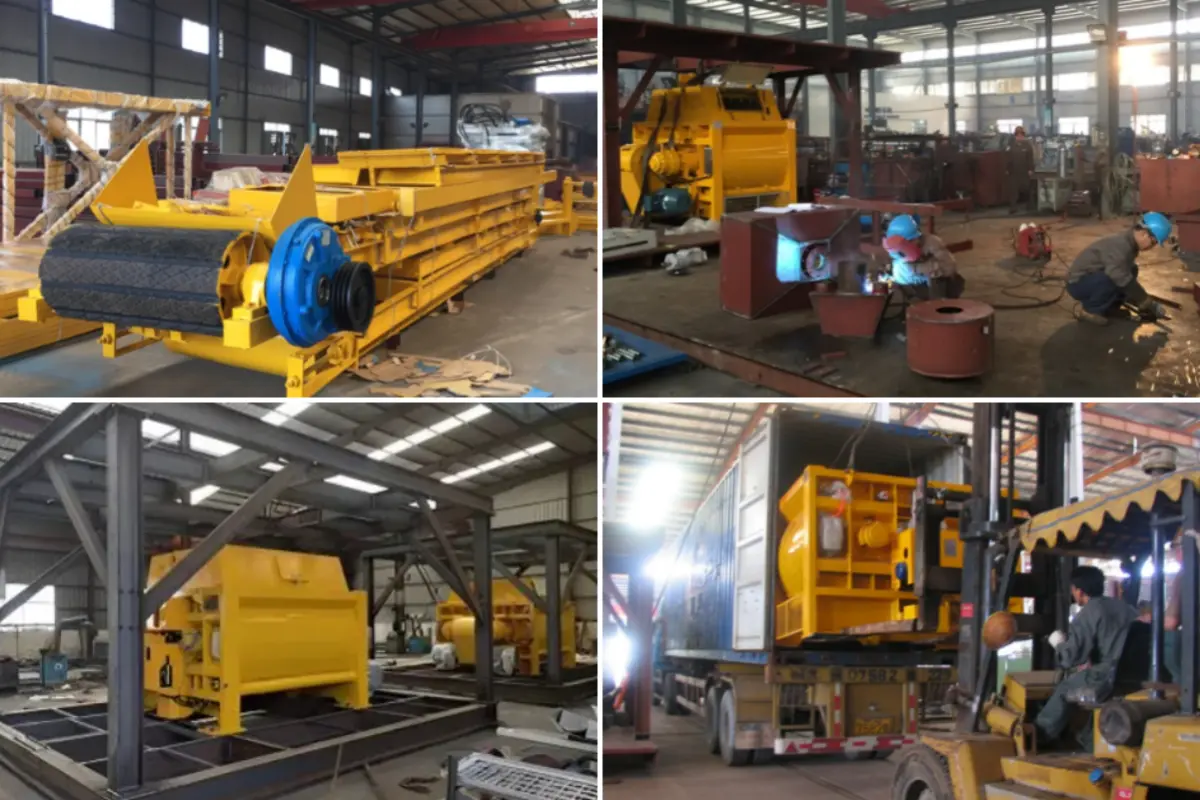
Calculating your ready mix concrete plant cost is only the first step. The true test of a successful concrete business is finding a manufacturing partner who guarantees your plant runs flawlessly, day after day, maximizing your Return on Investment (ROI).
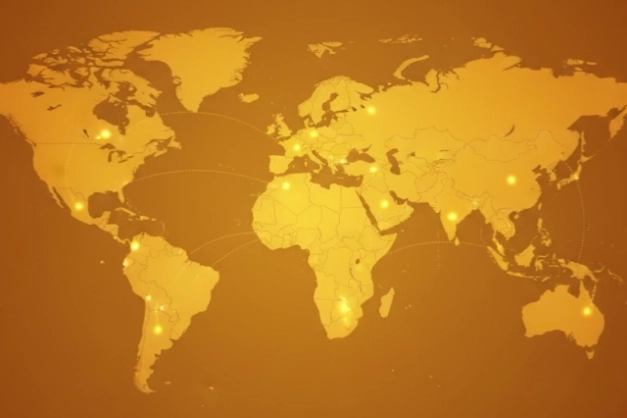
As a global leader with over 32 years of engineering excellence, CCS doesn’t just sell machinery—we deliver highly profitable, turnkey concrete production hubs. Here is why top-tier contractors across Southeast Asia, the Middle East, Africa, and Australia trust us with their capital:
- Engineered to Slash Operating Costs:
A cheap plant drains your daily budget through inaccurate weighing and constant breakdowns. Our heavy-duty plants feature world-class PLC automation (Siemens/Schneider) and strict ±1% batching accuracy, drastically reducing your labor dependency and eliminating expensive cement waste. - Tailored Solutions to Prevent Over-Capitalization:
We protect your initial investment. Our engineers work closely with you to design a plant—whether it’s an agile mobile unit or a massive dual-mixer stationary setup—that perfectly matches your local market demand and site constraints. We never push you to buy capacity you don’t need. - Unwavering Turnkey Support:
We handle the heavy lifting. From 3D foundation blueprints and optimized international shipping to dispatching expert technicians to your site for erection and training, CCS ensures your plant transitions from concept to your first profitable batch smoothly and safely.
Get Your Exact ready mix concrete plant cost Estimate Today
Every construction project and market environment is unique. While this guide provides a solid framework for your initial budgeting, your actual ready mix concrete plant cost will be influenced by your specific site dimensions, local shipping rates, and target production goals.
Don’t leave your investment to guesswork. We go beyond being a manufacturer—we are your strategic engineering partner.
What You Receive When You Request a Quote:
- Itemized Equipment Proposal: A transparent breakdown of the ready mix concrete plant cost tailored to your required m³/h output.
- 3D Site Layout Design: A professional engineering drawing to help you visualize the workflow and optimize the area required for your ready mix concrete plant.
- Comprehensive Logistics Estimate: We provide accurate shipping and delivery costs to your specific region (Southeast Asia, Africa, Middle East, Australia, etc.).
Ready to Start Your Concrete Business?
Whether you are looking for a small ready mix concrete plant cost for a local town or a massive industrial hub, our team is ready to help you plan for profit.
FAQ
For most new businesses, a Mobile RMC Plant or a Compact Skip-Hopper Stationary Plant (like the HZS60) is the best choice. While the machine price is mid-range, you save significantly on civil foundation costs and installation time.
Depending on the capacity, you will need between 1,500 and 3,000 square meters. This includes space for the plant, aggregate stockpiles, truck movement, and a small office/lab.
Usually, the “equipment price” quoted by manufacturers only includes the batching plant. However, in your total setup cost, you must budget for a fleet. At CCS, we can help you source compatible transit mixers to ensure a seamless turnkey delivery.
If you are planning to enter the highly lucrative construction materials market, the first and most critical question on your mind is likely: “How much does it cost to start a ready mix concrete plant?“
While the initial price tag of the batching machinery is important, savvy investors understand that building a fully operational commercial facility requires a much broader financial perspective. Your total ready mix concrete plant cost encompasses everything from acquiring the land and pouring foundations to purchasing a fleet of delivery trucks and securing local environmental permits.
The Total Investment Breakdown
To give you a realistic expectation for your 2026 business plan, the total ready mix concrete plant cost generally falls into three operational tiers:
- Tier 1: Small ready mix concrete plant Cost ($100,000 – $250,000+ USD):
Perfect for regional markets, rural development, or budget-conscious entrepreneurs. This budget covers a compact plant (like an HZS50 or HZS60), basic site preparation, and a small fleet of 2 to 3 used or entry-level transit mixer trucks. - Tier 2: Standard Commercial ready mix concrete plant Cost ($300,000 – $800,000+ USD):
The “sweet spot” for most urban and high-demand areas. This investment includes a high-performance stationary plant (HZS90 or HZS120), extensive civil foundation work, larger cement storage silos, and a robust fleet of 5 to 10 new mixer trucks to ensure continuous, high-volume delivery. - Tier 3: Mega-Capacity Industrial Facilities ($1,000,000+ USD):
Designed for massive infrastructure hubs or dominating a major city’s concrete supply. This requires dual-mixer setups (like two HZS180 plants running in sync), massive land acquisition, fully enclosed eco-friendly structures, water recycling systems, and a massive logistics fleet.
Note: If you are strictly looking for the FOB catalog prices of the machinery itself, please refer to our detailed [Concrete Batching Plant Price Guide].
What is a ready mix concrete plant?
A ready mix concrete plant is a specialized industrial facility where concrete is manufactured under a computer-controlled, automated process. Unlike manual on-site mixing, an ready mix concrete plant accurately proportions aggregates, cement, water, and additives according to precise “recipes” before delivering the fresh mixture to job sites via transit mixers.
The Core Benefits for Your Investment:
Superior Quality & Consistency: Production in a controlled environment ensures the concrete meets strict compressive strength and durability standards required for modern high-speed rail, bridges, and high-rise buildings.
Drastic Waste Reduction: Automated dosing helps reduce cement consumption by 10-12% compared to traditional methods, directly lowering your daily material costs.
Environmental Compliance: Modern ready mix concrete plants utilize dust collection and noise suppression systems, making them far more eco-friendly and easier to permit in urban or sensitive areas.
The following are the specific parameters of our stationary concrete batching plant (skip hopper and belt conveyor), mobile concrete batching plant, dry mix concrete batching plant and compact concrete batching plant (Foundation-Free and Containerized). We have 6 types of concrete batching plants. If you are interested in our concrete mix plants, you can read ready mix concrete plant to find your desired product.
Mobile vs. Stationary Type: Under the same capacity, the price of batching plant mobile type is generally higher than stationary ones because their portability and flexibility enable easy relocation and adaptability to various project sites. The mobility comes with advanced engineering and features that facilitate quick setup and operation, which justifies the higher cost.
Stationary Concrete Batching Plant
The Backbone of Mega-Projects.
Capacity: 25 – 240 m³/h (Models: HZS Series)
Engineered for massive, long-term infrastructure and commercial ready-mix operations. Available in both space-saving Skip Hopper designs and high-capacity continuous Belt Conveyor configurations to perfectly match your site layout.
Mobile Concrete Batching Plant
High Production Rates, Anywhere You Need Them.
Capacity: 25 – 120 m³/h (Models: YHZS Series)
Designed for maximum mobility. All core components are pre-wired on a transportable chassis, allowing for rapid assembly and relocation with zero civil foundation work required.
Wet Mix vs. Dry Mix Type: The wet concrete mix plant price is higher due to the need for more complex equipment that facilitates the thorough mixing of water and additives directly into the concrete before it is dispatched. This process requires additional machinery, such as concrete mixers and water dosing systems, which contribute to the overall expense.
Dry mix plants, while generally less costly, may not offer the same level of consistency and control over the concrete mixing process. Thus, if you do not have demands for high-quality concrete, the dry mix plants would be a preferred choice.
Wet Concrete Batching Plant
Perfect Homogeneity from Start to Finish.
Capacity: 25 – 240 m³/h (Models: HZS Series)
Equipped with heavy-duty twin-shaft or planetary central mixers. These plants guarantee perfectly mixed, high-strength concrete before discharge—essential for precast elements and strict-spec infrastructure.
Dry Mix Concrete Batching Plant
Versatile, Fast, and Highly Cost-Effective.
Capacity: 25 – 100 m³/h (Models: HZS-G Series)
For projects where concrete is mixed in the transit truck. With no central mixer, these plants offer rapid batching cycles, extremely low maintenance, and high-volume output for long-distance transport.
Compact Type: The compact type concrete batching plants, present another cost-effective option for specific needs. They are designed to occupy minimal space while still providing efficient production capabilities. Their compact design reduces the need for extensive foundations and civil works, thereby lowering installation costs.
Foundation-Free Concrete Batching Plant
A Small Footprint Designed for Big Business.
Capacity: 25 – 75 m³/h (Models: FHZS Series)
Integrating containerized and foundation-free designs, our compact plants are optimized for limited spaces and cheap international shipping, while delivering state-of-the-art mixing performance.
Containerized Concrete Batching Plant
A Small Footprint Designed for Big Business.
Capacity: 60 – 180 m³/h (Models: HZS-C Series)
Integrating containerized and foundation-free designs, our compact plants are optimized for limited spaces and cheap international shipping, while delivering state-of-the-art mixing performance.
Ready-Mix Delivery vs. Batch Plant Investment – Which is Right for You?
Before committing to the total ready mix concrete plant cost, every business owner must answer a fundamental question: “Should I continue buying concrete from a third party, or is it time to invest in my own batching plant?”
Understanding the financial and operational trade-offs will help you determine the best path for your growth.
Ready-Mix Delivery: The Third-Party Model
This is the standard choice for small contractors or short-term projects with low annual volume.
The Pros:
No massive upfront capital investment (CAPEX), no need for land or permits, and no responsibility for raw material sourcing.
The Cons:
High Unit Cost: You will pay a significant premium, often $120 – $200 per cubic meter/yard, which includes the supplier’s profit and delivery fees.
Scheduling Dependencies: You are at the mercy of the supplier’s schedule. Delivery delays can halt your entire job site, leading to expensive labor idle time.
Batch Plant Ownership: The Self-Production Model
For operations requiring consistent, high volumes of concrete—such as large infrastructure contractors or precast manufacturers—ownership is the key to substantial cost savings, better production control, and more stable concrete supply.
- The Financial Impact: Once operational, producing your own concrete can reduce your cost per cubic meter from $150 (buying) to as low as $70 – $90 (producing).
- The Operational Advantage: You gain 100% control over your production schedule and mix designs. No more waiting for trucks; you produce exactly what you need, exactly when you need it.
The “Golden Rule” for Investment: The Break-Even Point
When does it become cheaper to own a plant than to buy concrete?
While it varies by region, the industry benchmark is generally 25 to 30 cubic meters per day. If your projects consistently require more than this volume, the savings on material costs alone will likely cover your entire ready mix concrete plant cost within the first year.
Worried about operational complexity?
We specialize in making plant ownership easy. Our fully automated control systems and turnkey installation support mean you don’t need to be an engineering expert to run a highly profitable concrete business.
Breaking Down the ready mix concrete plant cost
To launch a highly profitable commercial concrete business, your initial Capital Expenditure (CAPEX) goes far beyond purchasing the central mixing unit. A realistic ready mix concrete plant cost must account for land acquisition, heavy civil engineering, a logistics fleet, and environmental compliance.
Here is a detailed breakdown of the five major expenses you must budget for:
The Core Equipment (30% – 40% of Total Cost)
The heart of your operation is the ready mix concrete plant. As a global manufacturer, we provide premium stationary and mobile batching plants tailored to your capacity needs (from 25m³/h up to 240m³/h).
- What this includes: The twin-shaft or planetary mixer, aggregate batching bins, cement silos, screw conveyors, and the fully automated PLC control cabin.
- Pro Tip: While buying a cheap plant saves money upfront, investing in a high-precision, CE/ISO-certified plant from our factory drastically reduces your long-term cement waste and maintenance downtime.
Land Acquisition & Area Required (15% – 25% of Total Cost)
The physical footprint of your facility is a major factor in your ready mix concrete plant cost.
- Area Required for ready mix concrete plant: A standard stationary commercial plant requires at least 1,500 to 3,000 square meters (0.4 to 0.7 acres). You need ample space not only for the plant itself but also for large aggregate stockpiles, cement silo foundations, and a wide turning radius for your transit mixer trucks and wheel loaders.
Civil Works & Foundation Erection (10% – 15% of Total Cost)
Stationary plants are incredibly heavy and vibrate constantly during operation. You cannot simply place them on dirt.
- The Investment: A significant portion of your installation cost goes into pouring massive, reinforced concrete foundations. This ensures the towering cement silos remain stable against high winds and the main mixer chassis does not crack under stress. We provide precise 3D blueprint designs to help your local contractors execute this efficiently.
The Auxiliary Fleet (25% – 35% of Total Cost)
You cannot run a commercial ready-mix business without a way to deliver the product. In many cases, the delivery fleet costs more than the batching plant itself!
What You Need:
- Transit Mixer Trucks: A minimum of 3 to 5 trucks (8m³ to 12m³ capacity) to keep your plant continuously producing.
- Wheel Loaders: At least one heavy-duty loader to continuously feed sand and gravel into the aggregate batching bins.
Environmental Compliance & Permits (5% – 10% of Total Cost)
Modern concrete production faces strict environmental regulations globally.
- The Investment: To secure your plant permit, you must often invest in active pulse-jet dust collectors for your silos, fully enclosed cladding for the main plant to reduce noise, and sometimes a concrete washout recycling system to prevent wastewater discharge. Our plants are designed with dust control, cleaner operation, and easier compliance in mind, helping you meet common environmental requirements from the beginning.
Daily Operating Expenses (OPEX) – What Does It Cost to Run a ready mix concrete plant?
Securing the capital for your initial ready mix concrete plant cost is only half the battle. Once your plant is operational, your profitability depends entirely on how efficiently you manage your daily Operating Expenses (OPEX).
To calculate your true cost of ready mix concrete per cubic meter/yard, you must track four major ongoing expenses:
Raw Materials (70% – 80% of Operating Costs)
The materials you feed into the mixer account for the vast majority of your daily spending.
- The Breakdown: Cement (the most expensive component), coarse aggregates (gravel/crushed stone), fine aggregates (sand), water, and chemical admixtures (plasticizers/accelerators) to achieve specific mix designs.
Pro Strategies to Control Material Costs:
- Alternative Binders: Actively explore using supplementary cementitious materials like fly ash or GGBS (slag). When mixed correctly using a high-shear twin-shaft mixer, these can significantly reduce your reliance on expensive pure cement without compromising concrete strength.
- Preventing Storage Loss: Protect your aggregates from rain and moisture to prevent unpredictable water-cement ratios. Investing in enclosed aggregate bins and high-quality sealed cement silos prevents material deterioration and wind loss.
- Strict Batching Accuracy: This is where a premium plant pays for itself. Our plants utilize dynamic moisture compensation radars and S-type load cells to maintain a strict ±1% accuracy on all materials, completely eliminating cement wastage.
Power & Utility Consumption (5% – 10% of Operating Costs)
A commercial batching plant is a heavy industrial machine that requires a robust power supply.
- The Breakdown: Running twin-shaft mixer motors (often 2x 37kW or higher), massive air compressors for pneumatic gates, water pumps, and incline belt conveyors consumes significant electricity. If your site lacks grid power, you must factor in the heavy diesel consumption of a large backup generator.
Labor & Payroll (10% – 15% of Operating Costs)
Your ready mix concrete plant operator salary and support staff wages are fixed monthly costs, regardless of how much concrete you sell.
- The Breakdown: A standard commercial operation requires a highly trained control room operator, a wheel loader driver (to feed aggregates), a maintenance technician, and several transit mixer truck drivers.
- How to Save Money: Investing in a fully automated plant with a smart PLC interface (Siemens/Schneider) can significantly reduce the need for manual intervention and oversight. One operator can easily manage the entire batching, mixing, and discharging process with a single click, allowing you to run a leaner, more profitable crew.
Routine Maintenance & Wear Parts (3% – 5% of Operating Costs)
Concrete is highly abrasive. Friction is the enemy of your equipment.
- The Breakdown: Regularly replacing mixing blades, internal cast-iron liners, conveyor belts, and lubricating the central mixer’s shaft seals.
- How to Save Money: Cheap plants use thin, unhardened steel that requires constant, expensive replacement and causes debilitating downtime. We equip every plant with high-chromium, heavy-duty wear liners designed to process thousands of batches before needing replacement, keeping your ready mix concrete plant maintenance costs remarkably low.
Market Outlook – Is It Profitable to Start a ready mix concrete plant in 2026?
Before diving into the exact profit margins, an investor must understand the macro-economic drivers. According to global construction statistics, concrete costs account for nearly 30% to 50% of an entire project’s budget. This immense demand makes the ready-mix concrete business one of the most resilient and high-growth sectors today.
Three Primary Drivers for Your Investment:
Massive Infrastructure & Urbanization
Governments worldwide are accelerating investments in highways, high-speed railways, airports, and bridges. Simultaneously, rapid urbanization is driving the demand for residential and commercial real estate. As the “liquid gold” of construction, the demand for high-quality concrete is stable and expanding.
Shift Toward Environmental Compliance
New, stricter environmental regulations are forcing many old, polluting mixing plants to shut down. This creates a massive market gap. Investing in a modern, eco-friendly batching plant with advanced dust and noise control gives you a significant competitive edge and ensures long-term operational permits.
Technological ROI
Modern ready mix concrete plants are no longer just “mixers”—they are intelligent production facilities. Our automation improves production efficiency, reduces material waste by 10%+, and slashes labor costs. This allows investors to achieve a typical total business payback period within 3 to 5 years, with individual equipment costs often being recovered much sooner.
Calculating Your ready mix concrete plant Profit Margin & ROI (The Financial Model)
Building on the strong market outlook for concrete demand driven by global infrastructure development and urbanization, the next crucial step in your investment plan is to quantify the financial viability. To truly understand your potential revenue and profit margins, you must apply a concrete financial model to your local market conditions.
This involves calculating your projected ready mix concrete cost per cubic meter/yard and comparing it against local selling prices. Let’s break down the profitability equation:
The Profit Calculation Formula
To understand your potential revenue, you must calculate your profit per cubic meter (or per yard).
- Market Selling Price: Research the current ready mix concrete cost per yard/m³ in your local area. For example, if local contractors are buying standard C30 concrete for $120 per m³.
- Your Production Cost: Add up your OPEX (raw materials, electricity, labor, maintenance). Suppose your highly efficient plant produces that same cubic meter for $85.
- Your Gross Margin: $120 (Selling Price) – $85(Production Cost)= $35 Profit per m³.
The Power of High-Volume Production
Now, let’s scale those numbers using a mid-range commercial plant. If you install a HZS90 Stationary Plant (producing ~70m³ per hour in real-world conditions) and operate it for 8 hours a day, 25 days a month:
- Daily Production: 8 hours × 70m³ = 560 m³ per day
- Daily Profit: 560 m³ ×
35margin=∗∗19,600 per day** - Monthly Profit: 25 days ×
19,600=∗∗490,000 per month**
(Note: These are illustrative figures. Your actual margins will vary based on local cement prices, truck delivery costs, and overhead.)
How We Accelerate Your Payback Period
A typical commercial ready mix concrete plant can recover its entire ready mix concrete plant cost within 6 to 12 months—but only if the equipment doesn’t break down.
This is why investing in premium machinery is critical. A cheap plant will suffer from constant mixer blockages, burnt-out motors, and inaccurate weighing (which wastes expensive cement and destroys your $35/m³ margin).
By choosing our concrete batch plant, you guarantee maximum uptime. Our heavy-duty twin-shaft mixers, strict ±1% batching accuracy, and 24/7 remote diagnostic support ensure that your plant delivers profitable concrete day after day, year after year.
How to Start an ready mix concrete plant – Your Step-by-Step Business Roadmap
Calculating your ready mix concrete plant cost is a vital first step, but executing a successful launch requires a structured approach. Based on decades of experience helping contractors worldwide, here is the essential business plan to take you from initial idea to your first profitable batch.
Step 1: Market Research & Feasibility Study
Before investing a single dollar, identify where the demand is.
- Analyze Your Territory: Who are your local competitors? What is the current ready mix concrete cost per yard/m³ they are charging?
- Identify Your Clients: Are you targeting large government infrastructure projects or local residential builders? Your target market will determine your plant’s required capacity (e.g., HZS60 vs. HZS120).
Step 2: Strategic Site Selection & Permits
Your location can make or break your profitability.
- The Golden Radius: A commercial plant should be within a 20-30 km radius of major construction hubs to minimize transit time and prevent concrete from setting in the drum.
- Regulatory Compliance: Secure your plant permit early. Ensure the site has access to heavy-duty power lines, a high-volume water supply, and complies with local noise and dust emission laws. Our engineers can provide 3D site layout plans to help you secure environmental approvals faster.
Step 3: Equipment Procurement & Logistics
This is where you partner with a world-class batching plant manufacturer.
- Custom Configuration: Don’t buy a standard catalog item. Consult with us to design a plant that matches your exact local raw materials and mix specifications.
- Seamless Logistics: We manage the international shipping of your plant, ensuring all components are packed efficiently into standard containers to minimize your total ready mix concrete plant cost.
Step 4: Installation, Training & Launch
Proper setup ensures a 10+ year lifespan for your equipment.
- Turnkey Commissioning: We dispatch expert technicians to your site to supervise the mechanical erection and electrical wiring.
- Staff Empowerment: We provide rigorous on-site training for your control room operators and maintenance crew. We don’t leave until your plant is producing certified, high-strength concrete and your team is fully confident.
Small ready mix concrete plant cost – Starting on a Budget
Not every successful concrete empire begins with a massive, multi-million dollar facility. In fact, for many entrepreneurs in emerging markets or rural regions, investing in a smaller-scale operation is the smartest way to test the local market and achieve a rapid Return on Investment (ROI).
If you are researching the small ready mix concrete plant cost, here is how to launch a lean and profitable concrete business:
Choosing the Right Entry-Level Plant
For a small commercial operation, you don’t need a belt-conveyor stationary plant. A compact, skip-hopper design is significantly more affordable.
- The Recommendation: Invest in a HZS50 or HZS60. These models provide a theoretical capacity of 50m³ to 60m³ per hour, which is ample for supplying small housing developments, local road repairs, and private contractors.
- The Price Advantage: By choosing a mini ready mix concrete plant for sale from us, you reduce your initial machinery investment to the $25,000 – $45,000 range while still benefiting from high-precision automated batching.
Minimizing Land and Infrastructure Expenses
One of the biggest savings in a small ready mix concrete plant cost comes from the reduced physical footprint.
- Area Required: A compact HZS50 setup only requires about 600 to 1,000 square meters. This allows you to lease smaller, more affordable plots of land or set up on an existing construction site.
- Reduced Civil Works: Smaller plants require lighter concrete foundations, significantly lowering your on-site construction and installation labor costs.
Operating with a Lean Fleet
When starting a small concrete business, your logistics fleet should be matched to your plant’s output to prevent idle equipment.
- The Strategy: Start with 2 or 3 transit mixer trucks (ideally 6m³ to 8m³ capacity). This keeps your capital tied up in the machinery to a minimum while ensuring you can fulfill local orders reliably.
Why Starting Small with us is the Smart Move?
The total small ready mix concrete plant cost generally ranges from $80,000 to $150,000 USD (all-in). This low entry barrier allows you to focus on high-margin local projects and recoup your entire investment within the first year of operation.
As your reputation grows and your client list expands, our modular design makes it easy to upgrade your plant’s capacity or add more silos later—helping your business grow alongside your profits.
ready mix concrete plant Price List: Which Model Fits Your Project?
Here is the overview of our ready mix concrete plant price for different models for reference:
Rural development, small housing projects, temporary road repairs.
Skip-hopper feeding, highly cost-effective, compact footprint.
Commercial ready-mix concrete businesses, highways, dams, airports.
Inclined belt conveyor, heavy-duty twin-shaft mixer, fully automated PLC, high-volume continuous output.
Short-to-medium term contractors, wind farms, multi-site projects.
Pre-wired on a towable chassis, rapid deployment, zero civil foundation required.
Long-distance transport, vast geographic areas, lower-grade concrete projects.
No central mixer, extremely low maintenance, fast batching directly into transit trucks.
Tight urban spaces, projects requiring fast relocation but smaller footprints.
Modular design, installed on pre-compacted ground, significant savings on civil works.
High-end urban commercial supply, eco-friendly zones, overseas mega-projects.
Built into standard 40HQ containers, lowest international shipping cost, enclosed zero-dust structure.
(Skip-hopper) HZS25 – HZS200 $25k – $48k
For: Rural development, small housing projects, road repairs.
Features: Skip-hopper feeding, highly cost-effective, compact footprint.
(Belt conveyor) HZS60 – HZS240 $50k – $210k+
For: Commercial ready-mix, highways, dams, airports.
Features: Inclined belt conveyor, heavy-duty twin-shaft mixer, automated PLC, high-volume.
For: Short-to-medium term contractors, wind farms, multi-site.
Features: Pre-wired on towable chassis, rapid deployment, zero civil foundation.
For: Long-distance transport, lower-grade concrete projects.
Features: No central mixer, low maintenance, batching directly into trucks.
(Foundation-Free) FHZS25 – FHZS75 $28k – $65k
For: Tight urban spaces, fast relocation but smaller footprints.
Features: Modular design, pre-compacted ground install, saves civil works.
(Containerized) HZS-C60 – C180 $60k – $180k+
For: Urban commercial supply, eco-zones, overseas mega-projects.
Features: Standard 40HQ container build, lowest shipping cost, zero-dust.
Should You Consider a Used ready mix concrete plant to Save Costs?
When calculating the total ready mix concrete plant cost, some investors consider purchasing second-hand equipment to reduce initial capital expenditure. While a used plant can be 30% to 50% cheaper upfront, it comes with significant long-term risks:
- Maintenance Spikes: Older machinery often has heavily worn liners, fatigued mixer shafts, and outdated pneumatic systems that lead to frequent, expensive downtime.
- Technological Obsolescence: Used plants may lack modern PLC features like remote diagnostics or automatic moisture compensation, leading to material waste and unstable concrete quality.
- Environmental Issues: Older models may not comply with current local dust and noise emission regulations, risking heavy fines or site shutdowns.
Our Solution: We offer Compact/Mini ready mix concrete plants at prices highly competitive with used equipment. Choosing a brand-new plant from us ensures you get a full manufacturer’s warranty, 10-15 years of service life, and up-to-date standard automation for a similar total investment.
Procurement Secrets – How to Cut Your ready mix concrete plant cost by 30%
When calculating your total ready mix concrete plant cost, the most effective way to protect your budget isn’t by downgrading your equipment’s capacity or automation. It is by optimizing your procurement strategy.
Here is how smart investors secure a high cost-performance (ROI) plant:
Cut Out the Local Middlemen
Many investors buy through local dealers or foreign agents, unknowingly paying a massive markup. China is the undisputed global hub for heavy concrete machinery. By sourcing directly from a proven Chinese ready mix concrete plant manufacturer like us, you bypass trader margins, instantly reducing your initial capital expenditure by 20% to 40%.
Verify the Source, Not Just the Price Tag
A low price from a trading company often means compromised steel thickness, counterfeit PLC components, and zero after-sales support. Always verify the factory’s background.
- Our Guarantee: With over 32 years of manufacturing excellence, a massive 40,000m²+ facility, and strict CE/ISO certifications, we are a true OEM (Original Equipment Manufacturer). We invite you to request a live video tour of our production lines to see exactly where your investment is being built.
Demand “Lifecycle” Support
- A low-cost plant is of little value if you cannot source spare parts a year later. When buying direct, ensure the manufacturer offers a 12+ month warranty, dispatches engineers globally for commissioning, and maintains an inventory of wear parts ready for immediate international shipping.
Why Partnering with CCS is Your Safest Business Investment
Calculating your ready mix concrete plant cost is only the first step. The true test of a successful concrete business is finding a manufacturing partner who guarantees your plant runs flawlessly, day after day, maximizing your Return on Investment (ROI).
As a global leader with over 32 years of engineering excellence, CCS doesn’t just sell machinery—we deliver highly profitable, turnkey concrete production hubs. Here is why top-tier contractors across Southeast Asia, the Middle East, Africa, and Australia trust us with their capital:
- Engineered to Slash Operating Costs:
A cheap plant drains your daily budget through inaccurate weighing and constant breakdowns. Our heavy-duty plants feature world-class PLC automation (Siemens/Schneider) and strict ±1% batching accuracy, drastically reducing your labor dependency and eliminating expensive cement waste. - Tailored Solutions to Prevent Over-Capitalization:
We protect your initial investment. Our engineers work closely with you to design a plant—whether it’s an agile mobile unit or a massive dual-mixer stationary setup—that perfectly matches your local market demand and site constraints. We never push you to buy capacity you don’t need. - Unwavering Turnkey Support:
We handle the heavy lifting. From 3D foundation blueprints and optimized international shipping to dispatching expert technicians to your site for erection and training, CCS ensures your plant transitions from concept to your first profitable batch smoothly and safely.
Get Your Exact ready mix concrete plant cost Estimate Today
Every construction project and market environment is unique. While this guide provides a solid framework for your initial budgeting, your actual ready mix concrete plant cost will be influenced by your specific site dimensions, local shipping rates, and target production goals.
Don’t leave your investment to guesswork. We go beyond being a manufacturer—we are your strategic engineering partner.
What You Receive When You Request a Quote:
- Itemized Equipment Proposal: A transparent breakdown of the ready mix concrete plant cost tailored to your required m³/h output.
- 3D Site Layout Design: A professional engineering drawing to help you visualize the workflow and optimize the area required for your ready mix concrete plant.
- Comprehensive Logistics Estimate: We provide accurate shipping and delivery costs to your specific region (Southeast Asia, Africa, Middle East, Australia, etc.).
Ready to Start Your Concrete Business?
Whether you are looking for a small ready mix concrete plant cost for a local town or a massive industrial hub, our team is ready to help you plan for profit.
FAQ
For most new businesses, a Mobile RMC Plant or a Compact Skip-Hopper Stationary Plant (like the HZS60) is the best choice. While the machine price is mid-range, you save significantly on civil foundation costs and installation time.
Depending on the capacity, you will need between 1,500 and 3,000 square meters. This includes space for the plant, aggregate stockpiles, truck movement, and a small office/lab.
Usually, the “equipment price” quoted by manufacturers only includes the batching plant. However, in your total setup cost, you must budget for a fleet. At CCS, we can help you source compatible transit mixers to ensure a seamless turnkey delivery.
HOT-SALE PRODUCTS
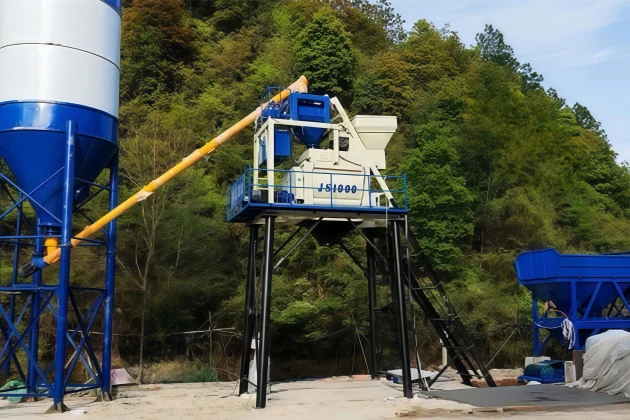
Stationary Concrete Batching Plant
(Skip Hopper)
The Backbone of Mega-Projects.
Capacity: 25 – 200 m³/h
Models: HZS Series
Stationary Concrete Batching Plant
(Belt Conveyor)
The Backbone of Mega-Projects.
Capacity: 60 – 240 m³/h
Models: HZS Series
Mobile Concrete Batching Plant
High Production Rates, Anywhere You Need Them.
Capacity: 25 – 120m³/h
Models: YHZS Series
Dry Mix Concrete Batching Plant
Versatile, Fast, and Highly Cost-Effective.
Capacity: 25 – 100 m³/h
Models: HZS-G Series
Foundation-Free Concrete Batching Plant
A Small Footprint Designed for Big Business.
Capacity: 25 – 75 m³/h
Models: FHZS Series
Containerized Concrete Batching Plant
A Small Footprint Designed for Big Business.
Capacity: 60 – 180 m³/h
Models: HZS-C Series
SUCCESSFUL PROJECTS
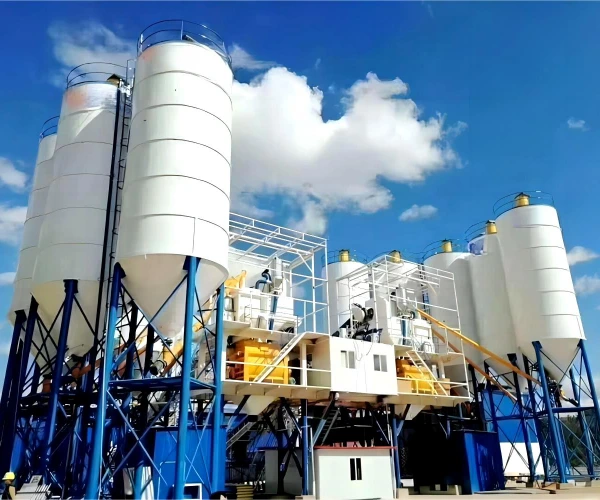
High-Volume Commercial RMC Supply
- Location: Philippines
- Equipment: Dual HZS120 Stationary Batching Plants
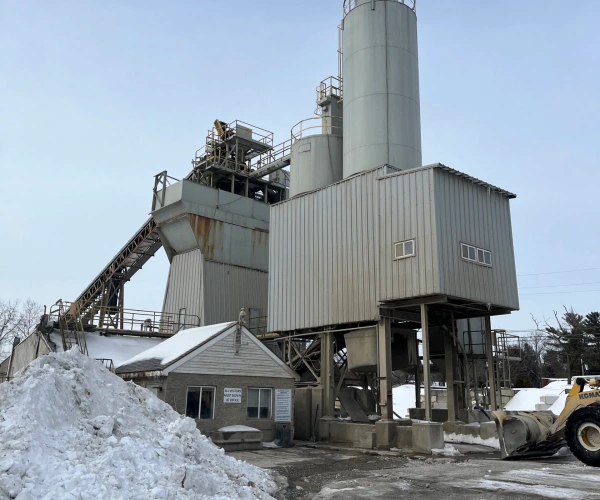
- The Result: To meet the massive daily demand of a rapidly expanding urban center, the client required non-stop production. Our dual-plant setup with fully automated PLC synchronization delivers over 200m³/h, operating 24/7 with zero unscheduled downtime.
Extreme Climate Infrastructure Project
- Location: Uzbekistan
- Equipment: HZS90 with Winter Enclosure & Heating System
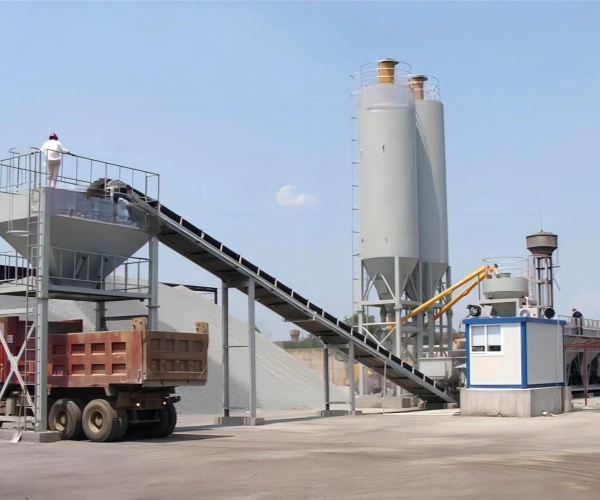
- The Result: Operating in sub-zero temperatures, the client needed a reliable solution to prevent aggregate freezing. We delivered a fully cladded plant with steam heating, allowing the highway construction project to continue seamlessly throughout the harsh winter.
High-Precision Dam Construction
- Location: Kenya
- Equipment: HZS180 with Ice & Microsilica Dosing
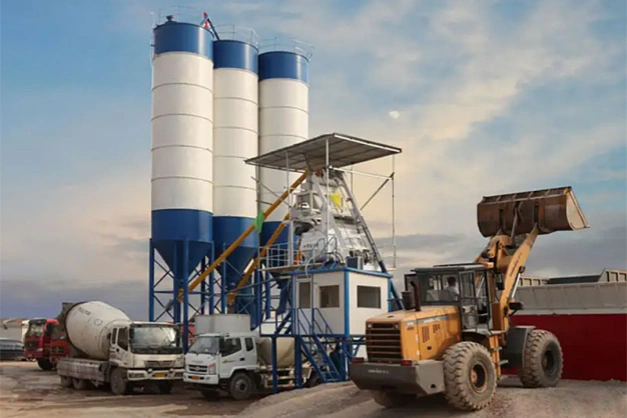
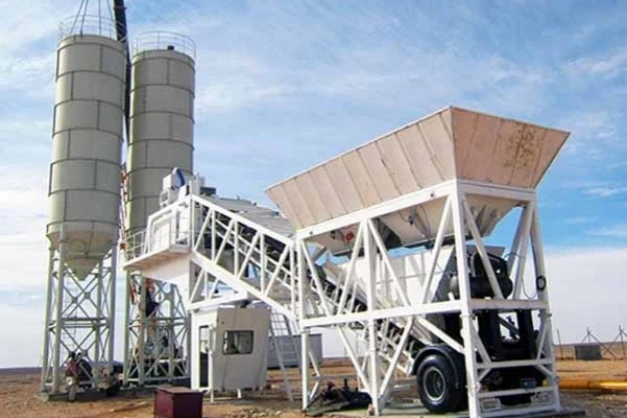
- The Result: Dam construction requires strict control over concrete hydration heat. We integrated a specialized flake ice weighing system and planetary mixers, ensuring the exact structural integrity required for this mega-project.
Customize Your Solutions
Ready to get a comprehensive, itemized setup cost estimate for your project? When you invest hundreds of thousands of dollars into a concrete facility, you cannot afford to gamble on unreliable equipment. A premium, CE/ISO-certified CCS plant is the foundation of a sustainable, high-margin ready-mix business. Fill out the form for Your Concrete Plant Needs to receive a customized solution and a competitive quote from the most trusted name in the industry.
FEW TIPS:
· Please describe the capacity per hour of the batching plant (e.g., 25m³/h-240m³/h).
· Please describe the type of project (e.g., building house, factory, road, bridge, dam, airport, etc.).
· Please tell us the project location and estimated project start-up date.
· Please detail your specific requirements or expectations (e.g., project site, voltage, climate, etc.).
Our experts will reply you with in 12 hours.