Home » Concrete Batch Plant For Sale » Mobile Concrete Batching Plant
Mobile Concrete Batching Plant
Capacity: 25m ³/h ~ 120m ³/h | Type: belt or hopper feeding | Cost: $32,000-$145,000
Mobile Concrete Batching Plant For Sale
In today’s fast-paced construction industry, operational flexibility is the key to long-term profitability. For contractors managing short-term sites or projects spread across remote terrains, a mobile concrete batching plant (also widely known as a portable concrete plant) is a true game-changer. Unlike permanent stationary facilities, these systems are engineered for agility, allowing you to bring high-quality concrete production directly to your job site.
As a premier global manufacturer, we specializes in the engineering of high-performance mobile solutions. Our units combine the mixing power of a stationary plant with the convenience of a wheeled chassis. Whether you are repairing a highway, building a wind farm, or developing rural infrastructure, our portable batch plant ensures consistent concrete quality while drastically reducing your logistics and setup expenses.
Mobile Concrete Batching Plant Price List
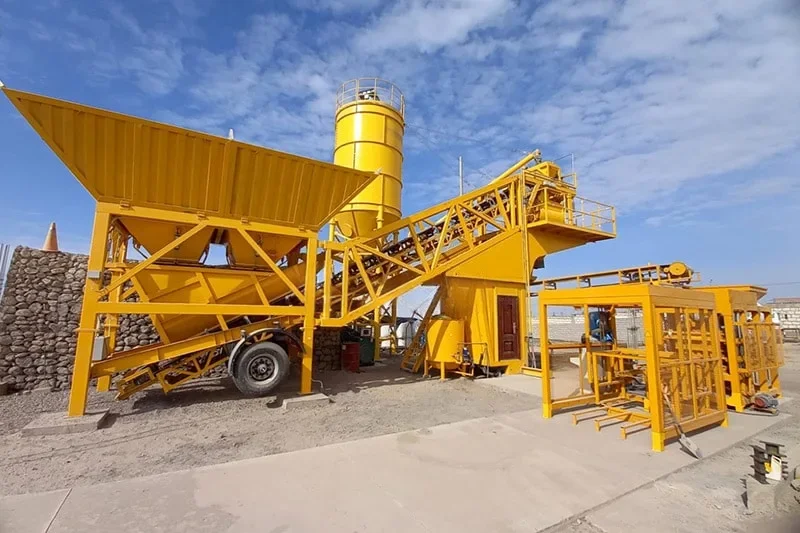
The scope of a mobile concrete batching plant is between 25m3/h and 120m3/h. It is relatively smaller and suitable for medium-sized temporary construction projects.
| Best Products | Production Capacity | Estimated EXW Price |
| YHZS Series (Premium Twin-Shaft) (YHZS25 ~ YHZS60) | 25 m³/h ~ 60 m³/h | $32,000 – $58,000 |
| YHZS Series (Premium Twin-Shaft) (YHZS75 ~ YHZS120) | 75 m³/h ~ 120 m³/h | $65,000 – $145,000 |
| LTY Series (Budget Reversible Drum) (LTY-60A / LTY-60B) | 50 m³/h ~ 60 m³/h | $18,000 – $28,000 |
The price is for reference only. Please get in touch with us for the latest quotation.
Mobile Concrete Batching Plant Price List
The scope of a mobile concrete batching plant is between 25m3/h and 120m3/h. It is relatively smaller and suitable for medium-sized temporary construction projects.
| Best Products | Production Capacity | Estimated EXW Price |
| YHZS Series (Premium Twin-Shaft) (YHZS25 ~ YHZS60) | 25 m³/h ~ 60 m³/h | $32,000 – $58,000 |
| (YHZS75 ~ YHZS120) | 75 m³/h ~ 120 m³/h | $65,000 – $145,000 |
| LTY Series (Budget Reversible Drum) (LTY-60A / LTY-60B) | 50 m³/h ~ 60 m³/h | $18,000 – $28,000 |
The price is for reference only. Please get in touch with us for the latest quotation.
Why Your Project Needs Mobile Concrete Batching Plant
The decision to invest in a mobile concrete batching plant is driven by the need for speed and cost-control. Here are the three primary reasons why modern contractors are shifting toward portable production:
Unmatched Relocation Agility
The most obvious benefit is the “wheels.” Every core component—from the aggregate bins to the twin-shaft mixer and control room—is integrated onto a single, heavy-duty towable chassis. This allows for rapid relocation; once a project phase is complete, the plant can be folded and towed to the next site within hours, keeping your production heartbeat aligned with your construction schedule.
Zero Foundation & Minimum Civil Costs
Stationary plants require deep, expensive concrete foundations that take weeks to cure. In contrast, a portable concrete batch plant is engineered for “plug-and-play” deployment. It can be installed on any pre-compacted flat surface with minimal civil work. This alone can save you tens of thousands of dollars in initial setup costs and weeks of site preparation time.
Factory Pre-Wired for Rapid Deployment
Time is money. Our mobile units arrive at your site pre-wired and factory-tested. This means the electrical and pneumatic systems are already integrated. Upon arrival, your crew simply unfolds the main structure and connects the power. This manufacturing strategy allows you to transition from delivery to producing your first batch of concrete in as little as 2 to 3 days.
Mobile Batch Plant Models
We understand that every project has unique requirements. We offer flexible configurations designed to match your specific site conditions, production capacity, and budget.
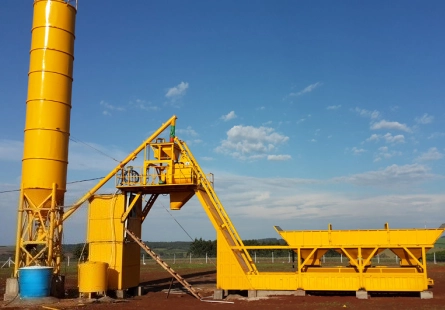
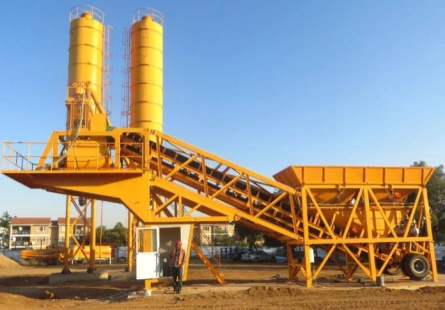
MOBILE CONCRETE PLANT
YHZS25
Capacity: 20 – 25 m³/h
Our most agile unit, designed for swift towing and instant batching upon arrival.
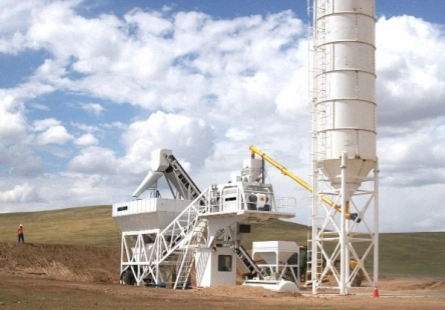
MOBILE CONCRETE PLANT
YHZS35/40
Capacity: 30 – 40 m³/h
Effortless relocation combined with a streamlined modular setup for rapid job site deployment.
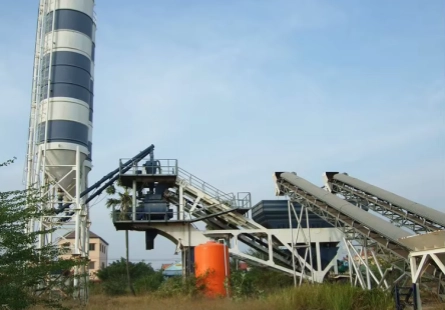
MOBILE CONCRETE PLANT
YHZS50/60
Capacity: 45 – 60 m³/h
Industrial performance on wheels, pre-wired for a hassle-free transition between project phases.
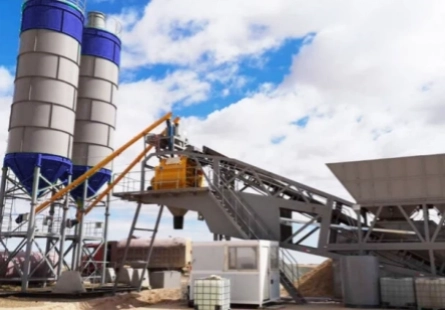
MOBILE CONCRETE PLANT
YHZS75/90
Capacity: 70 – 90 m³/h
High-mobility powerhouse engineered to minimize transport downtime without sacrificing scale.
MOBILE CONCRETE PLANT
YHZS100/120
Capacity: 95 – 120 m³/h
The pinnacle of mobile engineering, offering high-volume logistics for massive, fast-track projects.
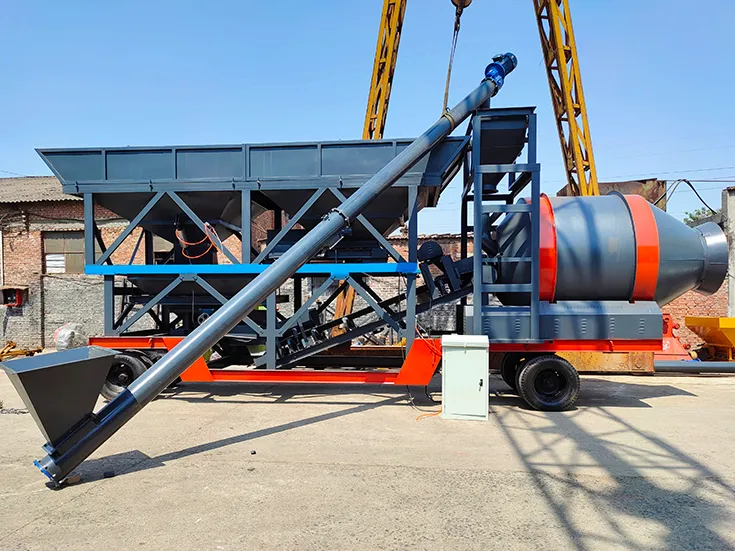
MOBILE CONCRETE PLANT
LTY-60A
Capacity: 50 – 60 m³/h
An exceptionally economical mobile drum-mix plant, designed with a JZM1500 mixer and low 1.3m discharge for direct concrete pump feeding.
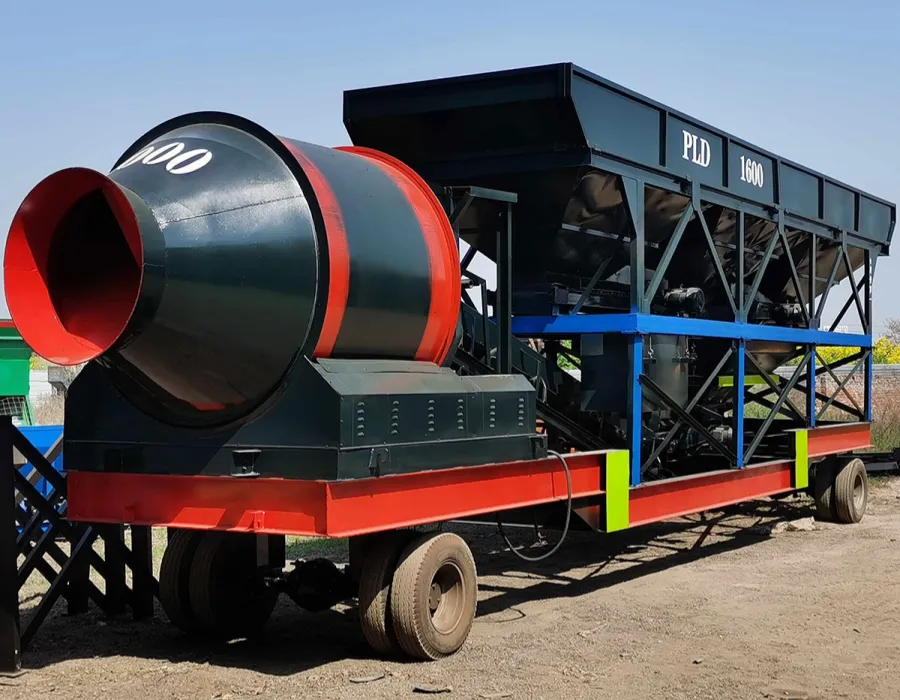
MOBILE CONCRETE PLANT
LTY–60B
Capacity: 50 – 60 m³/h
Features an expanded 3-bin aggregate batcher on an extended mobile chassis, optimized for stable, continuous on-site concrete production.
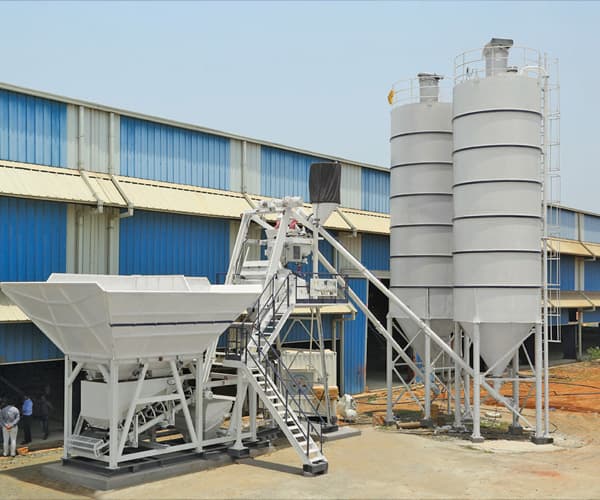
Core Advantages of the YHZS Mobile Batching Plant
1. Unmatched Mobility: “Follow the Project”:
Engineered with a towable wheeled chassis, the YHZS series allows you to produce concrete directly at the pouring site. This “Follow the Project” capability eliminates long-distance transport costs and prevents premature setting, making logistically impossible projects viable.
2. Plug-and-Play Rapid Deployment:
Our mobile plants are factory pre-wired and tested. Utilizing quick-connect aviation plugs and modular fittings for air and water systems, you can transition from arrival to full production in as little as 2 to 3 days with minimal heavy lifting equipment.
3. Zero-Foundation & Easier Licensing:
The YHZS series requires no heavy civil foundations—only a flat, compacted surface. Because it is classified as a temporary industrial asset, securing environmental and construction permits is often significantly faster and easier than with permanent stationary facilities.
4. Significant Cost Reduction:
By producing on-site, you eliminate third-party ready-mix delivery fees and reduce material waste by 10%–15%. The lower initial capital investment compared to stationary hubs ensures an ultra-fast capital recovery period.
5. High-Performance Mixing & Versatility:
Equipped with heavy-duty JS-series twin-shaft mixers, our mobile units deliver the same perfect homogeneity as stationary plants. They handle hard, plastic, and even lightweight aggregate concrete for projects ranging from high-speed rail to dam construction.
6. Advanced PLC Intelligent Automation:
Features a user-friendly, multi-language PLC interface (Siemens/Schneider options). The system includes automatic moisture compensation and remote diagnostics, allowing a lean crew of just 1-2 operators to manage the entire process with high precision.
7. Extreme Environment Adaptability:
Designed for the world’s harshest climates. With optional heating systems and insulated enclosures, our mobile plants operate flawlessly in temperatures ranging from +45°C down to -40°C, ensuring your project never stops.
8. Sustainable & Eco-Friendly Design:
Modern urban projects demand green solutions. Our units feature integrated pulse-jet dust collectors and closed-loop water recycling options, reducing noise and dust emissions to comply with the strictest global environmental codes.
Mobile Concrete Batching Plant Specification
To accommodate varying project budgets and concrete specifications, our mobile concrete plants are engineered with two distinct mixing technologies: the high-performance, compulsory YHZS series and the highly economical, drum-mix LTY series. Spanning capacities from 25 m³/h to 120 m³/h, each trailer-mounted system is designed with a modular structure to ensure rapid setup and reliable operations on any job site.
While the YHZS series utilizes twin-shaft compulsory mixers (JS series) with high discharging heights (3.8m to 4.1m) for commercial ready-mix and heavy-duty infrastructure, the LTY series features a low-profile reversible drum mixer (JZM series) with a 1.3m discharge height, providing a highly cost-effective, foundation-free solution for direct-pour projects or on-site pumping operations.
Below are the definitive parameters for our mobile and portable configurations:
| Type | YHZS25 | YHZS35/40 | YHZS50/60 | YHZS75/90 | YHZS100/120 | |
| Theoretical Production Capacity(m3/h) | 25 | 35 | 50 | 75 | 100 | |
| Concrete Mixer | Type | JS500 | JS750 | JS1000 | JS1500 | JS2000 |
| Discharging Capacity(L) | 500 | 750 | 1000 | 1500 | 2000 | |
| Aggregate Size(Pebble/Macadam)(mm) | 80/60 | 80/60 | 80/60 | 80/60 | 80/60 | |
| Matched Aggregate Batcher | PLD800 | PLD1200 | PLD1600 | PL2400 | PLD3200 | |
| Weighing Accuracy | Aggregate (KG) | 1500Kg ±2% | 2000Kg ±2% | 3000Kg ±2% | 3000Kg ±2% | 3000Kg ±2% |
| Cement(KG) | 300Kg ±1% | 450Kg ±1% | 900Kg ±1% | 1500Kg ±1% | 1500Kg ±1% | |
| Fly Ash(KG) | Optional | |||||
| Water (KG) | 200Kg ±1% | 300Kg ±1% | 600Kg ±1% | 900Kg ±1% | 500Kg ±1% | |
| Additive(KG) | 20Kg ±1% | 30Kg ±1% | 30Kg ±1% | 50Kg ±1% | 100Kg ±1% | |
| Specifications | Unit | LTY-60A | LTY–60B | |
| Mixer | Theoretical Productivity | m3/h | 50-60 | 50-60 |
| Drum Mixer | JZM1500 | JZM1500 | ||
| Motor Power | KW | 11×2 | 11×2 | |
| Mixing Time | S | 40 | 40 | |
| Discharging Height | m | 1.3 | 1.3 | |
| Batching Machine | PLD1600 | PLD1600 | ||
| Storage Hopper | M3 | 5×2 | 5×3 | |
| Motor Power | KW | 4×2 | 4×3 | |
| Batching Machine | Sensor | kg | 2000×3 | 2000×3 |
| Cylinder | 100*250 | 100*250 | ||
| Belt Size | mm | 3600-600 x 1 9000-600×1 | 10400-500×24200-500×19000*600×1 | |
| Feeding Height | mm | 3200 | 3200 | |
| Cement Weighing System | Weighing Accuracy | ±1% | ±1% | |
| Water Weighing System | Weighing Accuracy | ±1% | ±1% | |
| Water Pump | KW | 3 | 3 | |
| Additive Weighing System | Weighing Accuracy | ±1% | ±1% | |
| Additive Pump | 1.1 | 1.1 | ||
| Chassis | Size | mm | 8410*2000*780 | 11100*2000*780 |
| Tyres | mm | 1000 | 1000 | |
| Control System | Electrinoic Components | ZHENG TAI | ZHENG TAI | |
| Control System | PLY 1000 semi auto | PLY 1000 semi auto | ||
Parameters are for reference only, please consult us for details.
Parts of mobile Concrete Batching Plant
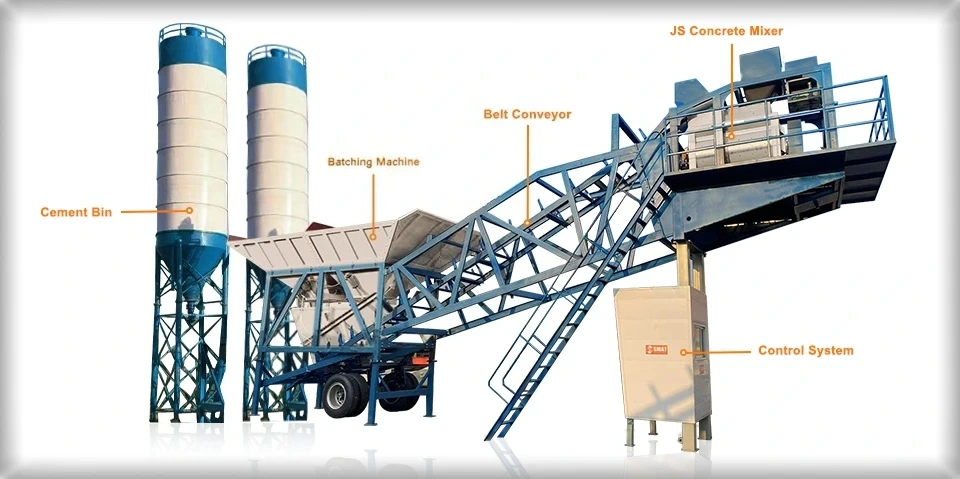
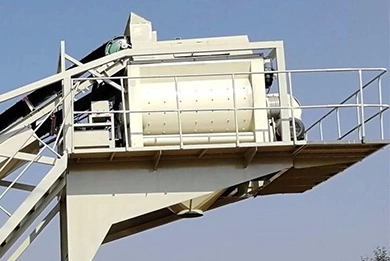
Mixer
Horizontal twin-shaft compulsory mixer has strong mixing ability, it can mix the materials evenly and effectively. It can mix concrete with different slumps and raw materials ratio. Its mixing blade and lining board are made of high chromium wear-resistant alloy. External shaft end support and special shaft seal ensure the long service life of the mixer. Planetary type mixer as an optional choice.
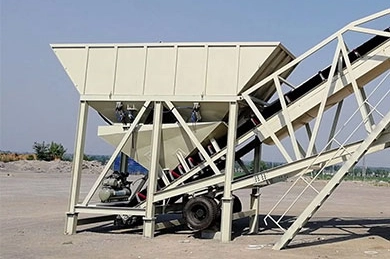
Batching Machine
The batching machine is divided into different silos, which can store cement, sand, aggregates, and other ingredients separately. The automated batching system ensures the accuracy of raw material dispensing.
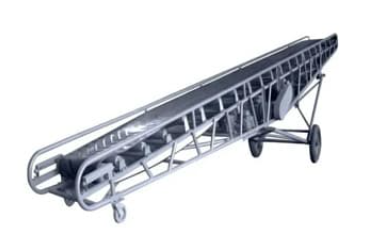
Aggregate Conveying System
After weighing, the aggregate is sent to the stationary concrete mixer by the lifting hopper or belt conveying system.
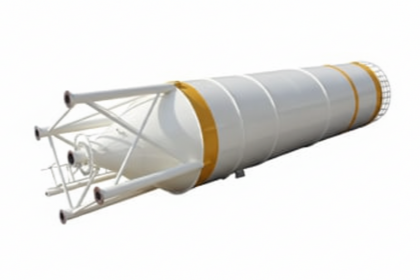
Material storage system
Used for storing aggregates, powdered materials (such as cement, fly ash), additives, etc. required for concrete production. Reasonable design, ensuring continuous and stable material supply, and improving production efficiency.
Including cement silo, aggregate silo, powder silo, etc., used to store different raw materials.
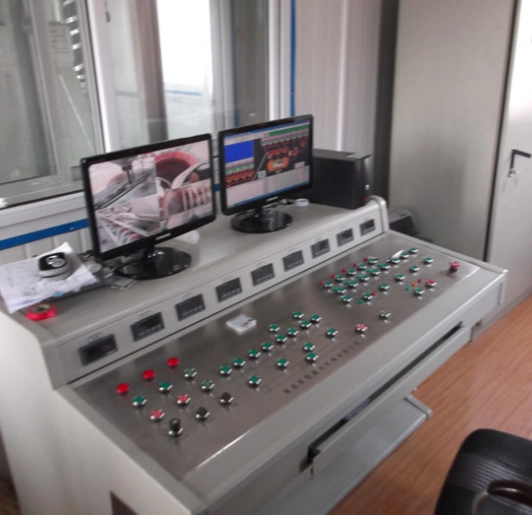
Control system
The whole plant is controlled by industrial control computer. This system has the following features: real-time data processing function; both automatic and manual control are available; simple and convenient operation, for the automatic control system, The PLC is the world famous Germany Brand, the electric components are Schneider Brand from France. It can save all the data of the plant and the materials ratio; It can also print all the report forms. Constant temperature containerized type of control room adopts sound and heat insulation colorful batten board which can ensure the working temperature of electrical devices and also provide a comfortable environment for the operator.
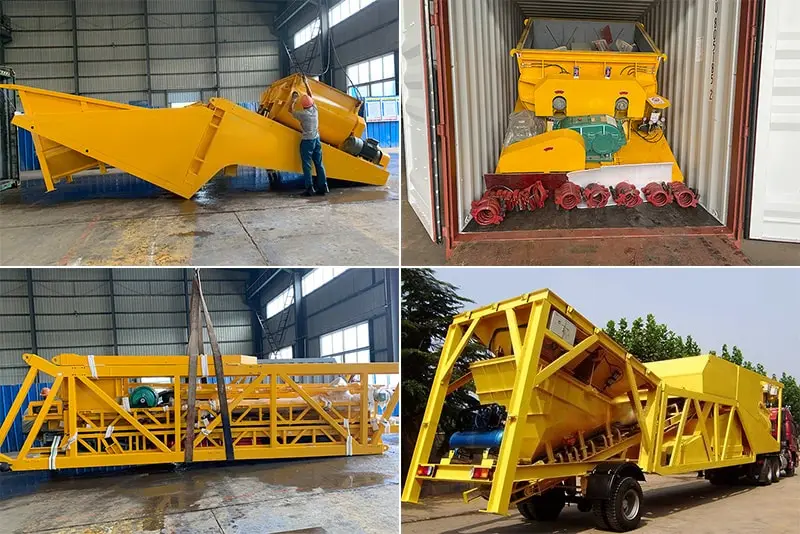
You can examine some photos of the product taken in our established facilities. For detailed information and references, you can contact our sales team by calling back or filling out the request form.
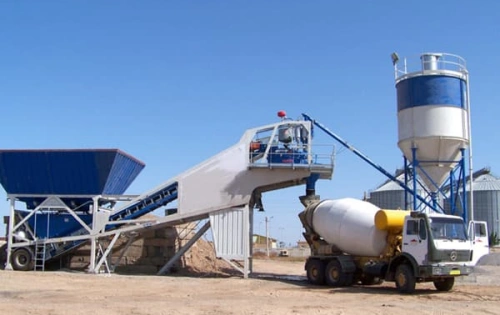
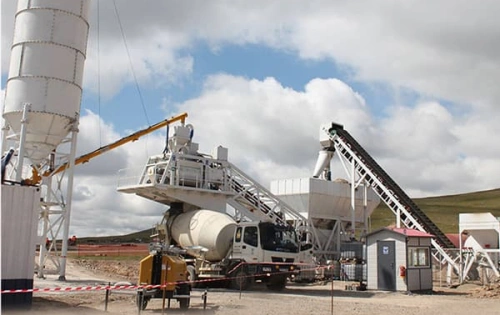
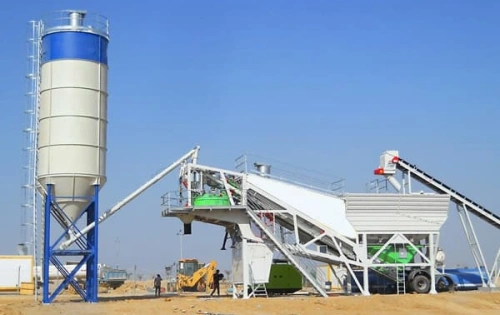
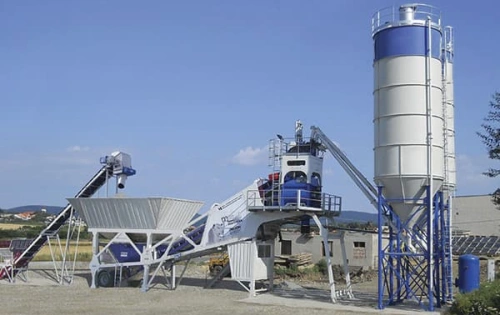
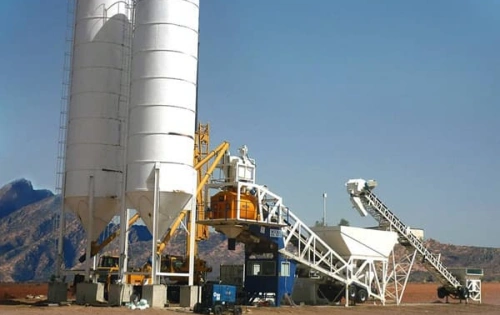
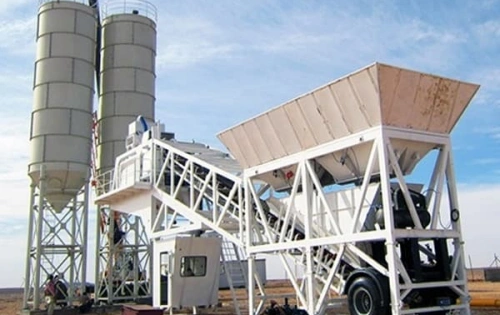
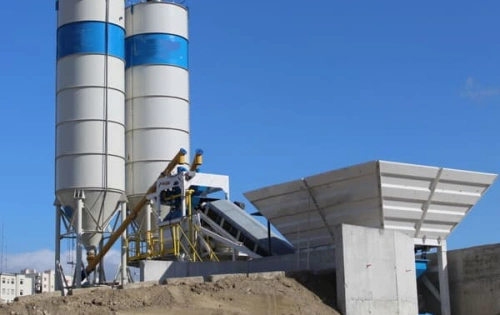
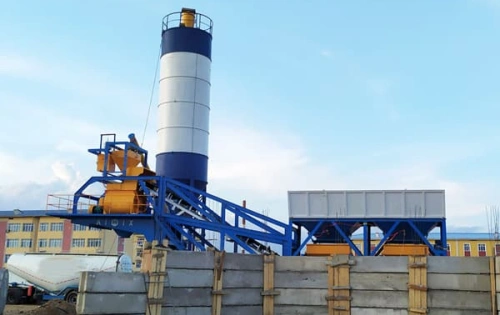
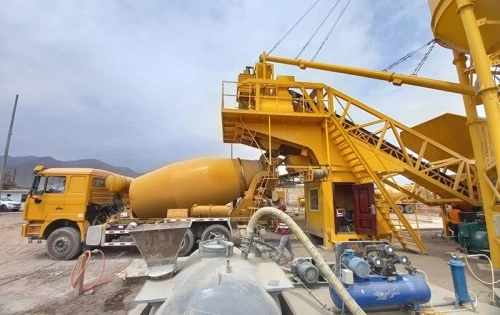
CCS Mobile Concrete Batching Plant Goods Delivery
Technical Engineering: What Defines a Premium Portable Plant?
A reliable mobile concrete mixing plant must be more than just a stationary plant on wheels. It requires specialized engineering to withstand the stresses of transport and rapid setup. Our 32 years of engineering mastery are reflected in every technical detail:
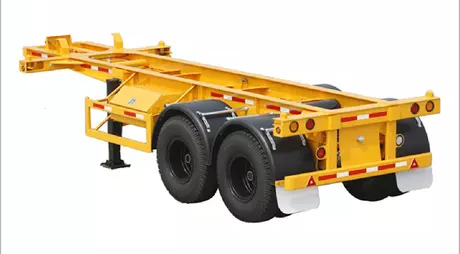
Heavy-Duty Semi-Trailer Chassis
Our mobile units are engineered for maximum portability. The entire plant—including the batching machine, weighing system, and mixer—is mounted on a robust chassis that can be easily transported with a standard semi-trailer tractor. This structural integrity ensures the plant remains perfectly aligned even after traveling hundreds of kilometers over rough terrain.
Dual Mixing Technologies: Compulsory vs. Gravity Drum
Depending on your project’s budget and concrete specifications, we equip our portable plants with two distinct mixing technologies:
- JS-Series Twin-Shaft (For YHZS Series): Heavy-duty compulsory mixers engineered for high-strength concrete and continuous commercial ready-mix projects.
- JZM-Series Drum (For LTY Series): Reversible gravity mixers, offering an exceptionally economical, low-maintenance choice for standard on-site pouring.
Precision Batching & Dosing Accuracy
Accuracy is never sacrificed for mobility. Our integrated PLD series batchers (and PLY-controlled systems) feature high-precision weighing:
- Aggregates: Up to 3000kg capacity with ±2% accuracy.
- Cement, Water & Additives: Independent scales with ±1% accuracy (with automatic difference compensation).
🔩Tech Focus: Mobile Batch Mixing vs. Volumetric Mixing
While researching portable options, you may encounter the mobile volumetric concrete batching plant. It is important to understand the engineering difference. Volumetric plants mix by volume (continuous flow), which is often less precise. In contrast, both our YHZS and LTY series utilize Compulsory or Reversible Batch Mixing technology.
By weighing every single gram of cement, water, and aggregate through high-precision load cells before each batch, we ensure compliance with strict engineering codes (like C50+ high-strength specs for the YHZS series). If your project requires certified structural integrity—such as for bridges or airport aprons—a batch-type mobile plant is the only reliable choice.
Mobile Concrete Batching Plant Price & ROI: Investing in Agility
The mobile concrete batching plant price is more than just an upfront expense—it is a strategic capital allocation. We believe that maximizing value involves balancing initial costs with long-term operational performance and equipment lifespan.
Estimated Investment Tiers
Based on 2026 market intelligence, a factory-direct price for mobile concrete plants typically falls into these ranges:
- Compact Series: $32,000 – $55,000 USD. Optimized for lower volumes and rapid project turnover.
- Commercial Series: $65,000 – $120,000 USD. Built for continuous high-intensity road and bridge projects.
- Flagship Models: $145,000+ USD. Mega-capacity hubs for national infrastructure.
Understanding the Total Cost of Ownership (TCO)
Beyond the initial purchase, the true mobile batching plant cost includes logistics, maintenance, energy, and labor. Efficient site planning with our unit can reduce these hidden expenses by up to 20% compared to inefficient alternatives.
Pro Tips to Maximize Your Investment Value
To achieve the highest ROI, focus on these four strategic pillars:
Prioritize Component Integrity
Don’t settle for lower-grade mixers or sensors. Choosing a plant with robust Twin-Shaft mixers and premium PLC systems guarantees steady output and prevents the catastrophic cost of unplanned downtime.
Focus on Energy Efficiency
Fuel and electricity are your largest recurring OPEX. Our plants feature optimized motors and low-resistance conveying systems to keep your daily operational price as low as possible.
Demand Scalability
Choose a manufacturer that offers modular designs. This allows you to upgrade your capacity (e.g., adding a mobile silo) as your business grows, without having to buy an entirely new system.
Build an OEM Partnership
Partner directly with mobile concrete batching plant manufacturers like us. Buying direct from the factory ensures you have lifelong access to genuine spare parts and expert technical support, protecting your asset’s resale value.
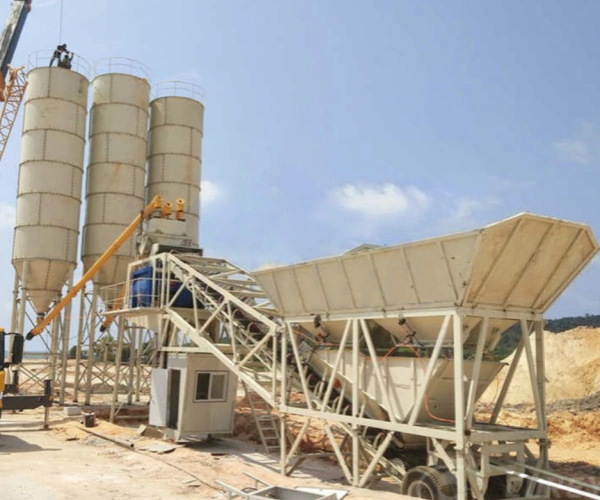
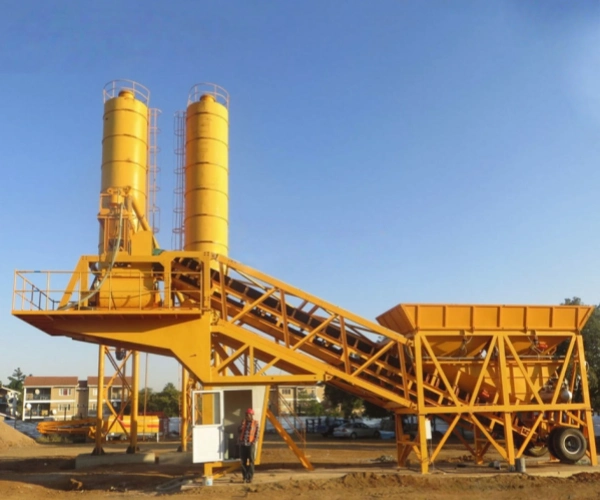
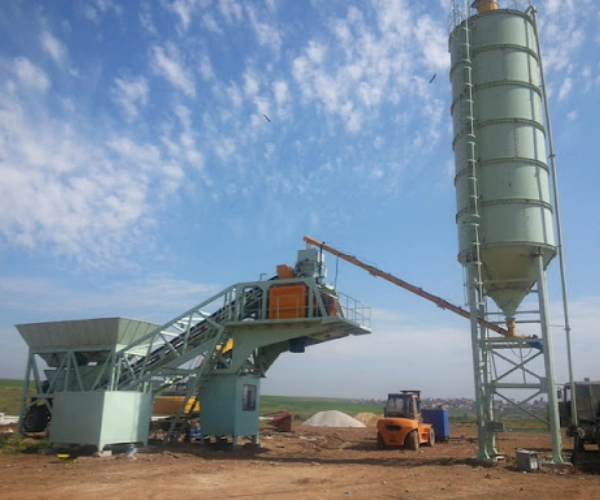
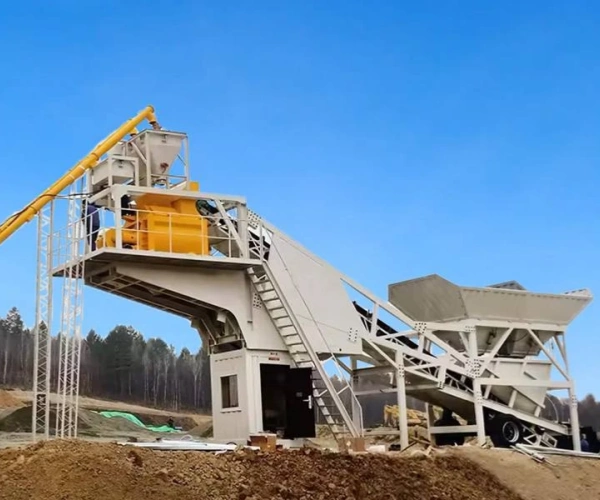
Our mobile Concrete Batch Plants In Action
Need a portable plant that has already proven itself in the field? Our YHZS mobile plants are towed, deployed, and producing across five continents — here are two in detail, with more below.
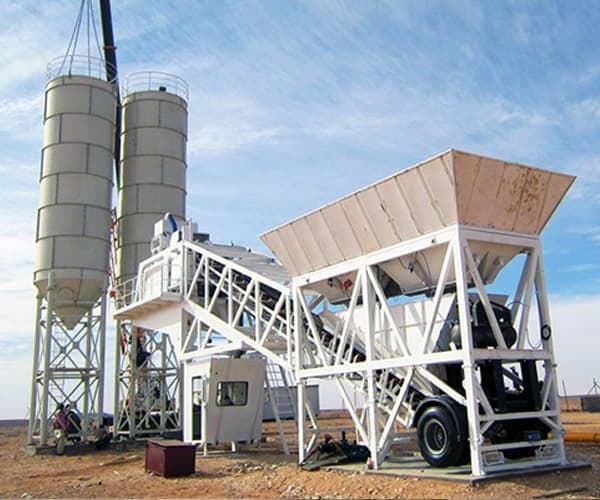
For a gold-mining and road contractor working deep in Papua New Guinea’s Highlands — with no grid power, no local water, and no technical support for hundreds of kilometers — we delivered a fully self-sufficient YHZS50 on a single towable chassis (zero foundation), with a diesel-generator power-stabilization system protecting the PLC and scales. It set up in just 3 days and relocated between phases in under 4:
“Operating in the remote Highlands means we had to survive without water or grid power, and this plant met every single challenge. The automatic generator transfer has saved our mixer during sudden blackouts, and the robust chassis survived over 1,000 km of unpaved roads.”
A road contractor running multiple 50-km highway segments needed an agile plant that could survive Punjab’s notorious load-shedding and post-monsoon mud. We recommended a YHZS60 mounting the batcher, weighing system and JS1000 mixer on one chassis, with a dual-power fail-safe that auto-switches to a backup generator within seconds of a grid drop. It was running in just 3 days on a compacted gravel pad:
“We were racing against both the hot weather and an unstable grid, and this plant saved us. A fully operational 60 m³/h plant in just 3 days on a simple gravel pad — without a massive concrete foundation — was a game-changer. The automatic generator backup has saved our mixer several times.”
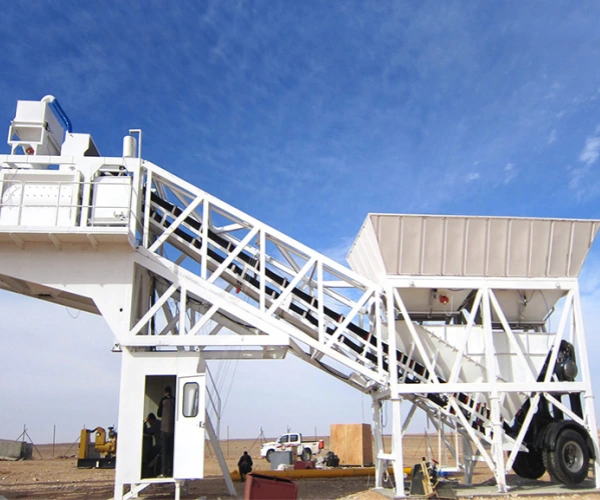
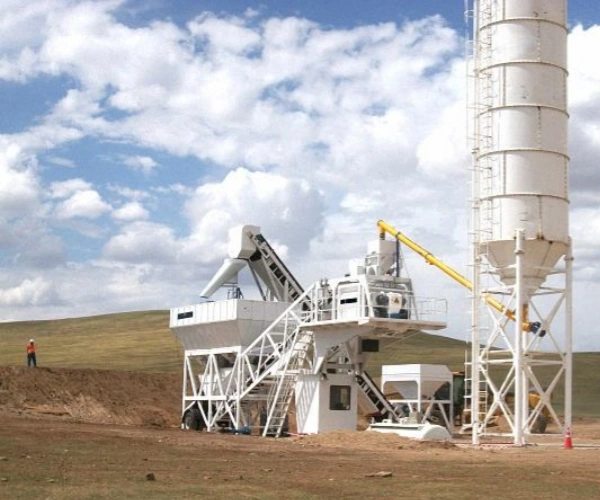
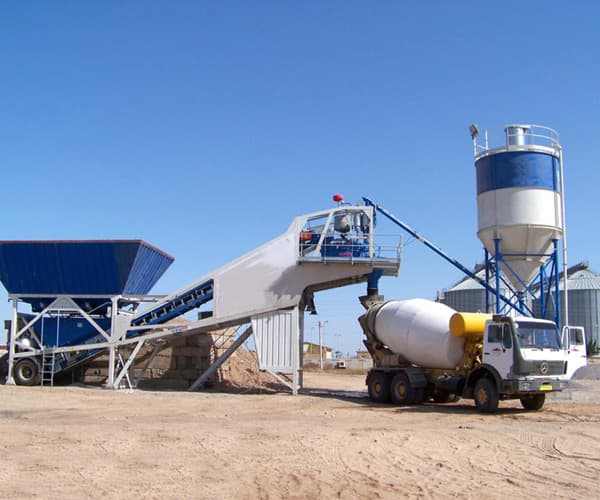
You can also explore more of our mobile YHZS projects by region:
Why Choose CCS Mobile Concrete Batching Plant Manufacturer?
Since our founding over three decades ago, CCS has established itself as a premier concrete plant manufacturer trusted by top-tier contractors and ready-mix producers worldwide. We don’t just assemble equipment; we engineer highly profitable, long-lasting concrete production hubs for landmark infrastructure, high-speed railways, and major dams.
While there are many concrete plant manufacturers in the global market, CCS stands out through our unwavering commitment to heavy-duty durability, fully customized turnkey solutions, and strict international certifications (CE, ISO, SGS, BV).
Today, our global footprint spans across diverse and extremely demanding environments. We proudly serve clients in advanced regions like Australia and South Korea, while powering massive urbanization and infrastructure projects throughout Southeast Asia, the Middle East, Central Asia, and Africa.
As a full-service organization, our commitment to your success extends far beyond the sale. We provide an end-to-end support system designed to maximize your Return on Investment (ROI).
Pre-Sales Engineering & Investment Consulting
Expert Installation & Operational Training
24/7 After-Sales Support & Maintenance
💡Expert Insights: Navigating Mobile Concrete Plants
What is Mobile Concrete Batching Plant?
A mobile concrete batching plant is a high-performance production facility engineered for rapid relocation and immediate on-site manufacturing. It is a fully automated industrial system that integrates raw material storage, precision weighing, conveying, mixing, and discharging into a single transportable chassis. By bringing production directly to the job site, it drastically reduces transit times and eliminates third-party delivery costs.
While it shares the same rigorous process flow and maintenance standards as a stationary plant, its unique value lies in its operational agility, effortless dismantling, and simplified logistics management. It is the ultimate “factory on wheels” for modern contractors.
Wide-Ranging Applications: Powering Diverse Industries
As a versatile portable concrete production system, our mobile batching plant is designed to meet the rigorous demands of various global engineering sectors:
- Urban & Municipal Infrastructure: Essential for the rapid construction of city roads, bridges, tunnels, and large-scale residential developments. It provides a steady, on-demand concrete supply in congested urban environments.
- Rural & Agricultural Development: The preferred solution for remote agricultural construction, water conservancy projects, and rural road networks where access to commercial ready-mix plants is limited.
- Energy & Industrial Sectors: Delivers reliable performance for high-stakes projects in power plants, oil and gas facilities, and mining infrastructure, ensuring continuous production in the most challenging terrains.
How Does a Mobile Concrete Plant Work? (Working Principle)
Step 1 Add Aggregates
Aggregates such as sand and gravel are transported via a conveyor belt or hopper to the precise measuring device, where they are accurately measured according to preset ratios before being fed into the mixer.
Step 2 Add Fillers
Materials like cement and fly ash are transported via a screw conveyor or pneumatic conveying system to the filler measuring device, where they are precisely measured and then added to the mixer.
Step 3 Add Water and Additives
The water/additive supply system delivers the appropriate amount of water and additives (e.g., plasticizers, retarders) to the mixer, according to the concrete’s performance requirements, ensuring the concrete’s strength and durability.
Step 4 Mixing
Once the mixing system is activated, the rotation of the mixer blades thoroughly combines the aggregates, cement, water, and additives to form homogeneous concrete, ensuring consistency and high quality.
Step 5 Transport and Discharge
Once mixing is complete, the ready-mix concrete is delivered to the construction site via a conveyor pump or mixer truck for pouring.
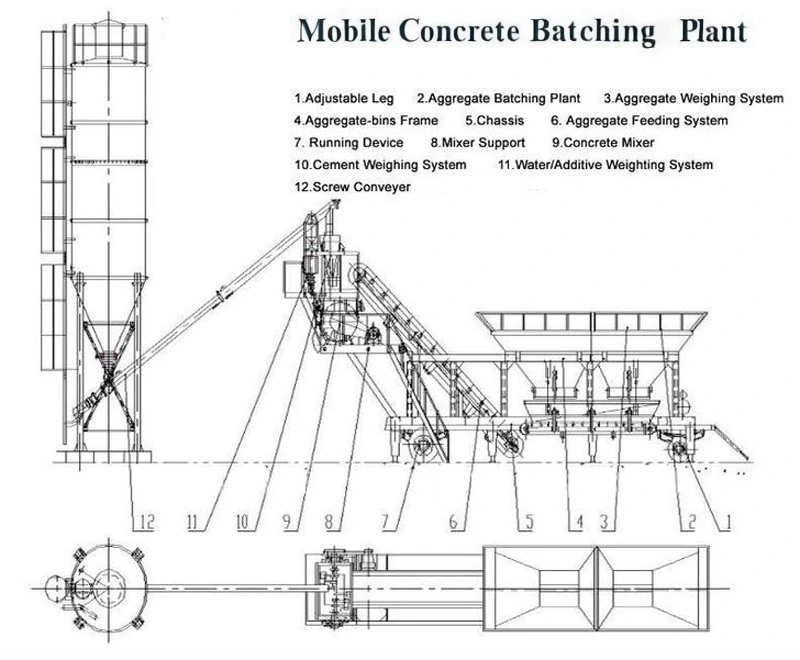
Layout of Mobile Concrete Plant
Cement Supply Solutions: Navigating Logistics in Remote Areas
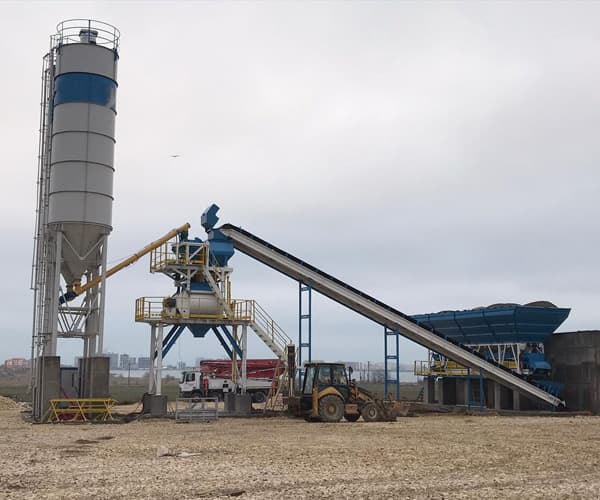
A mobile batching plant gives you the agility to produce concrete anywhere. However, supplying cement to a remote, moving job site can be a major logistical challenge. We offer highly flexible cement supply configurations to ensure your YHZS plant never runs out of powder.
Depending on your site conditions and local material availability, you can choose from three optimized supply methods:
① The 100% Portable Solution: Horizontal Mobile Silos
Best For: Projects moving every few weeks or sites where hiring heavy cranes is too expensive.
Our Setup: We pair your YHZS plant with a low-level, horizontal mobile silo. These units feature integrated telescopic legs and require no concrete foundation or crane for installation. They can be towed alongside the plant and set up within hours.
② The High-Volume Choice: Traditional Bolted Silos
Best For: Semi-permanent sites (6+ months) where bulk cement trucks have easy road access.
Our Setup: If your project demands massive volumes, we supply standard vertical bolted silos (50T to 200T+). These offer the most cost-effective bulk storage. They are shipped in flat-pack sections to minimize ocean freight and are easily assembled on a simple concrete slab.
③ The Remote Solution: Bagged Cement with Big-Bag Breakers
Best For: Extremely remote areas (islands, mountains, or developing regions) where bulk cement trucks cannot reach, and only bagged cement is available.
Our Setup: We can equip your mobile plant with a Big-Bag Breaker (Hopper) and a screw conveyor. Your crew can manually or via loader dump 1-ton big bags of cement into the hopper, and the screw will convey it directly into the plant’s weighing system—eliminating the need for a massive steel silo entirely.
How to Choose: Mobile vs. Stationary Concrete Plant?
Deciding between a stationary and a portable concrete batching plant is one of the most critical choices for any contractor or ready-mix supplier. Both types serve the same primary function—producing high-quality concrete—but they are engineered for very different operational models. To make the right decision, you must evaluate your project’s duration, production volume, and relocation frequency.
Key Differences to Consider
Project Duration & Relocation
Choose Stationary If: Your project (like a large dam, airport, or precast factory) will last for several years in a single location, or if you are setting up a commercial ready-mix business. Stationary plants require robust concrete foundations, making them harder to move but incredibly stable for long-term use.
Choose Mobile If: You are working on short-term projects (like road construction or wind farms) that require the plant to be moved every few months. Mobile plants are pre-wired on a wheeled chassis, allowing for rapid deployment and installation without massive civil foundation work.
Production Capacity
Stationary Advantage: They are built for high-volume output. A stationary plants can achieve capacities up to 240 m³/h. With larger aggregate bins, bigger twin-shaft mixers, and wider conveyor belts, they handle continuous, heavy-duty production flawlessly.
Mobile Limitation: Due to chassis weight and size restrictions for road transport, mobile plants generally max out around 120 m³/h. Their aggregate storage capacity is also typically smaller, requiring more frequent refilling by wheel loaders.
Initial Cost vs. Long-Term ROI
Stationary Plants: The initial setup cost is higher due to extensive foundation construction, site preparation, and longer installation times. However, for long-term projects, the lower maintenance costs, higher efficiency, and greater durability result in a significantly better Return on Investment (ROI) and a lower cost-per-cubic-meter over time.
Mobile Plants: Offer lower upfront installation costs and immediate production capabilities. They are highly cost-effective for contractors who need to frequently change sites, saving heavily on transport and re-erection expenses.
Our Recommendation
Invest in a Stationary Plant if you are building a permanent commercial ready-mix facility, a precast components factory, or supplying a multi-year mega-project where maximum capacity and unyielding stability are non-negotiable.
Opt for a Mobile Plant if agility is your priority and your business model relies on moving from one medium-sized construction site to the next.
| Feature | Mobile Concrete Batching Plant | Stationary Concrete Batching Plant |
| Flexibility | High, suitable for various construction environments, can be quickly relocated and installed | Low, typically used for long-term operations, not suitable for frequent project changes |
| Low, typically used for long-term operations, is not suitable for frequent project changes | Compact, highly integrated, easy to transport, and can be customized to different scales based on needs | Larger, composed of multiple units, requires fixed foundation support |
| Installation & Disassembly | Simple and quick, saves time and labor | Complex, longer construction period, requires more installation time and labor |
| Investment Cost | Relatively low, ideal for small to medium investors | Relatively high, suitable for large enterprises or long-term projects |
| Production Capacity | Relatively low | High, suitable for large-scale production |
| Applicable Project Types | Remote areas, temporary small to medium-sized projects | Large-scale, long-term projects requiring continuous concrete supply |
Selecting Your Ideal Mobile Concrete Batching Plant: A Strategic Guide
Choosing the right mobile concrete batching plant is a decision that dictates your project’s pace and profitability. We help you navigate the technical specifications to find the perfect match for your operational reality.
Align Capacity with Your Peak Pour
Production capacity is your first filter. Mobile plants are classified by theoretical output (e.g., YHZS25 to YHZS120).
The Rule of Thumb: Analyze your peak daily concrete requirement and choose a plant with a capacity 20% higher than your average demand. This buffer prevents equipment strain during high-intensity shifts and ensures you never fall behind your construction schedule.
Match Mixer Technology to Concrete Specs
Not all concrete is the same. Your mixer type should depend on your output requirements:
- Twin-Shaft Mixers (JS Series): The industry standard for high-volume, high-strength concrete used in roads and bridges. They offer rapid mixing cycles and exceptional durability.
- Planetary Mixers: If your project involves fine-grained or high-precision precast elements requiring superior surface quality, a planetary unit ensures maximum homogeneity.
Verify Road Compliance & Logistical Feasibility
Since mobility is your primary goal, the physical transport of the unit is critical.
- Transport Regulations: Before you buy a mobile concrete plant, check local height and weight limits for trailers. For very large units (like the YHZS120), you may need a modular configuration rather than a single-trailer setup to comply with national road permits.
- Site Access: Ensure your job site is accessible for a heavy-duty towing tractor and has a stable, pre-compacted surface for rapid “foundation-free” deployment.
Demand Intelligent Automation & Remote Support
Mobile projects are often in remote locations where skilled technicians are scarce.
- The Brain: Choose a plant with a fully automated PLC control system (Siemens/Schneider). This ensures consistent quality across every batch and reduces your reliance on highly specialized operators.
- The Safety Net: Ensure the manufacturer offers remote diagnostic capabilities. If an error occurs, our engineers in China can log into your system to troubleshoot instantly, preventing costly delays in the field.
Guide to Deploying, Maintaining, and Troubleshooting a Mobile Plant
Deploying a mobile batching plant is an exercise in speed and precision. While these plants are engineered for “plug-and-play” agility, following a strict operational protocol is essential to protect your asset during transport and ensure continuous high-quality output.
Phase 1: Rapid Mobilization & Site Setup
The primary advantage of a mobile unit is the elimination of heavy civil works. However, site preparation remains critical:
- Ground Compaction: While no deep foundations are needed, the plant must sit on a level, pre-compacted surface. Uneven ground can cause structural stress on the chassis and lead to weighing inaccuracies.
- Mechanical Unfolding: Our mobile units feature folding structures for transport. During setup, ensure all hydraulic leveling jacks are fully extended and locked before the main mixing tower is unfolded.
- Plug-and-Play Integration: Since our units are factory pre-wired, setup involves connecting the quick-access aviation plugs and plumbing the air/water lines. A rigorous test run is conducted on-site to ensure no electrical connections were loosened during road transit.
Phase 2: Mobile-Specific Maintenance Best Practices
Mobile plants endure unique stresses from frequent relocation and diverse site environments:
- Towing & Chassis Integrity: Regularly inspect the tires, brakes, and kingpin of the trailer unit. Ensure the wheel bearings are lubricated to prevent failure during long-distance highway transport.
- Hydraulic & Pneumatic Connections: Because mobile plants utilize more flexible hoses than stationary ones, check for leaks or abrasion at the pivot points where the structure folds and unfolds.
- Daily Mixer Washout: Just like stationary plants, the JS-series twin-shaft mixer must be flushed after every shift. On mobile sites, water supply can be limited—ensure your cleaning protocol is efficient to prevent concrete buildup.
Phase 3: Common Mobile Issues & Solutions
Even premium equipment encounters occasional issues. Here is how to handle the most common ones:
- Issue: Weighing Fluctuations after Relocation.
- Solution: Verify that the plant is perfectly level using the integrated spirit levels or digital sensors. Recalibrate the S-type load cells through the PLC interface to account for the new site’s vibration profile.
- Issue: Electrical Intermittency.
- Solution: Check the quick-connect aviation plugs. Dust or moisture from previous project sites can interfere with the signals. Clean the connectors with industrial contact cleaner.
- Issue: Chassis Vibration during Production.
- Solution: Ensure all mechanical locking pins are securely in place and that the support legs are resting on solid steel base plates to distribute the load evenly.
🤝Our Turnkey Support: Wherever the Project Takes You
Managing a mobile operation demands a manufacturer who understands the logistics of speed. We provide comprehensive site-planning assistance, remote diagnostic modules built into every mobile batching plant control system, and a rapid-response engineering team ready to fly to your site for expert support. We empower your team with the technical skills to relocate and operate your plant with 100% confidence.
Completing Your Mobile Setup: Essential Auxiliary Equipment
A mobile concrete batching plant is the core of your operation, but to achieve true “off-grid” production and seamless delivery in remote areas, you need a synchronized fleet of support equipment.
Consider these essential add-ons to maximize your operational independence:
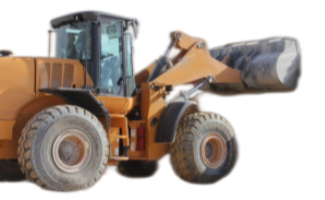
Heavy-Duty Wheel Loaders
The Front-End Powerhouse.
On mobile job sites, you lack permanent ramps or underground feeding systems. A wheel loader is mandatory to continuously feed sand and gravel into the YHZS aggregate bins.
Choose a loader with a bucket capacity that matches your plant’s hourly output to prevent production bottlenecks.
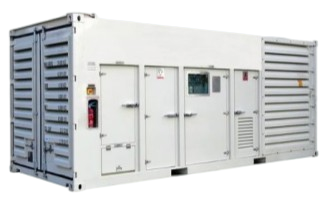
Industrial Diesel Generator Sets
Power Anywhere, Anytime.
Mobile plants are often deployed in remote regions where the municipal power grid is unstable or non-existent. A high-KVA diesel generator ensures your PLC system and mixer motors run without interruption.
We can advise on the exact power requirements (e.g., 100kVA to 250kVA) based on your specific YHZS model.
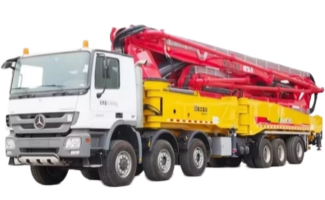
Rugged Transit Mixer Trucks
The Mobile Supply Chain.
Even for on-site production, you need transit mixers to transfer concrete from the plant’s 3.8m-4.1m discharge gate to the exact pouring location, keeping the mix agitated and fresh.
For remote road projects, smaller 6m³ or 8m³ trucks are often preferred for better maneuverability on rough terrain.
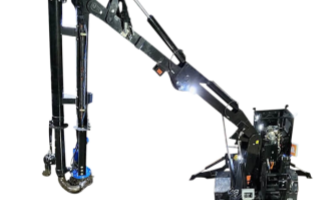
Concrete Trailer or Boom Pumps
Precision Placement.
If your project involves bridges, tunnels, or high-rise foundations, a concrete pump is essential to push the homogeneous mix directly into the forms.
Buying vs. Renting: Which is Better for Your Business?
Many contractors initially search for mobile concrete batching plant hire or rental services to avoid high upfront capital. While renting provides a low entry barrier, owning your facility is often the smarter long-term financial decision.
Asset Equity vs. Sunk Costs
Every dollar spent on mobile batching plant for rent is a sunk cost with zero return. When you buy our plant, you own a valuable industrial asset that maintains high resale value in the global market.
Operational Control
Rental units are often aged and prone to breakdowns. Owning a brand-new plant gives you the peace of mind of a factory warranty, 24/7 technical support, and the freedom to relocate the plant to any project instantly without waiting for a lease agreement.
Cost-Benefit Analysis
With our competitive factory prices, the cost of purchasing a high-quality YHZS mobile plant is often equivalent to just 12-14 months of rental payments. If your projects last longer than a year, purchasing is the superior financial move.
Business Feasibility: Planning Your Mobile Concrete Enterprise
Investing in a mobile concrete batching plant is a high-yield decision, but long-term success requires meticulous planning. Before you finalize your purchase, we recommend a 4-step market feasibility audit:
Regulatory & Policy Research
Understand local zoning laws, environmental regulations, and national infrastructure roadmaps for the next 5 years.
Demand Estimation
Calculate the total concrete volume required by ongoing residential and industrial projects within your 30km service radius.
Competitor Analysis
Identify the number and scale of existing stationary and mobile batching plant operators in your area to determine your pricing strategy.
Capital Assessment
Evaluate your total liquidity, covering both early-stage setup and 6 months of operational working capital.
Investment Blueprint: Total Setup Cost for a Large-Scale Hub
To help you budget, here is a professional estimate for a professional mobile production hub (based on an annual output of 500,000 m³ using a dual-line system):
- Site Construction & Land: For a high-volume hub, you may require ~15 acres. Factoring in land leveling, internal road construction, and office facilities, expect a setup cost of $400,000 – $700,000 USD.
- Mechanical Equipment: A high-end dual-line setup (e.g., 2 x YHZS100 mobile plants) will cost approximately $170,000 – $220,000 USD.
- Auxiliary Fleet: Investing in a fleet of transit mixers and pump trucks is often the largest expense, ranging from $280,000 to $430,000 USD.
- Labor & Operating Reserves: Budget for 12-15 employees and initial utility/maintenance bills, typically totaling $150,000 – $200,000 USD annually.
Total Projected Investment: For a premier 500,000m³ annual facility, your total capital requirement is approximately $1.7M – $2.1M USD.
How to Choose a Reliable Mobile Batch Plant Manufacturer?
Partnering with the right mobile concrete batching plant manufacturer is the single most important factor for your project’s success. Unlike stationary plants, mobile units must endure the vibrations of travel and the stress of repeated assembly.
(1) Proven Industry Experience
What to Look For: Look for manufacturers with decades of specialized experience. A long track record proves their expertise in design, production, and solving real-world engineering challenges.
Our Advantage: With over 32 years of dedicated manufacturing excellence, we have deep roots in concrete machinery, ensuring every plant we build is battle-tested and refined.
(2) Global Presence & Successful Case Studies
What to Look For: A reputable supplier should have a strong global footprint with successful installations across diverse climates and regulatory environments. Ask for project references.
Our Advantage: Our stationary plants are powering critical infrastructure projects in demanding markets worldwide, from Australia and South Korea to Southeast Asia, the Middle East, and Africa.
(3) Customization & Product Range
What to Look For: Avoid “one-size-fits-all” approaches. A professional manufacturer offers flexibility, from compact mobile units to massive stationary plants, tailoring configurations to your exact site layout and mix requirements.
Our Advantage: We provide a comprehensive portfolio (Stationary, Mobile, Dry Mix) and specialize in Ultimate Modular Design, ensuring your plant perfectly aligns with your operational goals.
(4) Comprehensive After-Sales Support
What to Look For: A plant is only as good as the service behind it. Ensure the manufacturer provides turnkey installation, operator training, rapid spare parts delivery, and robust warranty terms.
Our Advantage: We are a full-service organization. From ROI forecasting to 24/7 remote diagnostic assistance and dispatching engineers for on-site erection, our support never sleeps.
(5) Factory Transparency & Certified Quality Standards
What to Look For: Credible manufacturers adhere to strict international manufacturing standards and welcome factory inspections. Verified certifications are non-negotiable proof of quality, safety, and environmental compliance.
Our Advantage: Our commitment to excellence is backed by globally recognized certifications, including CE, ISO, SGS, and BV. We utilize heavy-duty structural steel and premium global components in every plant we build. We invite you to visit our manufacturing facilities or request a live virtual tour to witness our rigorous quality control processes firsthand.
FAQ
Yes. Unlike stationary plants that require deep concrete pilings, a portable concrete plant is designed to sit on a pre-compacted flat surface. This drastically reduces your civil setup cost and site preparation time.
Our YHZS series is engineered as a unitized system on a wheeled chassis. It can be easily transported with a standard semi-trailer tractor. For international shipping, we ensure the modules fit perfectly into standard containers to minimize ocean freight.
Absolutely. Equipped with our heavy-duty JS-series twin-shaft compulsory mixers, our mobile units deliver the same perfect homogeneity as our stationary plants, making them suitable for dams, high-speed rail viaducts, and bridges.
The cement silo does require a foundation. Since mobile batching plants do not include a cement silo, you will still need to lay a foundation for the silo. However, we do offer a modular design for a foundation-free horizontal cement silo. For more information, please feel free to contact us.
Absolutely. We offers flexible customization options to adjust designs based on your specific needs. Whether it’s in production capacity, configuration, functionality, or adaptation to different environmental conditions, we can provide tailored solutions to ensure your project requirements are fully met.
If your site has a stable and sufficient municipal power supply, a generator is not mandatory. However, if you are operating in a remote area with unreliable grid power or frequent outages, we strongly recommend investing in a backup diesel generator. This ensures uninterrupted production and prevents fresh concrete from setting inside the mixer during an unexpected power cut. We can advise you on the exact KVA rating required for your specific plant model.
Yes, absolutely. Our concrete batching plants feature an Ultimate Modular Design, which provides exceptional flexibility for future business growth.
If your production demands increase, you do not need to buy an entirely new plant. You can easily expand your operation by adding extra cement silos to increase storage, installing additional aggregate bin compartments for more complex mix designs, or upgrading to a higher-capacity twin-shaft mixer. Our control software is also fully scalable, allowing seamless integration of new components (like ice or microsilica dosing systems) without disrupting your existing workflow.