Home » Concrete Batch Plant For Sale » Dry Mix Concrete Batching Plant
Dry Mix Concrete Batching Plant
25m ³/h ~ 100m ³/h | Cost: $22,000-$95,000 | Easily being transported
Dry Mix Concrete Batching Plant For Sale
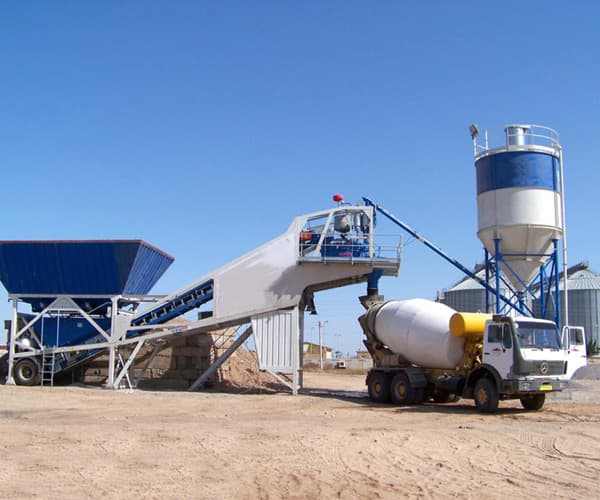
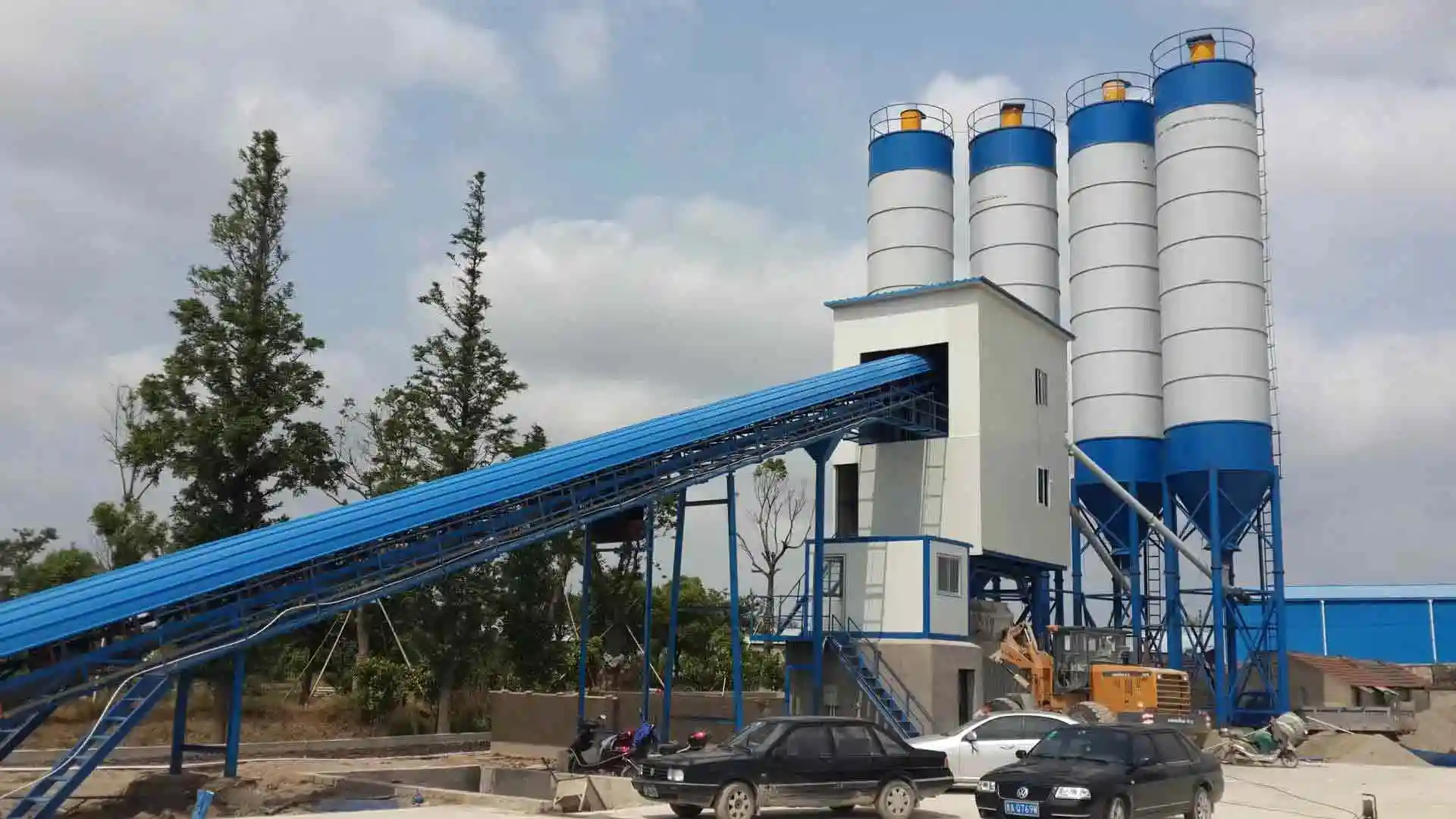
In the world of heavy construction, speed and logistical efficiency are paramount. The dry mix concrete batching plant (also known as a batching plant dry mix) stands out as a specialized solution designed for high-volume production without the complexity of a central mixing unit. Unlike conventional “wet” plants, a dry mix batching plant focuses on the precise weighing and rapid dispensing of raw materials directly into transit mixer trucks.
As an engineering-driven manufacturer with over 32 years of expertise, we have refined the dry mix concrete plant to perform heavy-duty operations in the world’s most demanding environments. Whether you are managing massive highway projects, airport runways, or remote infrastructure, our HZSG series ensures that your concrete is mixed thoroughly and accurately inside the truck drum, eliminating the need for on-site central mixing and reducing your initial capital expenditure.
Dry Mix Concrete Batching Plant Price List
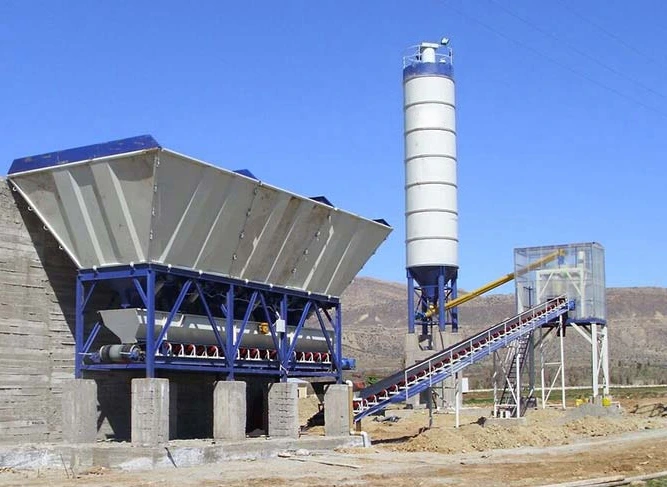
The scope of a dry mix concrete batching plant is between 25m3/h and 100m3/h. It is relatively smaller and suitable for medium-sized temporary construction projects.
| Best Products | Production Capacity | EXW Price |
|---|---|---|
| HZS25G ~ HZS60G | 25 m³/h ~ 60 m³/h | $22,000 – $45,000 |
| HZS75G ~ HZS100G | 75 m³/h ~ 100 m³/h | $55,000 – $95,000+ |
The price is for reference only. Please get in touch with us for the latest quotation.
Dry Mix Concrete Batching Plant Price List
The scope of a dry mix concrete batching plant is between 25m3/h and 100m3/h. It is relatively smaller and suitable for medium-sized temporary construction projects.
| Best Products | Production Capacity | EXW Price |
|---|---|---|
| HZS25G ~ HZS60G | 25 m³/h ~ 60 m³/h | $22,000 – $45,000 |
| HZS75G ~ HZS100G | 75 m³/h ~ 100 m³/h | $55,000 – $95,000+ |
The price is for reference only. Please get in touch with us for the latest quotation.
Dry vs. Wet Batch Concrete Plant: Which Technology Suits Your Project?
Understanding the fundamental difference between a dry mix concrete batching plant and a wet batch plant is essential for optimizing your ROI. While both systems are engineered to produce high-quality concrete, the distinction lies in where the actual mixing happens.
Wet Mix Concrete Plant (Central Mix)
This configuration includes a twin-shaft compulsory mixer. All ingredients are agitated at the plant before being discharged as wet concrete. It is the preferred choice for precast elements and high-strength specs where perfect homogeneity is required instantly.
Dry Mix Concrete Plant (Transit Mix)
A dry mix batching plant eliminates the central mixer entirely. Aggregates, cement, water, and additives are accurately measured and then poured into a transit mixer truck via a specialized chute. The truck’s rotating drum performs the mixing during the journey to the job site.
Why Your Project Needs Dry Mix Concrete Batching Plant
Lower Initial Investment
Without the expensive central mixing unit, the initial concrete plant price is significantly lower.
Zero Mixer Maintenance
No mixing blades or liners to replace, and no daily “washout” of the mixer is required, drastically reducing downtime.
Ideal for Long Distances
In hot climates or for remote sites (1+ hour away), dry batching prevents the concrete from setting prematurely, as mixing only begins when the operator adds water or starts the high-speed drum rotation.
Different Capacities of Dry Mix Concrete Plants for Free Choice
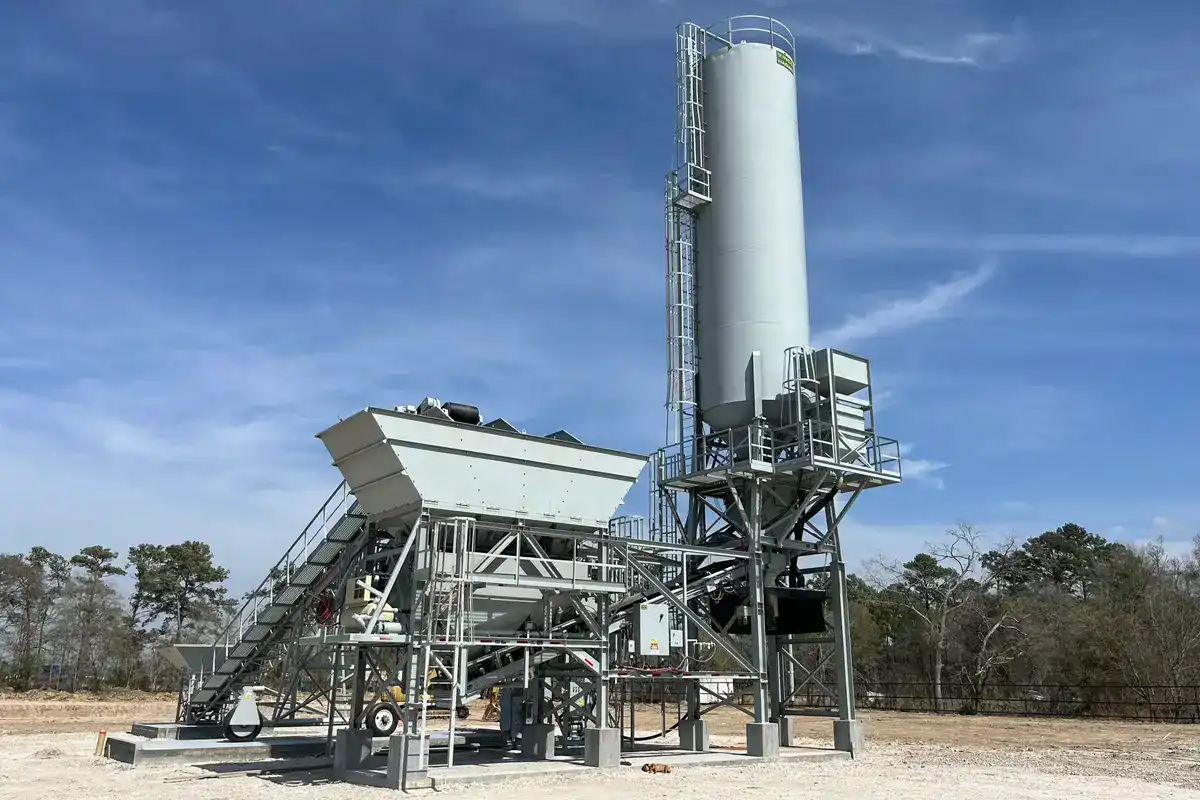
Our dry mix concrete plants for sale come in various capacities, each tailored to different types of applications. Here is the common capacity ranges and their ideal applications to help you make an informed decision:
SMALL CAPACITY
25 m³/h – 50 m³/h
Dry Batching Plant
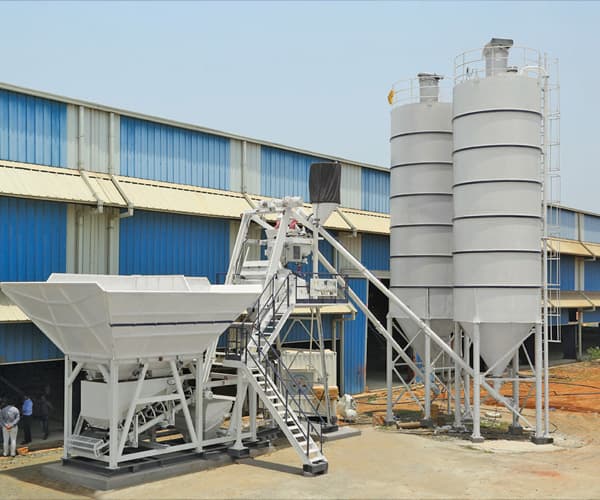
Models: HZSG25, HZSG35, HZSG50
- Aggregate bins: 2 or 3 bins
- Usages: The small concrete plant is ideal for small residential buildings; temporary construction sites; rural concrete road construction
- Advantages: Lower cost, easy to install, relocate, and operate;
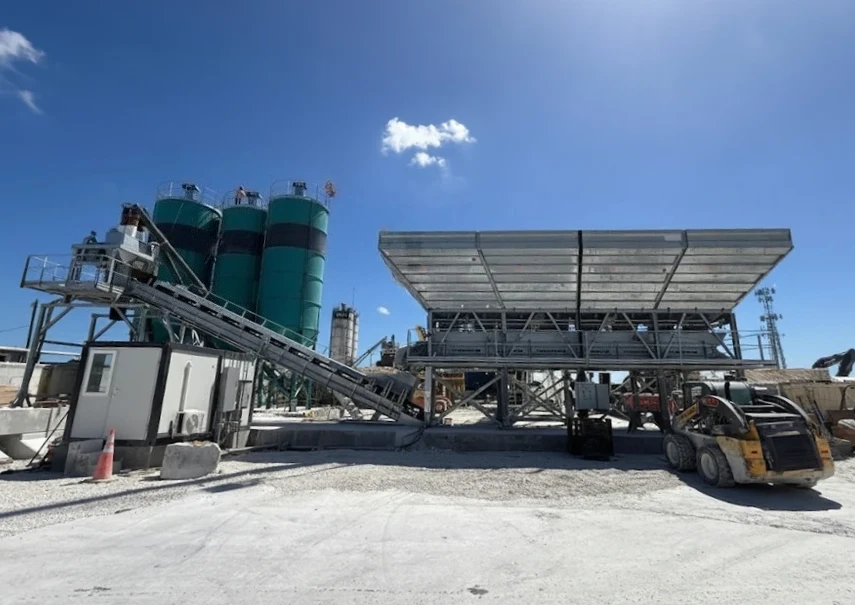
MEDIUM CAPACITY
60 m³/h – 100 m³/h
Dry Batching Plant
Models: HZSG60, HZSG75, HZSG90, HZSG100
- Aggregate bins: 3 or 4 bins
- Equipped mixer type: twin shaft mixer
- Applications: Infrastructure development, such as road construction, bridges, and drainage systems; Commercial building project; Industrial facilities; Precast concrete manufacturing;
- Advantages: Higher production capacity; Suitable for remote or rural areas
Custom Dry Mix Concrete Batching Plants
If you don’t see what you are looking for, we can build you a custom dry mix concrete batch plant to meet your specifications.
Our modular batch plants are designed for countless configurations in mind, resulting in unique layouts tailored to our customers’ specific requirements.
Contact us to learn more about our custom machines.
Strategic Advantages of the Dry Mix Concrete Batching Plant
Choosing a dry mix concrete batching plant is a strategic decision that prioritizes logistical agility and long-term cost control. By eliminating the central mixing unit, we have engineered a system that delivers unparalleled commercial benefits for high-volume, long-distance infrastructure projects.
1. Lowest Initial Capital Investment
By removing the most expensive component—the central twin-shaft mixer—and its associated heavy-duty tower, the dry mix batching plant price is typically 20% to 40% lower than wet-mix plants. This significantly lowers the entry barrier for new contractors and commercial ready-mix startups.
2. Outstanding Energy & Fuel Efficiency
Without a massive mixer motor to power, your facility’s industrial electricity consumption is drastically reduced. Energy savings can reach 40-50 kW·h per cubic meter, making the batching plant dry mix the most eco-friendly choice for off-grid sites running on diesel generators.
3. Unmatched Long-Distance Logistics
Since materials stay dry until they reach the transit mixer truck, there is zero risk of premature concrete setting. This extended material viability allows you to serve remote job sites over 50km away or operate in extreme heat without compromising concrete quality.
4. Minimal Maintenance & Zero Downtime
No central mixer means no high-frequency wear parts like mixing blades or liners to replace. The “No-Mixer” design eliminates the 70% of maintenance time typically spent on washing out a wet plant, ensuring your facility can run continuously 24/7.
5. High Production Flexibility & Real-Time Dosing
The dry mix batching plant allows for real-time adjustments to water-cement ratios during the transportation phase. This flexibility is critical for adapting to changing weather conditions or specific slump requirements at the pouring site.
6. Zero Wastewater Discharge
By eliminating wet operations at the plant, you completely remove the need for sedimentation basins and complex wastewater treatment facilities. This “Dry Operation” makes securing environmental permits significantly easier in urban or sensitive zones.
7. Faster Capital Recovery & High ROI
Combining lower CAPEX (equipment price) with lower OPEX (energy and maintenance), most our clients achieve full capital recovery within 6 to 9 months, far outperforming traditional wet-mix investments in high-demand markets.
8. Modular Design for Rapid Deployment
Our dry mix concrete plant features a streamlined modular structure that fits perfectly into standard shipping containers. It requires minimal civil foundation work and can be erected and operational in record time, making it ideal for fast-track projects.
Dry Mix Concrete Batching Plant Specification
To meet the high-volume demands of global infrastructure, we have developed a comprehensive range of dry mix concrete batching plant configurations. Our HZSG series is built for heavy-duty stability, ensuring that every batch is dispensed with industrial precision.
Below are the definitive parameters for our most popular dry mix configurations:
| Type | HZS25G | HZS35G | HZS50G | HZS60G | HZS75G | HZS90G | HZS100G | |
| Theoretical Production Capacity(m3/h) | 25 | 35 | 50 | 60 | 75 | 90 | 100 | |
| Matched Aggregate Batcher | PLD800 | PLD1200 | PLD1600 | PLD1600 | PL2400 | PLD2400 | PLD3200 | |
| Weighing Accuracy | Aggregate (KG) | 1500Kg ±2% | 2000Kg ±2% | 3000Kg ±2% | 3000Kg ±2% | 4500Kg ±2% | 4500Kg ±2% | 4500Kg ±2% |
| Cement(KG) | 300Kg ±1% | 450Kg ±1% | 900Kg ±1% | 900Kg ±1% | 1500Kg ±1% | 1500Kg ±1% | 1500Kg ±1% | |
| Fly Ash(KG) | 500Kg ±1% | 600Kg ±1% | 600Kg ±1% | 600Kg ±1% | 600Kg ±1% | 600Kg ±1% | 1500Kg ±1% | |
| Water (KG) | 200Kg ±1% | 300Kg ±1% | 600Kg ±1% | 600Kg ±1% | 600Kg ±1% | 600Kg ±1% | 1000Kg ±1% | |
| Additive(KG) | 20Kg ±1% | 30Kg ±1% | 100Kg ±1% | 100Kg ±1% | 100Kg ±1% | 100Kg ±1% | 100Kg ±1% | |
Parameters are for reference only, please consult us for details.
Parts of Concrete Batching Plant Dry Mix Type
A premium dry mix concrete batching plant is an integration of heavy-duty structural engineering and intelligent automation. Since the central mixer is eliminated, the precision of each remaining component becomes even more critical to ensuring concrete quality. We utilize world-class components designed for industrial endurance and high-speed throughput.
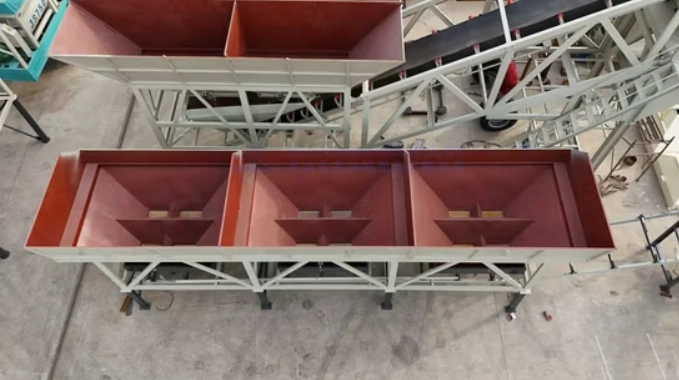
High-Capacity Aggregate Storage & Pre-Feeding System
- The Component: Our PLD series aggregate batchers feature 3 to 6 modular bins with cumulative or independent weighing options.
- The Advantage: We offer an optional aggregate pre-feeding system. This specialized conveyor setup eliminates the need for expensive and space-consuming concrete loading ramps, allowing wheel loaders to work on flat ground and significantly reducing your dry mix concrete plant footprint.
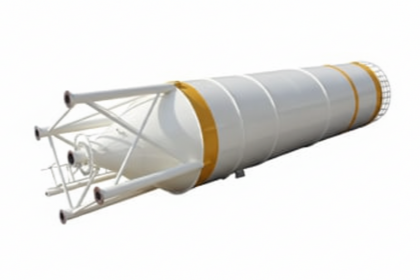
Heavy-Duty Industrial Cement Silos
- The Component: Bolted or welded steel silos designed to keep cement, fly ash, and slag perfectly dry.
- The Advantage: For remote sites where bulk cement is unavailable, our silos can be integrated with a Big-Bag Breaker (Sack Splitter). This allows you to easily feed 1-ton bags into the system via a synchronized screw conveyor, providing ultimate logistical flexibility.
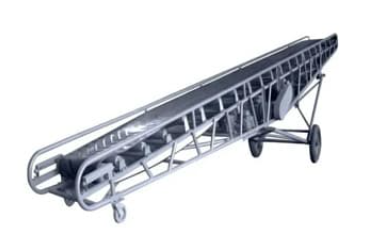
High-Speed Inclined Belt Conveyor
- The Component: A high-throughput belt system that transfers sand and stone from the batcher directly to the truck loading point.
- The Advantage: Our belts feature an enclosed dust-shield design and high-friction ribbed belts, ensuring zero material spillage and consistent throughput even at steep angles.
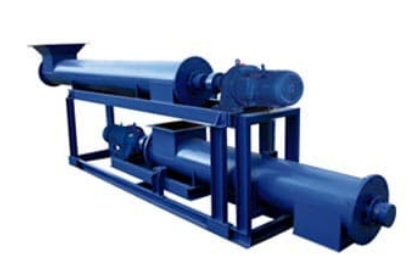
Precision Weighing & Automatic Compensation System
- The Component: Independent hoppers for cement, fly ash, water, and chemical additives.
- The Advantage: Following our strict manufacturing standards, each dry mix concrete plant is equipped with an advanced automatic difference compensation function. This ensures that every material—from aggregates (±2%) to powders and liquids (±1%)—is measured with absolute surgical precision. Our systems include dedicated weighing for fly ash, ensuring your high-performance mix ratios are never compromised.
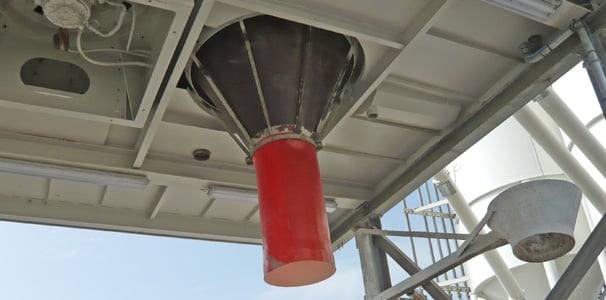
Optimized Truck Mixer Interface (Chute)
- The Component: The final discharge point where dry materials meet the transit mixer.
- The Advantage: Our heavy-duty discharge chutes are engineered with an aerodynamic flow design to prevent dust plumes and ensure all materials enter the truck drum at high velocity without blockages.
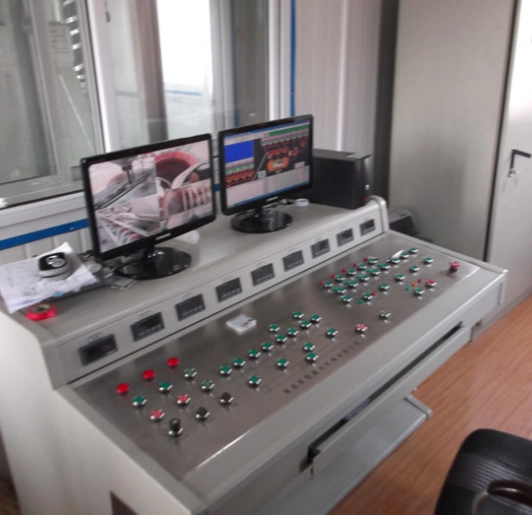
The Intelligent Control Nerve Center (Siemens & Schneider)
- The Component: A containerized, constant-temperature control cabin.
- The Advantage: The entire plant is managed by an industrial control computer featuring a world-famous Germany Brand PLC and French Schneider electrical components. The system supports both automatic and manual modes, processes production data in real-time, and generates detailed report forms for audit purposes. To ensure operator comfort and device longevity, our control rooms utilize heat and sound-insulated colorful batten boards, providing a stable working environment in any climate.
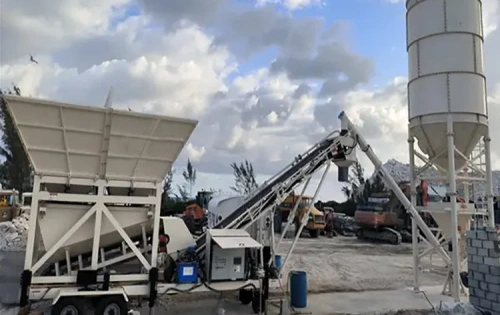
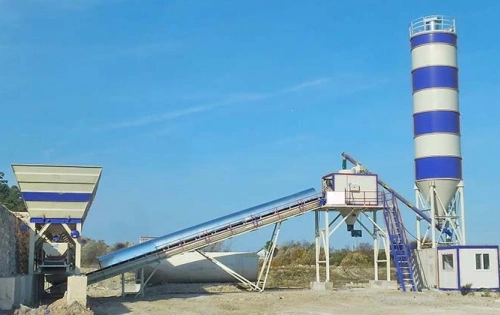
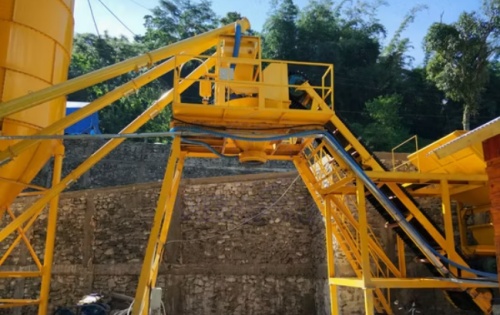
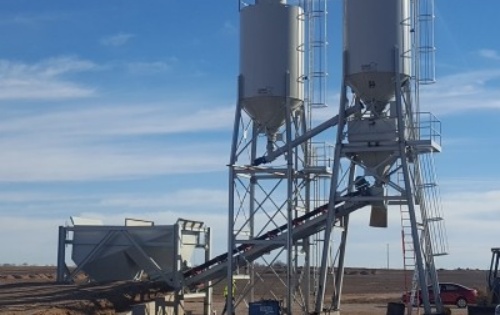
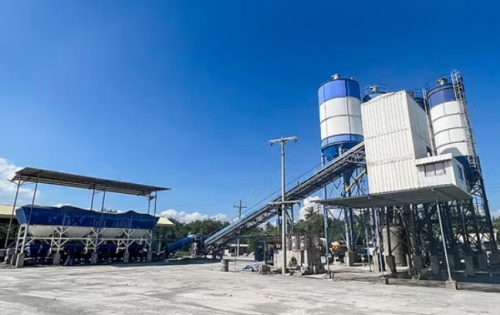
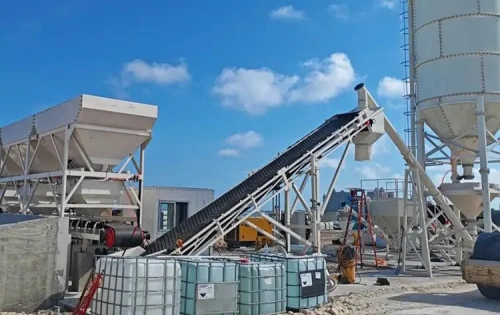
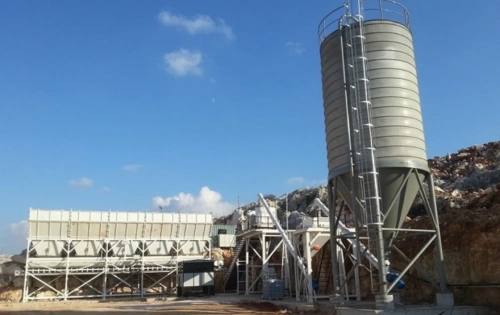
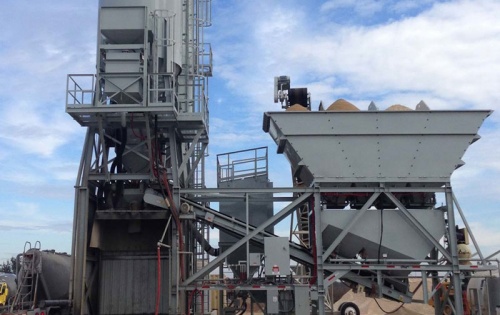
You can examine some photos of the product taken in our established facilities. For detailed information and references, you can contact our sales team by calling back or filling out the request form.
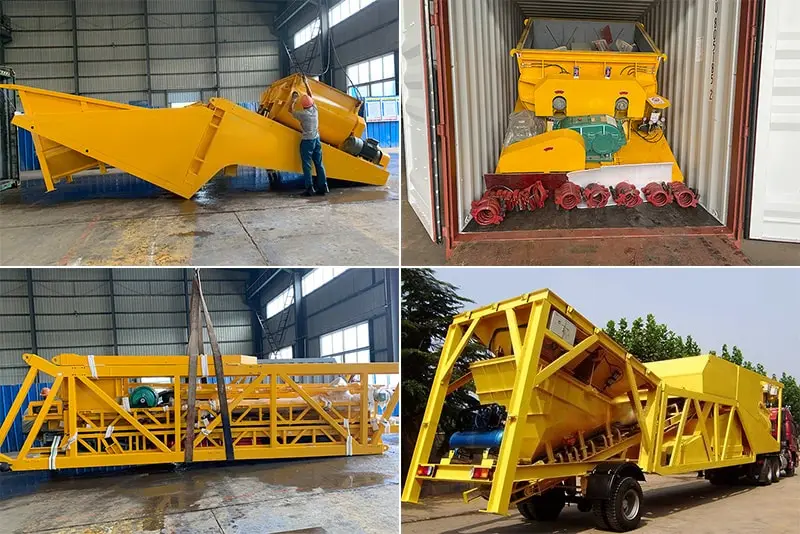
CCS Dry Mix Concrete Batching Plant Goods Delivery
Core Components: How a Premium Dry Mix Plant Operates
A high-performance dry mix batching plant relies on high-speed material handling and surgical weighing accuracy. We utilize world-class components to ensure your batching plant dry mix delivers non-stop performance.
High-Precision Aggregate Batcher
Our PLD series batchers are the foundation of your mix design. Equipped with industrial-grade cylinders and double-gate discharge systems, they ensure rapid material transfer into the weighing hopper with a consistent ±2% tolerance.
Specialized Discharge Chute System
This is the most critical part of a dry mix concrete plant. Since there is no central mixer, the ingredients (sand, gravel, cement, and water) must be funneled into the transit mixer truck drum with zero spillage and zero dust leakage. Our heavy-duty chutes are designed for high-velocity loading to minimize your truck turnaround time.
Intelligent Control Center: Siemens & Schneider
The “brain” of the HZSG series is our automated control cabin. We utilize Germany Brand PLCs and Schneider electrical components from France to ensure 100% operational stability.
- Automatic Compensation: The software features automatic difference compensation, ensuring every batch perfectly matches your required strength.
- Climate Control: Our containerized control rooms feature heat and sound insulation, providing a comfortable environment for operators in any climate.
Dry Mix Concrete Batching Plant Price & ROI Guide
The dry mix batching plant price is one of the most compelling reasons for contractors to adopt this technology. By eliminating the most expensive single component of a concrete plant—the central mixing unit—you drastically reduce your initial Capital Expenditure (CAPEX) while gaining significant operational agility.
Estimated Investment Tiers (2026 Guidelines)
Based on current global market conditions, the factory-direct dry mix concrete plant price typically falls into three strategic ranges:
- Compact / Mobile Series ($25,000 – $45,000 USD): Ideal for remote highway repairs or small-scale local supply where rapid relocation is the priority.
- Standard Commercial Series ($50,000 – $85,000 USD): The “Workhorse” tier for ready-mix suppliers serving projects within a 50km–100km radius.
- High-Capacity Industrial Hubs ($90,000+ USD): Designed for massive infrastructure projects (dams, airports) requiring continuous high-velocity batching.
Slashing Your Operational Expenses (OPEX)
The real profitability of a dry mix concrete batching plant lies in what you don’t spend every day:
- Drastic Energy Savings: Without a 37kW or 45kW mixer motor running constantly, your industrial electricity consumption is reduced by approximately 40% per cubic meter produced. This makes a dry mix batching plant highly profitable for sites running on expensive diesel generators.
- Zero Washout Waste: In a wet-mix plant, cleaning the mixer consumes tons of water and creates slurry waste daily. Dry plants eliminate this entire process, reducing your water utility bills and labor hours.
- Minimal Maintenance Costs: No mixing blades or liners means no high-frequency replacement parts. On average, a dry mix concrete plant saves an operator $6,000 to $10,000 USD annually in maintenance labor and wear-part procurement.
The ROI Outlook: Accelerating Capital Recovery
Because the initial dry mix concrete plant cost is significantly lower than wet-mix alternatives, the “Breakeven Point” is reached much faster. In high-demand markets with steady infrastructure project flows, most of our clients achieve full capital recovery within 6 to 9 months.
By combining the low initial price with minimal operating costs, the dry-batching model provides the highest possible margin for commercial ready-mix suppliers covering vast geographic areas.
Our dry mix Concrete Batch Plants In Action
Considering a transit-mix plant? Here are two HZS50G dry-mix installations we have commissioned in the field — at opposite ends of the climate map, yet solving the same problem: keeping concrete viable over long hauls with zero washout water.
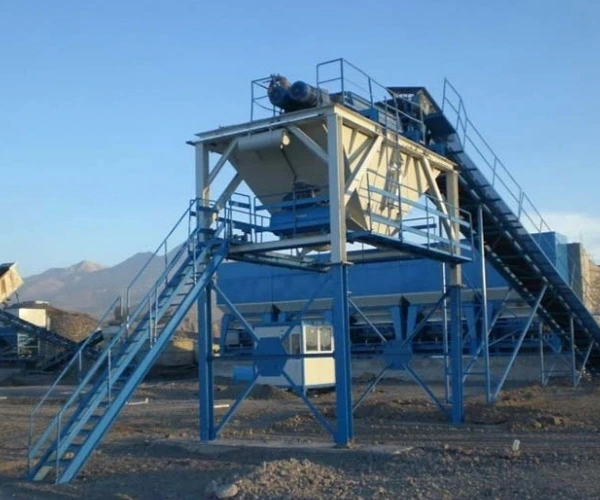
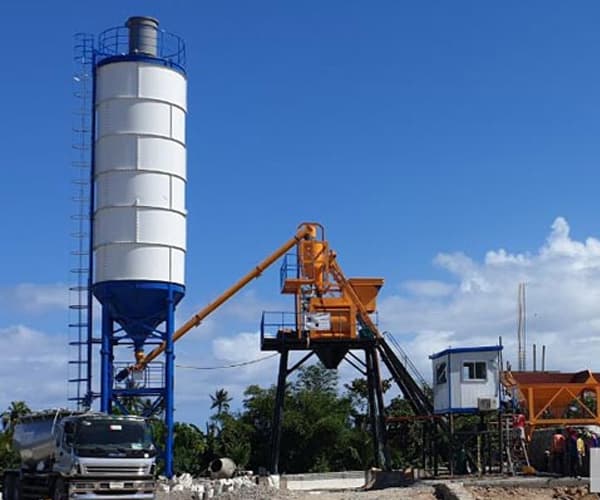
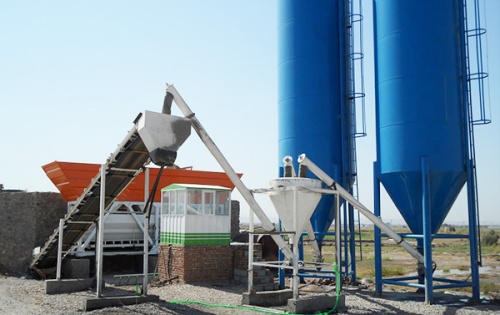
On an island where job sites sit beyond 90-minute mountain hauls, a standard wet plant was unviable — concrete would set before arrival. We delivered an HZS50G dry-mix (transit) plant with no central mixer, batching dry materials for final mixing inside the truck drum and cutting upfront cost by 35%. Because bulk cement tankers are scarce locally, we integrated airtight bolted silos with a big-bag breaker so the crew can feed 1-ton bags with a standard loader. It was installed in just 6 days:
“The road conditions here are terrible, and our concrete used to harden on the truck. This dry-batch plant completely solved that. The crew tows the dry materials to remote sites and only adds water on arrival. We didn’t need a deep foundation, which saved us weeks.”
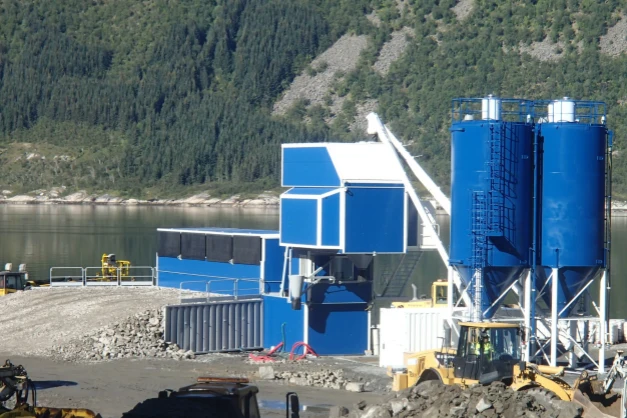
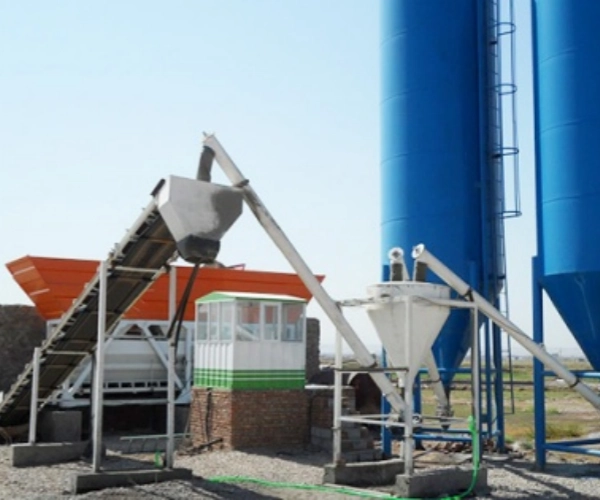
Along the Scandinavian coast, job sites beyond 90-minute fjord hauls made a wet plant unviable, and Norway’s strict zero-wastewater laws ruled out daily mixer washouts. We delivered an HZS50G dry-mix plant with no central mixer — eliminating washout water entirely — plus airtight bolted silos with electric heating platens and insulated water lines that hold raw materials at ≥5°C in sub-zero cold, all driven by a German-brand PLC.
“Our zero-wastewater rules ruled out a wet plant from the start — but the HZS50G has no central mixer to wash out at all. It went up foundation-free in just six days, and the electric-heated silos kept us producing right through the Nordic winter, at around 40% lower power.”
These two installations are our flagship transit-mix references to date. To see how the same engineering team configures wet-mix, mobile, containerized and foundation-free plants for other climates and codes, browse the full project archive for Asia (where the East Timor plant operates) and for Europe (the Bergen plant), or view our complete global concrete plant case studies.
Why Choose CCS Dry Mix Concrete Batching Plant Manufacturers?
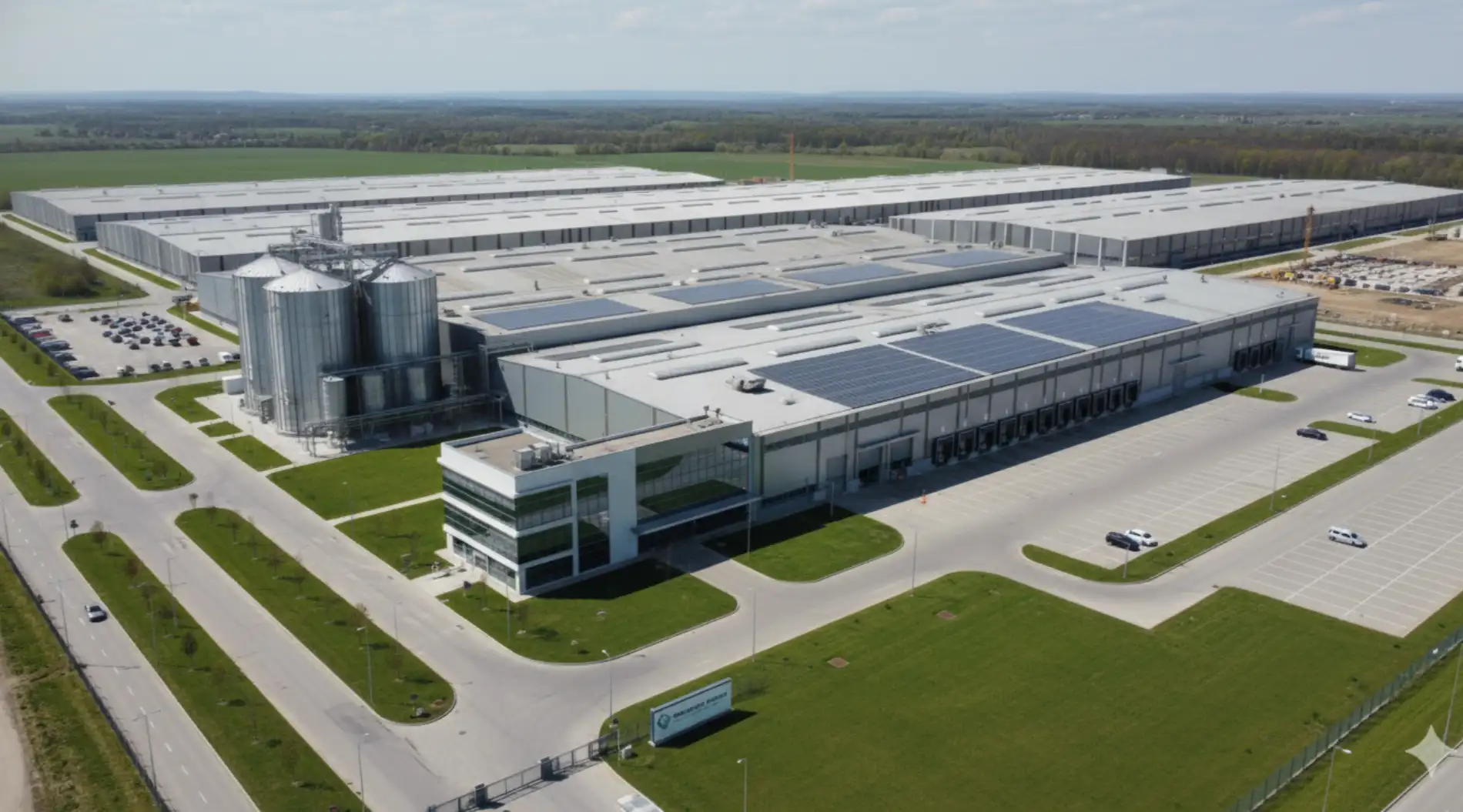
Since our founding over three decades ago, CCS has established itself as a premier concrete plant manufacturer trusted by top-tier contractors and ready-mix producers worldwide. We don’t just assemble equipment; we engineer highly profitable, long-lasting concrete production hubs for landmark infrastructure, high-speed railways, and major dams.
While there are many concrete plant manufacturers in the global market, CCS stands out through our unwavering commitment to heavy-duty durability, fully customized turnkey solutions, and strict international certifications (CE, ISO, SGS, BV).
Today, our global footprint spans across diverse and extremely demanding environments. We proudly serve clients in advanced regions like Australia and South Korea, while powering massive urbanization and infrastructure projects throughout Southeast Asia, the Middle East, Central Asia, and Africa.

As a full-service organization, our commitment to your success extends far beyond the sale. We provide an end-to-end support system designed to maximize your Return on Investment (ROI).
Pre-Sales Engineering & Investment Consulting
Expert Installation & Operational Training
24/7 After-Sales Support & Maintenance
💡Expert Insights: Navigating Dry Mix Concrete Plants
What is Dry Mix Concrete Batching Plant?
A dry mix concrete batching plant (also known as a batching plant dry mix) is a specialized, high-performance production system engineered for rapid concrete supply without a central mixing unit. This specialized dry mix batching plant focuses on the precise weighing of aggregates, cement, and additives, which are then discharged directly into a transit mixer truck. Unlike traditional wet plants, the actual mixing process occurs within the truck drum during transportation. This “transit-mix” approach effectively eliminates the risk of premature concrete setting, making the dry mix concrete plant the definitive choice for projects involving long transport distances or remote construction sites.
By eliminating the central mixer, this type of facility offers a significantly simpler structure, lower initial investment, and drastically reduced power consumption. Whether configured for stationary or mobile use, our dry mix concrete batching plant enables faster batching cycles and requires minimal maintenance compared to conventional systems. These cost-effective solutions are widely utilized in high-growth markets such as the Philippines, Peru, Chile, and across Southeast Asia and Latin America, providing reliable concrete production for major infrastructure and commercial ready-mix operations.
How Does a Dry Mix Concrete Plant Work? (Working Principle)
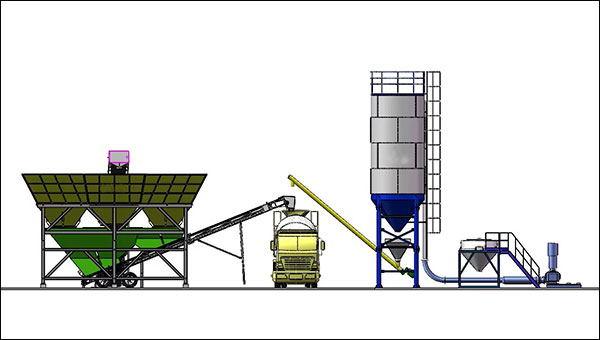
The working process of a batching plant dry mix is engineered for speed, simplicity, and high-volume throughput. Unlike traditional plants, the central mixing is replaced by transit mixing inside the truck drum. Below is the complete operational sequence:
Step 1 Raw Material Feeding & Storage
The process begins with the loading of sand and gravel into the aggregate batching machine (PLD series) via a wheel loader or belt conveyor. Simultaneously, cement and fly ash are stored in sealed silos, ready to be moved by screw conveyors.
Step 2 Precision Weighing & Dosing
Once the recipe is selected in the automated PLC control system, each material is measured independently:
- Aggregates: Weighed using high-precision sensors with an accuracy of ±2%.
- Powders (Cement/Fly Ash): Transported via screw conveyors to the weighing hopper, achieving a strict ±1% tolerance.
Step 3 Discharge into the Transit Mixer
This is the “Dry” phase of the dry mix concrete plant. All precisely weighed dry ingredients (sand, stone, and cement) are discharged through a high-speed loading hopper directly into the drum of a waiting transit mixer truck.
- Dust Suppression: To ensure environmental compliance, CCS integrates dust collection systems at this discharge point to capture any airborne particles.
Step 4 Water Addition & Transit Mixing
Water and chemical additives are either added at the plant or, more commonly, carried in the truck’s water tank and injected directly into the drum.
- In-Transit Homogenization: The truck drum rotates at a high speed (typically 10-12 RPM) for 5 to 8 minutes during transport or at the site. This process ensures the concrete achieves perfect homogeneity and structural strength just-in-time for placement.
Layout of Dry Mix Concrete Plant
Wet vs. Dry Concrete Batching Plants: What’s the Difference?
When configuring a stationary concrete production facility, one of the fundamental decisions is choosing between a wet mix and a dry mix plant. The primary distinction lies in where the concrete is actually mixed: inside a central mixer at the plant, or inside the rotating drum of the concrete truck during transit.
Wet Concrete Batching Plants (Central Mix)
In a wet mix plant (like the HZS series), all ingredients—aggregates, cement, water, and additives—are precisely weighed and then discharged into a central mixer (typically a twin-shaft or planetary mixer). The materials are vigorously agitated for a set time until a fully homogeneous wet concrete is formed. Only then is the finished concrete discharged into the transit truck. Since the concrete is mixed at the ready mix concrete plant and is ready to use, it needs to be delivered quickly to avoid setting or hardening before use. Wet concrete is more challenging to store and transport compared to dry mix.
- Pros : Superior quality control. The automated central mixer guarantees a consistent water-cement ratio, perfect homogeneity, and higher concrete strength.
- Cons : Higher initial investment and maintenance costs due to the central mixing unit and its wear parts.
Dry Concrete Batching Plants
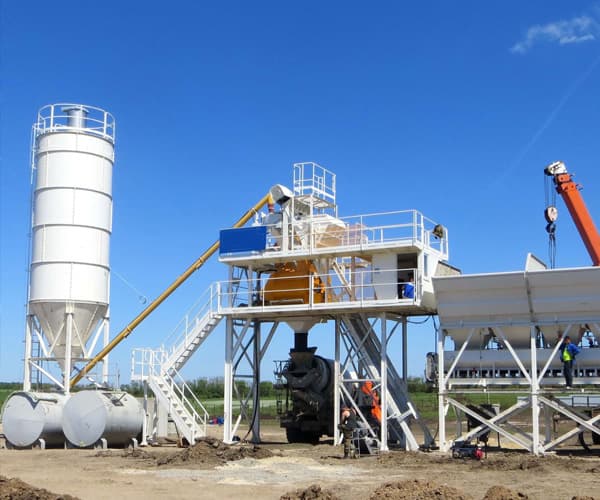
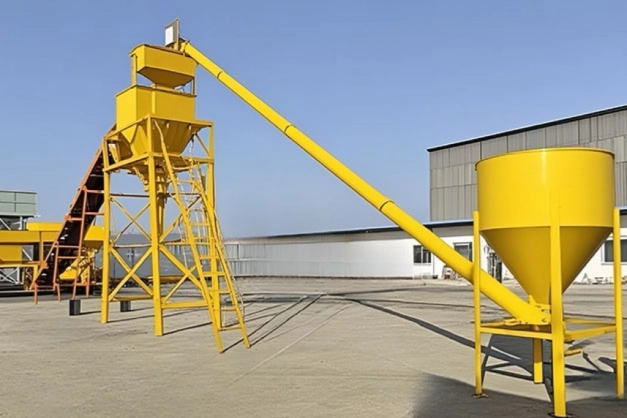
A dry mix plant does not have a central mixer. The plant’s role is strictly limited to weighing and dispensing. The precisely weighed dry ingredients (sand, gravel, cement) are discharged via a chute directly into the drum of a ready-mix truck. Water is either added at the same time or piped into the truck separately. The actual mixing relies entirely on the truck’s rotating drum as it drives to the construction site. So it has the advantage of being easy to transport and store. Dry mix concrete doesn’t need to be used immediately, and it remains stable for longer periods during transit.
- Pros : Lower upfront equipment cost, smaller physical footprint, faster batching cycle at the plant, and significantly lower maintenance (no central mixer to clean or repair).
- Cons : Concrete quality and consistency rely heavily on the truck driver and the condition of the truck’s drum fins. It is much harder to control the exact water-cement ratio, making it unsuitable for strict-specification engineering projects.
Which One Should You Choose?
Choose a Wet Mix Plant if you are supplying commercial ready-mix concrete, manufacturing precast elements, or working on major infrastructure (highways, dams, airports) where strict quality control and structural integrity are non-negotiable.
Choose a Dry Mix Plant if you are operating on a tight budget, covering vast geographic areas where transit times are exceptionally long, or producing lower-grade concrete where perfect homogeneity is not the top priority.
Both dry and wet batch concrete plants have their advantages and ideal applications. Your choice between them depends on the scale, type, and specific requirements of your construction project.
| Feature | Dry Mix Batching Plant | Wet Mix Concrete Batch Plant |
|---|---|---|
| Quality of concrete | The standard deviation of tensile strength in dry-mix concrete plants is usually large, and there may be some differences between different loads. This is caused by differences in mixing time, truck shovel and drum conditions, traffic conditions, and many other external factors. However, our dry mix batching plant has already minimized these differences as much as possible. We have combined the characteristics of dry-mix batching plants and wet-mix concrete plant equipment to improve multifunctionality and applicability. Our dry mix batching plant can also produce concrete with a high mixing degree now. | On the contrary, all loads in the wet mix concrete batch plants are mixed at the same station and under similar conditions, making it easier to obtain concrete with a high degree of mixing. |
| Advantage | High efficiency, easy operation, and stable performance | High productivity, high quality, reliable performance, low investment, and long service life |
| Appearance | Simpler appearance and less equipment | Have more equipment relatively |
| Operating and maintenance cost | Lower operating and maintenance costs | Need more operating and maintenance costs relatively |
| Power consumption | Lower power consumption | Higher power consumption relatively |
| Construction performance | Can be carefully screened during the process to achieve the desired fineness, and it is easy to achieve the correct grade. | Lower than that of wet-mix batch plants. |
| Storage time | Can be stored for as long as possible because it will not solidify | The maximum storage time of wet concrete mixture shall not exceed 24 hours; Therefore, it must be used as soon as possible. |
| Mixing batches | Can be used for small-scale mixing | Cannot produce concrete in small batches |
| Mixer | Needs to be used in conjunction with the mixer | Contains a central mixer and the twin-shaft mixer can fully mix in a shorter time |
Selecting the Ideal Dry Mix Batching Plant: A Strategic Buyer’s Guide
Selecting the correct dry mix concrete batching plant configuration is critical to preventing production bottlenecks and maximizing your ROI. To ensure you invest in a system that aligns with your project goals, our engineering team recommends following this 4-step evaluation process:
Calculate Your Peak Production Demand
Never choose a plant based on average demand; always design for the peak.
The Math: If your project requires 1,000 m³ of concrete per day and you operate an 8-hour shift, you need a plant with an actual throughput of at least 125 m³/h. In this case, we recommend the HZSG120 or HZSG150 models to provide a safe buffer and prevent equipment overstrain.
Evaluate Site Footprint & Mobility
Your available land dimensions will dictate the structural layout of the batching plant dry mix.
- Stationary Setup: Best for long-term commercial hubs where stability and large-scale aggregate storage are the priorities.
- Mobile Chassis: If you are a contractor managing multiple highway phases or remote sites, choose a dry mix batching plant with a towable wheeled chassis. This allows for rapid relocation and immediate production upon arrival at a new job site.
Determine the Level of Automation Required
Automation is an investment in quality control and labor savings.
- Fully Automated PLC: We recommend a high-end PLC system (e.g., Siemens or Schneider) for professional operations. It provides real-time data logging, recipe management, and automatic difference compensation, which drastically reduces human error and material waste.
- Semi-Automatic: A cost-effective choice for smaller, local projects where a dedicated operator is always present to manually oversee the discharge process.
Analyze Your Investment Strategy
The dry mix concrete plant price is typically more budget-friendly than wet-mix alternatives, but you must factor in component quality.
Budget Guideline: Expect an investment range of $30,000 to $85,000 USD for high-quality equipment. This varies based on the number of aggregate bins (3 to 6), silo capacities (50T to 500T), and the brand of electronic components used.
Operation & Maintenance Guide for Dry Batching Reliability
A dry mix concrete batching plant is celebrated for its simplified mechanical structure and minimal maintenance requirements. However, to maintain peak efficiency and prevent costly downtime, proactive care must be focused on material integrity and the precision of the automated systems.
Material Quality Control
In a batching plant dry mix, the quality of input materials directly affects the final concrete performance:
- Moisture Management: Cement and fly ash must be kept in perfectly sealed silos. Any exposure to high humidity can cause clumping, which clogs screw conveyors and ruins mix proportions.
- Sediment-Free Water: Ensure the water supply is filtered. Sediment or impurities can block the high-pressure delivery hoses and valves used to inject water into the truck drum.
Dust Collection & Filtration System
Since a dry mix batching plant generates significant airborne particles at the truck loading point, the filtration system is critical:
- Filter Inspection: Regularly clean and replace the bags in the pulse-jet dust collectors. Clogged filters increase internal pressure and reduce the efficiency of the material flow.
- Chute Cleaning: Inspect the discharge chute daily for aggregate buildup. A clean chute ensures a high-velocity flow into the transit mixer with zero material waste.
Troubleshooting Common Dry Batch Issues
Even the most robust dry mix concrete plant requires occasional technical adjustments:
- Issue: Uneven Weight Distribution: This is often caused by debris interfering with the load cells. Ensure the weighing hoppers are physically free to move and recalibrate the sensors via the PLC if accuracy drifts beyond ±1%.
- Issue: Motor Response Lag: Check all quick-connect electrical plugs and the air compressor pressure. In dry environments, dust buildup on electrical contacts can cause command delays.
🤝Support You Can Trust: Maximizing Your Dry Batching ROI
Successfully running a large-scale dry batching operation demands a partner who understands the unique logistics of high-volume transit mixing. We provide comprehensive site-planning assistance, remote diagnostic modules integrated into every dry mix batching plant control system, and a rapid-response engineering team available for on-site expert support anywhere in the world. We empower your personnel with the technical mastery to maintain peak throughput and manage your concrete production with 100% confidence.
Business Feasibility: Planning Your Dry Mix Concrete Operation
Investing in a dry mix concrete batching plant is one of the most profitable ways to enter the construction materials market, especially in regions with massive infrastructure growth. However, a successful launch requires a logistics-first strategic roadmap.
The Dry-Batch Feasibility Audit
Before finalizing your project, our engineering team recommends evaluating these three critical variables:
Logistical Range Audit
Are your target job sites located 50km to 120km from your hub? If yes, a dry mix batching plant is the most viable business model to prevent concrete from hardening in transit.
Water & Utility Scarcity
Is your plant located in an area with restricted water access? Since a dry mix batching plant doesn’t use water during the batching phase (water is added at the site or in the truck), it drastically simplifies your facility’s environmental footprint and utility requirements.
Competitor Analysis
Do you have a reliable fleet of transit mixers? In this model, the truck drum is your “mixer.” Your business plan must prioritize high-quality trucks to ensure perfect concrete homogeneity upon arrival at the site.
Investment Blueprint: Total Setup Cost for a High-Output Dry Mix Hub
To help you plan, here is an estimated budget for a professional dry-mix facility capable of an annual output of 500,000 m³:
- Mechanical Equipment: A top-tier HZSG120 dry mix plant costs significantly less than its wet-mix equivalent, typically ranging from $75,000 – $110,000 USD.
- Site Construction & Land: Since no heavy mixing tower or sedimentation basins are required, your civil work and land leveling costs are reduced by ~20%, estimated at $300,000 – $550,000 USD.
- Auxiliary Fleet: Because transit times are longer, you may need a larger fleet of mixers, budgeting approximately $350,000 – $550,000 USD.
Total Projected Investment: For a high-capacity 500,000m³ annual dry-mix hub, your total capital requirement is approximately $1.1M – $1.6M USD.
How to Choose a Reliable Concrete Batch Plant Manufacturer?
(1) Proven Industry Experience
What to Look For: Look for manufacturers with decades of specialized experience. A long track record proves their expertise in design, production, and solving real-world engineering challenges.
Our Advantage: With over 32 years of dedicated manufacturing excellence, we have deep roots in concrete machinery, ensuring every plant we build is battle-tested and refined.
(2) Global Presence & Successful Case Studies
What to Look For: A reputable supplier should have a strong global footprint with successful installations across diverse climates and regulatory environments. Ask for project references.
Our Advantage Advantage: Our stationary plants are powering critical infrastructure projects in demanding markets worldwide, from Australia and South Korea to Southeast Asia, the Middle East, and Africa.
(3) Customization & Product Range
What to Look For: Avoid “one-size-fits-all” approaches. A professional manufacturer offers flexibility, from compact mobile units to massive stationary plants, tailoring configurations to your exact site layout and mix requirements.
Our Advantage Advantage: We provide a comprehensive portfolio (Stationary, Mobile, Dry Mix) and specialize in Ultimate Modular Design, ensuring your plant perfectly aligns with your operational goals.
(4) Comprehensive After-Sales Support
What to Look For: A plant is only as good as the service behind it. Ensure the manufacturer provides turnkey installation, operator training, rapid spare parts delivery, and robust warranty terms.
Our Advantage Advantage: We are a full-service organization. From ROI forecasting to 24/7 remote diagnostic assistance and dispatching engineers for on-site erection, our support never sleeps.
(5) Factory Transparency & Certified Quality Standards
What to Look For: Credible manufacturers adhere to strict international manufacturing standards and welcome factory inspections. Verified certifications are non-negotiable proof of quality, safety, and environmental compliance.
Our Advantage Advantage: Our commitment to excellence is backed by globally recognized certifications, including CE, ISO, SGS, and BV. We utilize heavy-duty structural steel and premium global components in every plant we build. We invite you to visit our manufacturing facilities or request a live virtual tour to witness our rigorous quality control processes firsthand.
Application of Dry Mix Concrete Plant
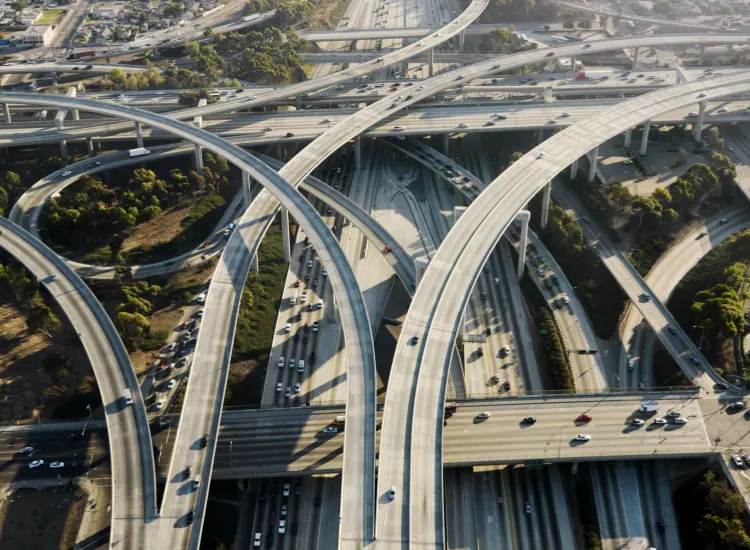
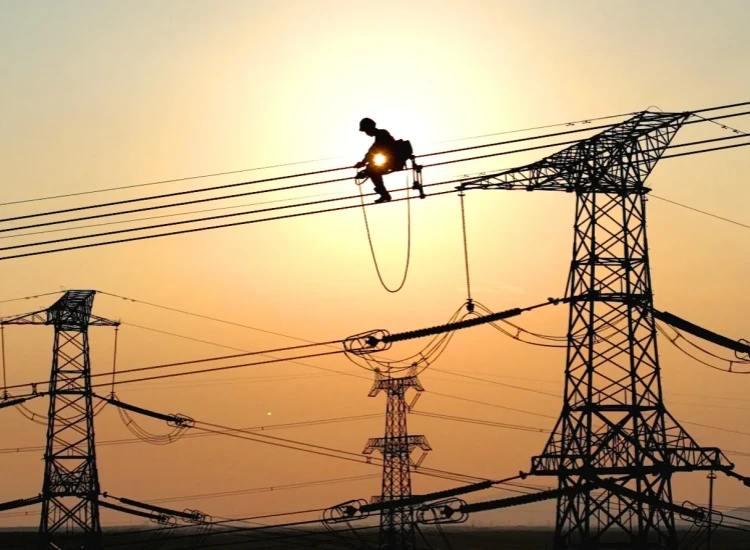
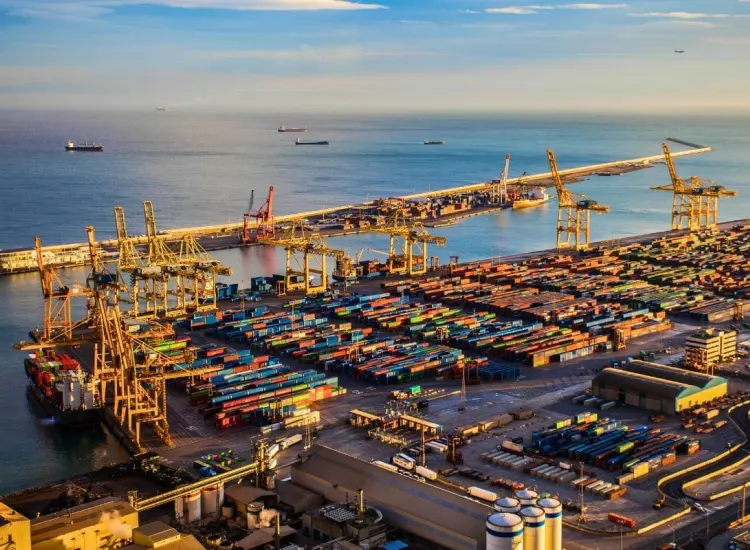
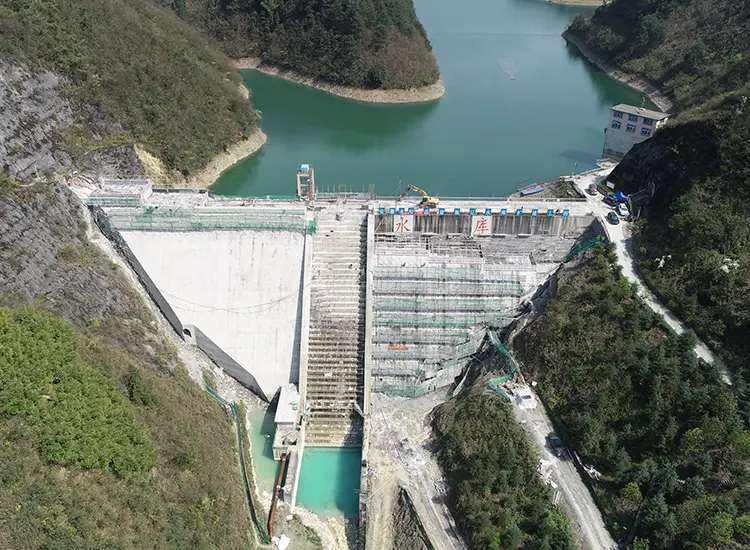
Our dry mix concrete batching plant has gradually become the preferred choice for various construction projects due to its economic viability. Of course, dry-mix concrete plants are more suitable for construction projects that require a large amount of concrete and high-quality concrete. In these projects, the closer the concrete plant is to the construction site, the higher the quality of the concrete and the lower the logistics costs.

Bridge
Highway
Electricity
Port

Airport
Water Conservancy
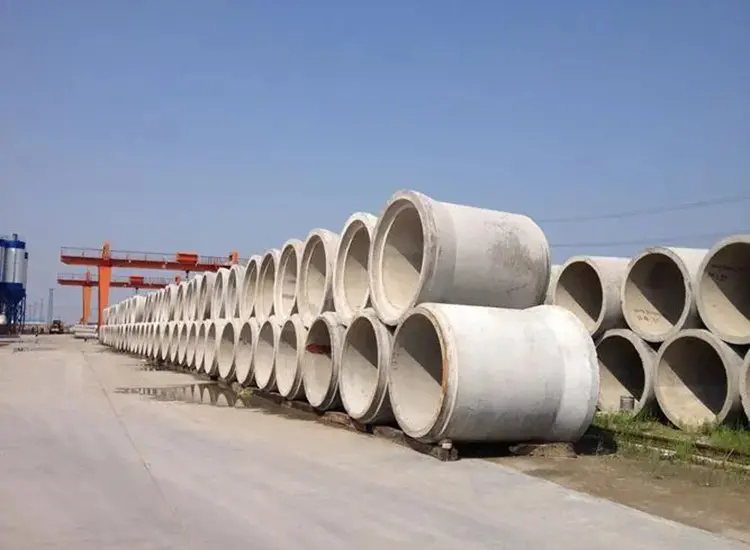
Precast Concrete Manufacturing
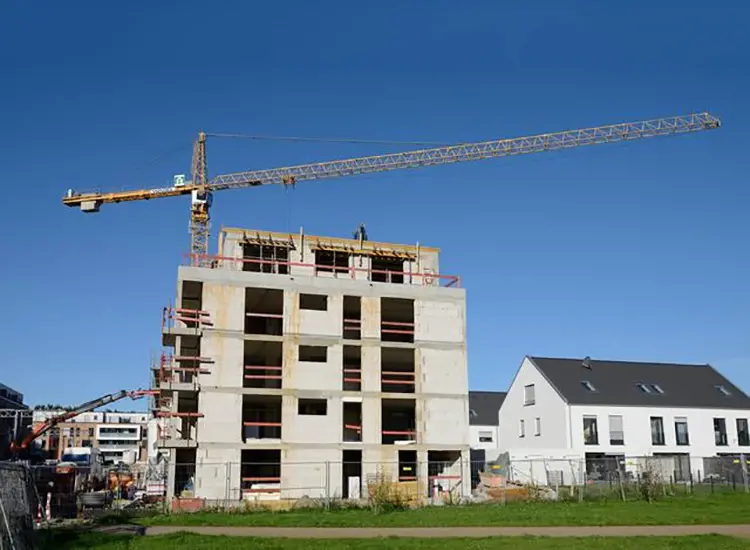
Commercial Ready-Mix Concrete Supply
FAQ
Yes. The strength of the concrete depends on the precision of the recipe and the mixing action of the truck drum. With our ±1% dosing accuracy for cement and water, and by following proper drum rotation protocols, you can easily produce high-strength concrete (up to C50) suitable for highways and foundations.
Extremely. Because a batching plant dry mix lacks the heavy central mixing unit and tower, the modular structure is lighter and more compact. This makes it the most mobile stationary-style plant on the market, allowing for rapid dismantling and relocation as your project moves forward.
Yes. Our PLD series aggregate batchers can be configured with 3 to 6 bins to handle various sizes of sand, gravel, and crushed stone, making them suitable for specialized infrastructure projects.
The most commonly used mixing ratios are 1:2:4 and 1:6:12 — cement, fine aggregate, and coarse aggregate. These mixing ratios can vary depending on what you need for your specific project. For example, a high-strength dry batch would use a ratio that has more cement (around 1:2:3 or 1:1.5:3).
Absolutely. We offer flexible customization options to adjust designs based on your specific needs. Whether it’s in production capacity, configuration, functionality, or adaptation to different environmental conditions, we can provide tailored solutions to ensure your project requirements are fully met.
If your site has a stable and sufficient municipal power supply, a generator is not mandatory. However, if you are operating in a remote area with unreliable grid power or frequent outages, we strongly recommend investing in a backup diesel generator. This ensures uninterrupted production and prevents fresh concrete from setting inside the mixer during an unexpected power cut. We can advise you on the exact KVA rating required for your specific plant model.
Yes, absolutely. CCS concrete batching plants feature an Ultimate Modular Design, which provides exceptional flexibility for future business growth.
If your production demands increase, you do not need to buy an entirely new plant. You can easily expand your operation by adding extra cement silos to increase storage, installing additional aggregate bin compartments for more complex mix designs, or upgrading to a higher-capacity twin-shaft mixer. Our control software is also fully scalable, allowing seamless integration of new components (like ice or microsilica dosing systems) without disrupting your existing workflow.