Concrete Batching Plant Projects in Europe — Real Case Studies & Installations
· Comprehensive Concrete Batching Plant Solutions
· 32+ Years of Engineering Heritage
Across Europe’s most regulated and climate-divided construction markets — from the sub-zero winters of Moscow and the fjord roads of Norway to the seismic Mediterranean coast and the EU-audited urban zones of Central Europe — our concrete batching plants are engineered to clear every compliance hurdle and keep producing where others freeze, stall, or fail an inspection. This page brings together real, commissioned projects across the continent, showing the exact plant models, capacities, and region-specific engineering our European clients rely on.
For more than 32 years, we have manufactured and installed over 100 batching plants in 20+ countries, every one of them backed by full CE, ISO, SGS and BV certification and end-to-end turnkey support. Whether you need a foundation-free mobile unit that bypasses permit delays or a fully winterized hub rated for −40°C, the cases below show how the right configuration is matched to each European market.
🏆
32+ Years Experience
🌍
80+ Countries
🏠
100+ Plants
📚
CE·ISO·SGS·BV
Europe at a Glance
Europe is united by one thing — the strictest regulatory baseline of any region we serve — and divided by almost everything else: a continent where a plant must survive −40°C in Moscow yet pass heritage-protection law on the Ligurian coast. Use the quick links below to jump to the projects most relevant to your market:
- Northern & Western Europe — United Kingdom, Norway
- Southern Europe — Italy, Turkey
- Central & Eastern Europe — Romania, Russia
At a glance: 6 commissioned projects · 4 plant types (stationary, containerized, mobile, dry-mix) · capacities from 50 to 120 m³/h · all CE-certified · delivered through Mediterranean, Black Sea and North Sea ports and overland via the China–Europe Railway.
Why Concrete Plant Selection Differs Across Europe
Specifying a concrete batching plant for Europe is fundamentally different from any other region, because here regulation is not optional — it is the starting line. Before capacity or climate is even discussed, every plant must carry full CE marking and satisfy EU environmental, emissions, and noise codes, and in many markets it must navigate permit regimes that can delay a permanent foundation by months. A plant that ignores this baseline does not underperform; it gets a stop-work order.
On top of that shared baseline, three forces split the continent and decide the configuration. The first is climate, divided sharply north to south: Nordic and continental winters demand active winterization — steam-heated aggregates and insulated cladding rated to −40°C — while the Mediterranean coast demands seismic reinforcement and anti-corrosion against salt-laden air. The second is terrain and permitting, where narrow Apennine passes, fjord roads, and heritage-protection laws often make a foundation-free mobile plant the only legal and practical choice. The third is logistics, where Europe is uniquely served not only by Mediterranean, Black Sea, and North Sea ports but also by overland rail from China. The matrix below shows how these forces shaped the actual plants we delivered:
| Sub-Region | Real-World Conditions (from our projects) | What It Demands | Proven In Our Projects |
|---|---|---|---|
| Northern & Western Europe | North Sea coastal humidity; sub-zero fjord cold with 90-min+ hauls | Corrosion-protected mobile units; dry-mix with heated silos & winterization | UK Hartlepool (YHZS60 mobile), Norway Bergen (HZS50G dry-mix) |
| Southern Europe | Mediterranean salinity & seismic risk; heritage-protection permits & narrow mountain roads | Seismic-reinforced anti-corrosion stationary; foundation-free mobile to bypass permits | Turkey Marmara (HZS120), Italy Genoa (YHZS60 mobile) |
| Central & Eastern Europe | EU-grant environmental audits; −40°C continental winter & heavy snow load | Enclosed low-emission containerized; fully winterized steam-heated stationary | Romania Bucharest (HZS60C containerized), Russia Moscow (HZS120 winterized) |
Every project on this page is a direct illustration of these principles. Read them not only as success stories, but as a decision guide for your own European market.
Featured Projects: Northern & Western Europe
Built for Coastal Humidity, Fjord Logistics & Nordic Cold
The maritime northwest combines two challenges: salt-laden coastal air that punishes under-built steel, and geography — fjords, mountains, and dispersed regional sites — that rewards mobility and self-sufficiency over sheer capacity. Our two projects here sit at opposite ends of that spectrum.
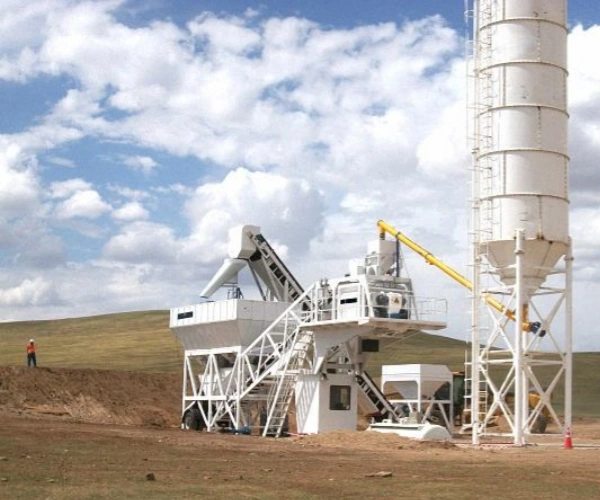
YHZS60 Mobile Plant — Hartlepool, United Kingdom
Local infrastructure, industrial site works & housing · 50–60 m³/h · North Sea coast
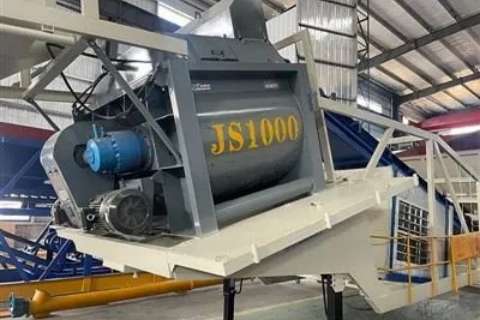
A regional contractor on the humid North Sea coast needed a compact, easily relocated plant to serve road, industrial, and housing jobs without the cost of a permanent ready-mix yard. We supplied a YHZS60 mobile plant with a JS1000 twin-shaft mixer, a space-saving lift-hopper feed, and a central automatic control system, configured with corrosion-aware steel and electrical protection for long-term coastal outdoor operation. Result: the contractor gained direct control over supply timing — producing to the day’s actual schedule instead of waiting on third-party ready-mix — with a compact footprint that fits tight, shifting jobsites.
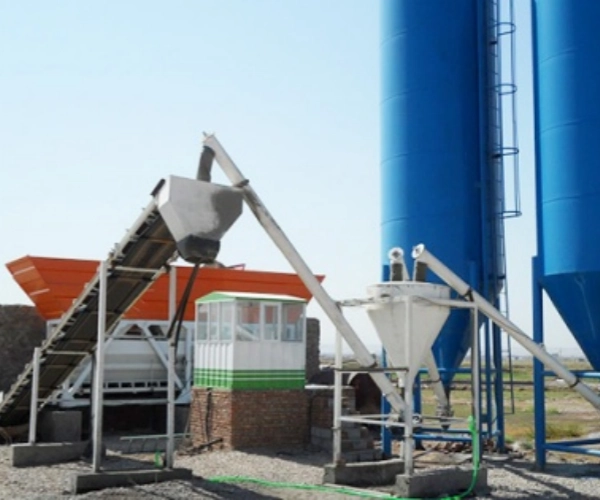
HZS50G Dry-Mix Plant — Bergen, Norway
Mountain road & remote fjord infrastructure · 50 m³/h · commissioned Dec 2025 · via Port of Bergen
Along the Scandinavian coast, job sites beyond 90-minute fjord hauls made a wet plant unviable, and Norway’s strict zero-wastewater laws ruled out daily mixer washouts. We delivered an HZS50G dry-mix (transit) plant with no central mixer — eliminating washout water entirely — plus airtight bolted silos with electric heating platens (2–3 kW/m³) and insulated water lines that hold raw materials at ≥5°C in sub-zero cold, all driven by a German-brand PLC. Result: 40% lower power consumption, zero transit spoilage, 15% savings on site preparation, and a foundation-free setup in just 6 days.
Featured Projects: Southern Europe
Engineered for Seismic Coasts, Heritage Permits & Narrow Terrain
The Mediterranean south pairs demanding geography — earthquakes, salt air, and narrow historic roads — with some of the world’s strictest landscape-protection laws. Both of our Southern European plants were configured to turn those constraints into an advantage.
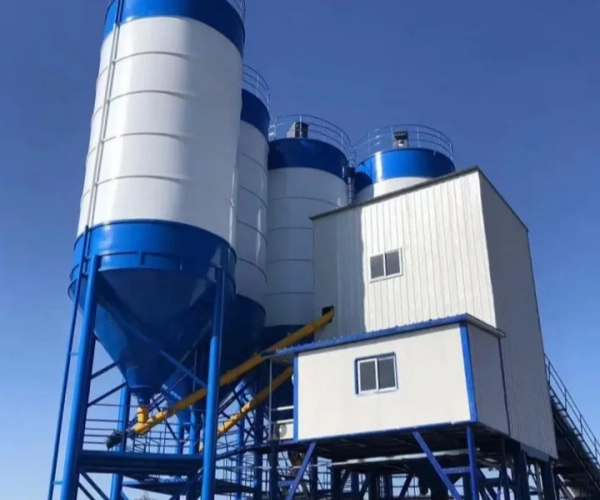
HZS120 Stationary Plant — Marmara Region, Turkey
Large commercial development · 120 m³/h · delivered via Ambarlı Port, Istanbul
In a market famous for its own plant makers (ELKON, MEKA), a Turkish contractor chose to import on the strength of total cost of ownership — acquiring a CE-certified HZS120 with Tier-1 components (Siemens PLC, premium European pneumatics) at significantly lower capital cost. We customized it with a seismic-resistant reinforced framework for earthquake-prone zones, double-epoxy anti-corrosion against Marmara coastal salinity, and fully enclosed cladding with pulse-jet dust collectors to satisfy the EU emissions standards enforced in Turkey’s urban zones. Result: stable 100–120 m³/h at peak, with measurable cement savings from automated compensation.
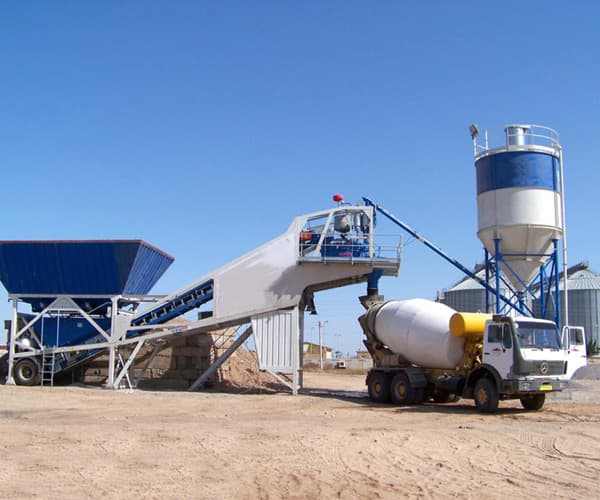
YHZS60 Mobile Plant — Genoa, Liguria, Italy
Apennine highway, tunnel & bridge infrastructure · 60 m³/h · commissioned Jun 2025 · via Port of Genoa
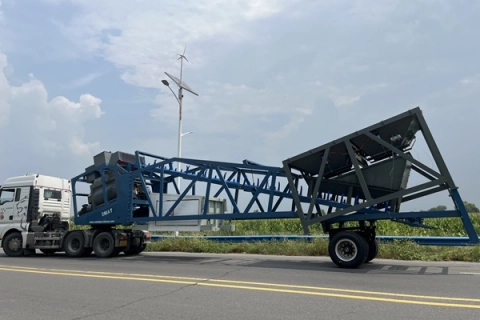
In Liguria, Italy’s heritage and landscape-protection laws (Tutela del Paesaggio) make permanent foundations a months-long permit ordeal, and the narrow Apennine passes block oversized equipment. We delivered a YHZS60 mobile plant on an integrated, road-compliant trailer chassis that needs zero concrete foundation — legally classified as temporary equipment, it bypasses the municipal permit process entirely — fitted with CE-certified Schneider components, a German-brand PLC, and pulse-jet dust collectors. Result: full regulatory peace of mind, 15% savings on site preparation, concrete that passed strict state bridge audits, and a 3-day setup.
Featured Projects: Central & Eastern Europe
For EU-Grant Compliance & Continental Winter Extremes
The continental east is defined by two forces: EU-funded projects that demand spotless environmental compliance, and winters severe enough to freeze an unprotected plant solid. Our two flagship projects here meet both head-on.
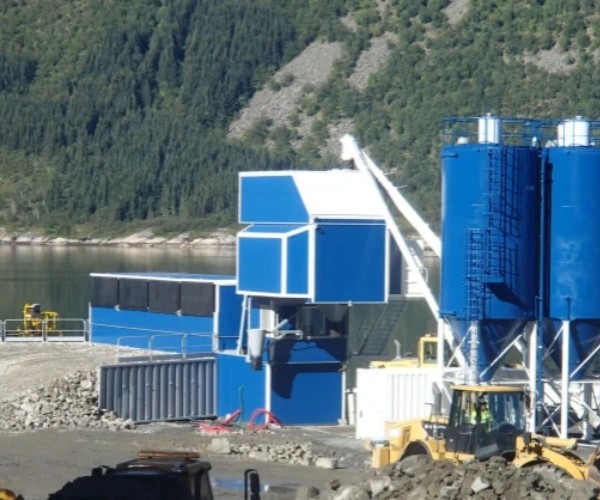
HZS60C Containerized Plant — Bucharest, Romania
EU-funded expressway & regional infrastructure · 60 m³/h · commissioned Apr 2025 · via Port of Constanța
Working under an EU-grant contract near residential zones, this contractor faced some of the strictest particulate and noise limits in Europe. We delivered a fully enclosed, sound-insulated HZS60C containerized plant — rock-wool cladding keeps boundary noise below 65 dB, and active pulse-jet baghouses capture 99.9% of cement dust for a zero-visible-emission operation. Built to 40HQ container dimensions, it shipped cost-effectively to the Black Sea Port of Constanța. Result: passed every environmental audit with zero regulatory interruptions, 30% logistics savings, and 10% less material waste — all installed in 10 days.
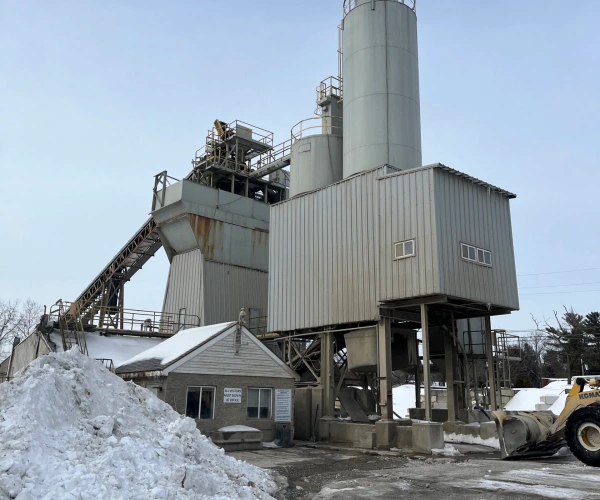
Winterized HZS120 Stationary Plant — Moscow, Russia
Municipal housing & transport infrastructure · 120 m³/h · commissioned Nov 2025 · via China–Europe Railway
Moscow’s construction season runs straight through winters that reach –40°C, freezing aggregates into solid blocks and crystallizing water in the lines. We delivered a fully winterized HZS120 with a JS2000 twin-shaft mixer and PLD3200 4-bin batcher, wrapped in high-density rock-wool insulated cladding to hold the mixing tower above 10°C, fed by an integrated steam-heating system that defrosts aggregates before batching, with all valves, seals and belts upgraded to –40°C-rated materials. Shipped overland via the China–Europe Railway to avoid sea delays. Result: zero downtime from sub-zero temperatures while uninsulated local plants shut down, and zero rejected loads through municipal quality audits.
Europe Project Overview Table
Europe Concrete Plant Projects at a Glance
| Country / City | Plant Model | Capacity | Application | Year |
|---|---|---|---|---|
| Marmara, Turkey | HZS120 (Stationary) | 120 m³/h | Commercial development | 2025 |
| Moscow, Russia | HZS120 (Winterized) | 120 m³/h | Municipal housing & transport | 2025 |
| Bucharest, Romania | HZS60C (Containerized) | 60 m³/h | EU-funded expressway | 2025 |
| Genoa, Italy | YHZS60 (Mobile) | 60 m³/h | Highway, bridge & tunnel | 2025 |
| Hartlepool, UK | YHZS60 (Mobile) | 50–60 m³/h | Infrastructure & housing | 2025 |
| Bergen, Norway | HZS50G (Dry-mix) | 50 m³/h | Mountain road & fjord | 2025 |
Browse Europe Projects by Plant Type
Find Your Match: Asia Projects by Plant Type
The same six projects, organized by the type of plant — a fast way to see which configuration fits your operation.
Stationary plants anchor our highest-capacity, permanent European hubs — the HZS120 in Turkey and the winterized HZS120 in Russia. Explore the full stationary concrete batching plant range.
Mobile plants suit contractors who relocate between sites or need to bypass permits — the YHZS60 in the UK and the foundation-free YHZS60 in Italy. See all mobile concrete batching plants.
Dry-mix plants excel where long fjord hauls and zero-wastewater laws rule out wet mixing, as with the HZS50G in Norway. Learn more about our dry-mix concrete batching plants.
Containerized plants combine enclosed, low-emission operation with cheap container shipping — ideal for EU-compliance projects like the HZS60C in Romania.
Browse Europe Projects by Capacity
Match Your Volume: Europe Projects by Capacity
Compact (50–60 m³/h) — Ideal for regional contractors, project-based work, and EU-compliance roadwork: Norway (HZS50G), the UK (YHZS60), Italy (YHZS60) and Romania (HZS60C). Often built around the HZS25 and HZS60 platforms.
Commercial (120 m³/h) — Built for high-volume commercial supply and state infrastructure: the HZS120-based plants in Turkey and Russia. For the largest demands, see the HZS240.
Capacity & Investment Guide for Europe
Choosing the Right Plant Size & Budget in Europe
Investment scale across our European projects generally falls into three tiers. Use these as planning ranges; your final figure depends on customization (winterization, enclosure, CE upgrades), shipping, foundation work and auxiliary vehicles.
| Tier | Typical Capacity | Best For | Indicative Investment* |
|---|---|---|---|
| Entry / Mobile | 25–60 m³/h | Project-based contractors, permit-bypass, remote sites | $25,000 – $60,000 |
| Commercial | 60–120 m³/h | Regional ready-mix & EU-compliance roadwork | $60,000 – $120,000+ |
| Industrial / Mega | 150–240+ m³/h | State infrastructure, high-volume hubs | $120,000 – $200,000+ |
*Core machinery estimate only; European projects often add cost for winterization, full enclosure or CE-grade emission control. For a detailed breakdown, see our guide on how much a concrete plant costs and the 2026 concrete plant price list.
What European Buyers Should Know
What to Know Before Importing a Concrete Plant to Europe
Ports, rail & logistics
We ship to every major European gateway — Ambarli (Istanbul), Constanța, Genoa and Bergen — packing components into standard 40HQ containers to minimize freight. For destinations where sea routes are slow or impractical, we use the China–Europe Railway, as we did to reach Moscow ahead of winter.
CE & environmental compliance
Every plant is built to CE, ISO, SGS and BV standards. For EU and urban projects we add enclosed towers, pulse-jet dust collectors (99.9% capture), and noise cladding (below 65 dB) so you pass municipal and EU-grant audits on the first run.
Winterization
For continental and Nordic winters down to –40°C, we provide insulated rock-wool cladding, steam-heated aggregate bins, heated silos and low-temperature-rated valves, seals and belts — keeping you producing while uninsulated plants shut down.
Permits & terrain
Where landscape or heritage laws make permanent foundations difficult, our foundation-free mobile plants qualify as temporary equipment and ship in road-compliant profiles for narrow mountain passes.
Support
On-site installation supervision, operator training, and 24/7 technical support via phone or WhatsApp with cloud-based remote PLC diagnostics.
Countries We Serve Across Europe
Equipment Delivery and Plant Installation Across Europe
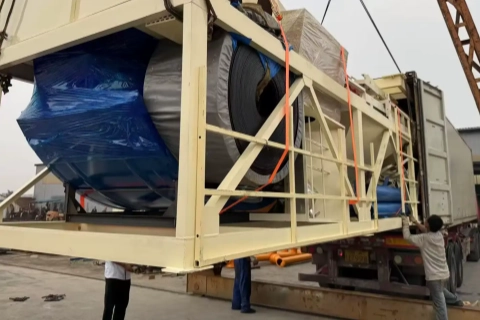
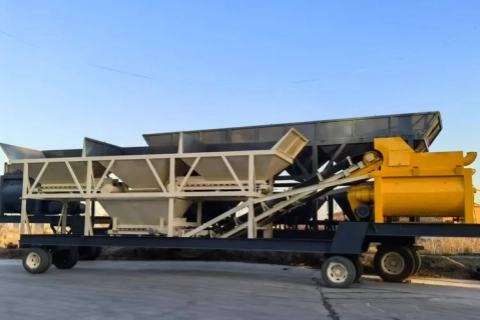
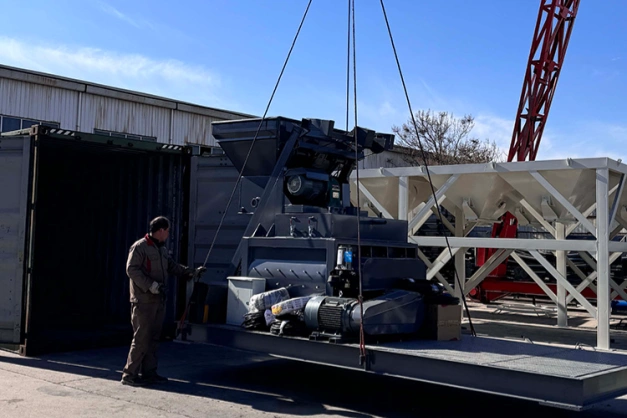
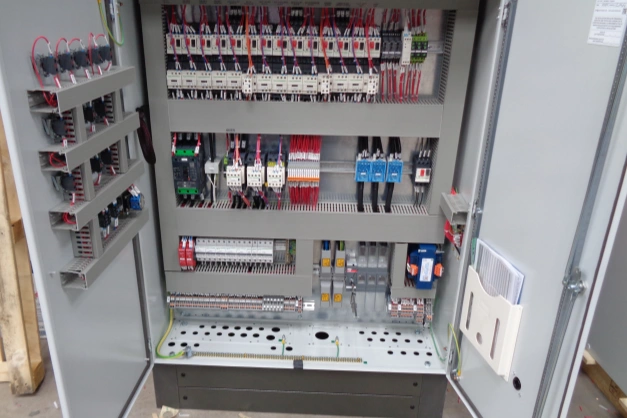
Our commissioned projects span Turkey, the United Kingdom, Norway, Russia, Romania and Italy — and our delivery network reaches far beyond them. We also supply and support concrete batching plants across Germany, France, Spain, Poland, the Netherlands, Sweden, Finland, the Czech Republic, Hungary, Bulgaria and Serbia, with logistics and engineering teams familiar with each market’s ports, rail links, voltage standards, CE requirements and permitting frameworks.
What Our Asian Clients Say
⭐⭐⭐⭐⭐
“The winter here in Moscow is very challenging, and before we purchased this plant, we suffered from constant project delays. We had the entire plant fully operational in just 14 days, and the integrated steam heating system has kept our material lines flowing in sub-zero temperatures. We’ve had zero concrete rejections — the long-term ROI is clear.”
— Project Director, Infrastructure & Housing Contractor (Moscow, Russia)
⭐⭐⭐⭐⭐
“Operating under an EU-funded contract means incredibly strict environmental codes. This containerized plant solved all our compliance worries. It was fully operational in just 10 days, and the active dust collectors let us pass our environmental audits on the first run.”
— Project Director, Highway Contractor (Bucharest, Romania)
⭐⭐⭐⭐⭐
“The regulatory and geographic challenges here in Liguria are incredibly tough. This YHZS60 has been a game-changer — fully operational in just 3 days on a simple gravel surface, without a massive civil-works project. We’re now pouring entirely on our own schedule.”
— Project Director, Highway & Tunnel Contractor (Genoa, Italy)
FAQ
Core machinery typically ranges from $25,000 for an entry-level mobile or compact plant to $200,000+ for a high-capacity industrial hub. European projects often add cost for winterization, full enclosure or CE-grade emission control, depending on the climate and local regulations.
Yes. For climates down to –40°C, we provide insulated rock-wool cladding, steam-heated aggregate bins, heated silos and low-temperature-rated components — as delivered in Moscow, where the plant ran with zero cold-weather downtime.
All plants meet CE, ISO, SGS and BV standards. For EU-funded and urban projects we add enclosed towers, pulse-jet dust collectors (99.9% capture) and noise cladding below 65 dB to pass environmental and safety audits — as proven on our Romania and Italy projects.
A foundation-free mobile plant like the YHZS60 is classified as temporary equipment and requires only a compacted gravel pad, letting you bypass the permanent-foundation permit process — the approach that worked under Italy’s strict landscape-protection laws.
Besides sea freight to ports like Constanța, Genoa, Bergen and Ambarli, we use the China–Europe Railway for fast overland delivery — the route we used to reach Moscow ahead of the winter season.
It varies by type: a mobile plant can be running in 3 days, a containerized or compact stationary plant in about 10 days, and a fully winterized HZS120 within roughly 14 days including foundation work and commissioning.