Concrete Batching Plant Projects in Asia — Real Case Studies & Installations
· Comprehensive Concrete Batching Plant Solutions
· 32+ Years of Engineering Heritage
Across Asia’s most demanding construction environments — from the typhoon-swept coasts of Southeast Asia to the +50°C deserts of the Gulf and the load-shedding grids of South Asia — our concrete batching plants are built, shipped, and commissioned to perform without compromise. This page brings together real, commissioned projects across the region, showing the exact plant models, capacities, and climate-specific engineering our clients rely on every day.
For more than 32 years, we have manufactured and installed over 100 batching plants in 20+ countries, every one of them backed by full CE, ISO, SGS and BV certification and end-to-end turnkey support. Whether you are launching a lean regional ready-mix startup or supplying concrete to a national mega-project, the cases below show how the right configuration is chosen for the right environment.
🏆
32+ Years Experience
🌍
80+ Countries
🏠
100+ Plants
📚
CE·ISO·SGS·BV
Asia at a Glance
Asia is not a single market — it is at least three. The way a plant must be engineered for tropical Manila has almost nothing in common with what survives a Saudi summer or a Punjab power cut. Use the quick links below to jump straight to the projects most relevant to your region:
- Southeast Asia Projects — Philippines, East Timor
- Middle East Projects — Saudi Arabia, United Arab Emirates
- South Asia Projects — Pakistan, India
At a glance: 6 commissioned projects · 4 plant types (stationary, mobile, dry-mix, belt-conveyor) · capacities from 50 to 200+ m³/h · delivered through 6 major Asian ports including Manila, Jeddah, Jebel Ali, Karachi, Mundra and Tibar Bay.
Why Concrete Plant Selection Differs Across Asia
Buying a concrete batching plant for Asia is never a matter of picking a capacity off a price list. The single biggest cause of failed installations and blown budgets is choosing a plant designed for one climate and dropping it into another. A plant that thrives in a humid coastal city will corrode and underperform in a desert; a high-capacity stationary tower that makes sense in a megacity is dead weight on a remote island with 90-minute haul roads.
Across our Asian projects, four variables decide the configuration almost every time: climate (hydration heat in 45–50°C deserts versus salt-spray corrosion in the tropics), logistics and terrain (deep-water ports and flat sites versus island shipping and mountain roads), power stability (continuous grid supply versus frequent load-shedding), and local aggregates and economics (abrasive quartz and basalt, thin commercial margins, and the availability of spare parts). The matrix below shows how these forces shaped the actual plants we delivered:
| Sub-Region | Real-World Conditions | What It Demands | Proven In Our Projects |
|---|---|---|---|
| Southeast Asia | Tropical humidity, salt-spray corrosion, island shipping, long mountain hauls | Heavy anti-corrosion stationary plants, or dry-mix for transit-hardening control | Philippines (double-epoxy anti-corrosion), East Timor (HZS50G transit-mix) |
| Middle East | 45–50°C heat, sandstorms, ≤32°C placement limits, mega-scale demand | Flake-ice cooling, full cladding, high-chromium wear parts | Saudi Arabia (ice dosing), Dubai (desertized HZS180) |
| South Asia | Load-shedding, monsoon mud, abrasive aggregate, thin margins | Mobile dual-power plants, belt-conveyor efficiency, locally sourced parts | Pakistan (dual-power fail-safe), Ahmedabad (Siemens/Schneider local sourcing) |
Every project on this page is a direct illustration of these principles in action. Read them not just as success stories, but as a decision guide for your own market.
Featured Projects: Southeast Asia
Engineered for Humidity, Corrosion & Difficult Logistics
Southeast Asia’s infrastructure boom runs headfirst into two realities: relentless tropical humidity that rusts under-built steel, and geography — islands, coasts and mountains — that punishes poor logistics planning. Our two projects here sit at opposite ends of the scale, yet both were configured around exactly these constraints.
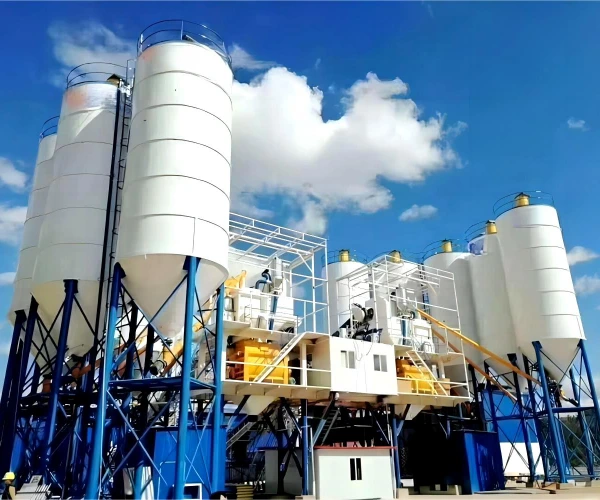
Dual HZS120 Stationary Ready-Mix Plant — Philippines
Commercial RMC hub · 200+ m³/h combined · delivered via Port of Manila
To supply multiple highway and skyscraper projects in a fast-growing urban center around the clock, a leading local ready-mix producer needed massive, uninterrupted output in a corrosive tropical climate. We delivered a dual HZS120 setup with synchronized Siemens PLC control, allowing both plants to run as one coordinated unit — if one pauses for maintenance, the other holds full capacity. Main towers were built from extra-thick structural steel with robotic-welded joints and a double-epoxy anti-corrosion finish (shot-blasted to Sa2.5) to defeat salt-spray rust. Result: a combined 200+ m³/h, zero unscheduled downtime across the first 12 months, and a 4% cut in cement waste.
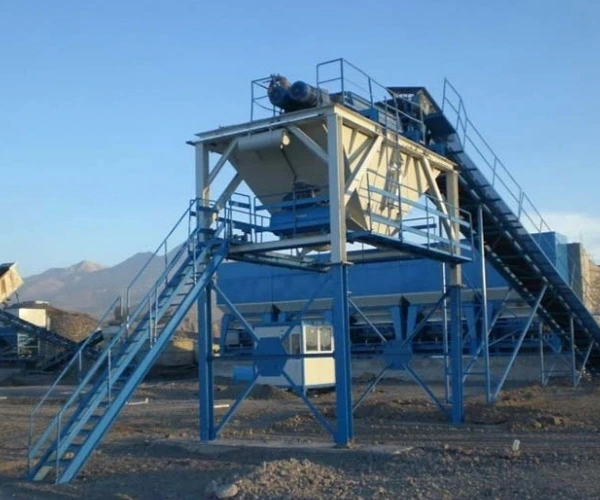
HZS50G Dry-Mix Plant — Dili, East Timor
Rural road & regional infrastructure · 50 m³/h · commissioned Oct 2025 · via Tibar Bay Port
On an island where job sites sit beyond 90-minute mountain hauls, a standard wet plant was unviable — concrete would set before arrival. We supplied an HZS50G dry-mix (transit) plant with no central mixer, batching dry materials for final mixing inside the truck and cutting upfront plant cost by 35%. Because bulk cement tankers are scarce locally, we integrated airtight bolted silos with a big-bag breaker so the crew can feed 1-ton bags with a standard loader. Result: zero transit spoilage, no daily mixer washout, and savings of $5,000–8,000/year on mixing blades and liners — all installed in just 6 days.
Featured Projects: Middle East
Beating +50°C Heat, Sandstorms & Strict Temperature Limits
Gulf construction is a thermodynamic battle. Ambient temperatures routinely exceed 50°C, municipal codes cap fresh-concrete placement temperature, and abrasive sand attacks both wear parts and electronics. Both of our flagship Middle East plants were re-engineered specifically to win that battle.
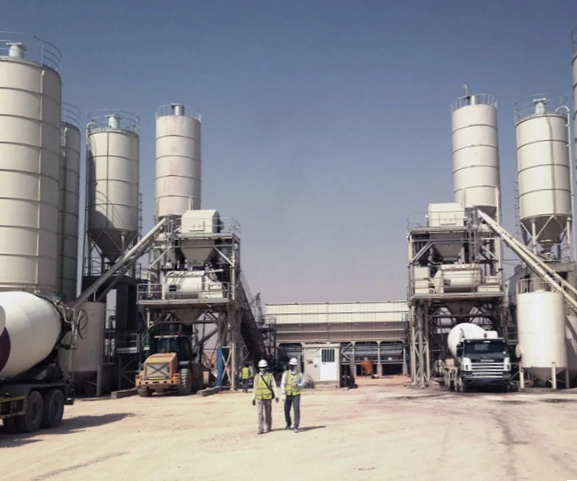
Dual HZS120 Ready-Mix Plant — Saudi Arabia
Vision 2030 infrastructure supply · 200+ m³/h combined · delivered via Jeddah Islamic Port
Supplying a futuristic urban mega-development in a harsh desert, this client needed temperature-controlled concrete at scale, 24/7. We engineered a dual HZS120 system with an integrated flake-ice dosing chute, automatically blending chilled water and ice into the twin-shaft mixers to hold an optimal pouring temperature despite 45°C+ heat. The entire mixing tower and conveyors were fully cladded and fitted with pulse-jet dust collectors for near-zero emissions in sandstorm conditions. Result: consistently temperature-regulated, crack-free concrete, zero unscheduled downtime in year one, and ~4% cement savings from automated moisture compensation.
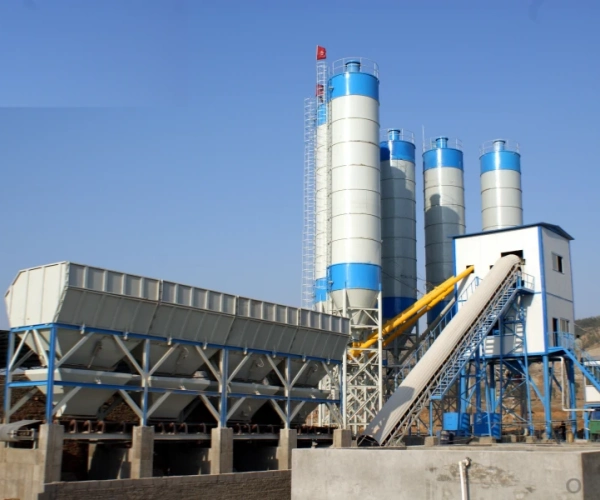
HZS180 Stationary Plant — Downtown Dubai, UAE
Commercial ready-mix & high-rise · 180 m³/h · commissioned May 2025 · via Port of Jebel Ali
To keep skyscraper pouring schedules on track while meeting Dubai Municipality’s strict ≤32°C placement limit, we adapted an HZS180 for the Gulf’s most extreme conditions. The plant integrates flake-ice and chilled-water dosing above the MAO3000/2000 twin-shaft mixer, desertized sealed-and-cooled electrical cabinets to protect electronics from salt air and dust, and 26% high-chromium alloy wear liners that extend service life by 40% against abrasive local sand. Result: zero discarded batches at high-rise sites and a dramatic drop in maintenance downtime.
Featured Projects: South Asia
Built for Unstable Power, Monsoon Mud & Tight Margins
In South Asia, the enemies are different again: load-shedding that can freeze a mixer mid-cycle, post-monsoon ground too soft for heavy foundations, abrasive aggregates, and ready-mix margins so thin that every kilogram of wasted cement matters. Our two projects here show how mobility, power resilience and local-parts strategy solve these problems.
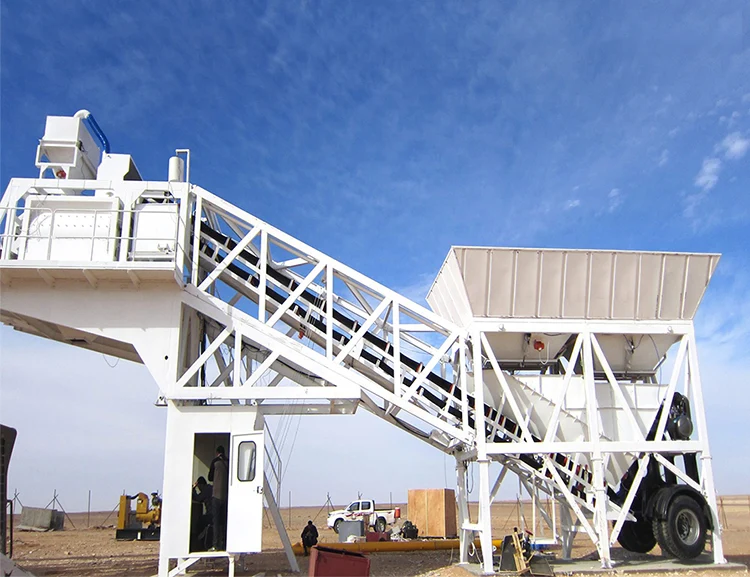
YHZS60 Mobile Plant — Multan, Punjab, Pakistan
Highway & bridge construction · 60 m³/h · commissioned Sep 2025 · via Port of Karachi
A road contractor working multiple 50-km highway segments needed an agile plant that survives Punjab’s notorious load-shedding and post-monsoon mud. Our YHZS60 mobile plant mounts the batcher, weighing system and JS1000 mixer on a single towable chassis requiring zero foundation — just a compacted gravel pad. A dual-power fail-safe system auto-switches to a backup diesel generator within seconds of a grid drop, preventing the mixer from setting solid. Result: a fully operational plant in 3 days, 15–20% lower logistics costs from on-site batching, and zero losses from power outages.
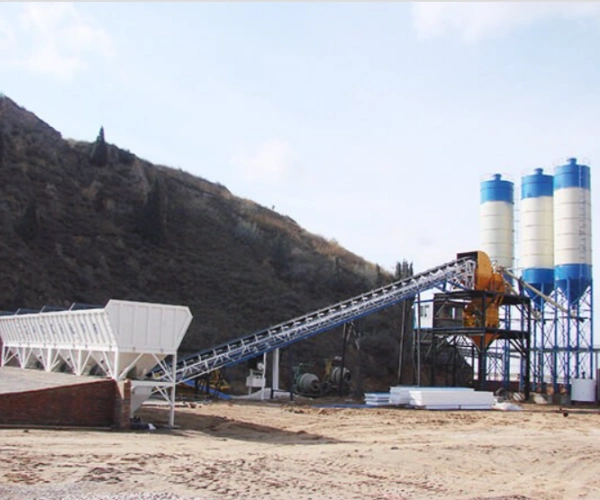
HZS60 Belt-Conveyor Plant — Ahmedabad, Gujarat, India
Commercial RMC startup · 60 m³/h · commissioned Dec 2025 · via Port of Mundra
Entering Gujarat’s fiercely competitive ready-mix market, a startup needed certified quality at the lowest possible operating cost. We configured an HZS60 with an inclined belt conveyor and intermediate waiting hopper, running aggregate dosing in parallel with mixing to cut batch cycle time by 25%. High-chromium (26% Cr) wear liners handle abrasive quartz and basalt, while Siemens PLCs and Schneider components mean routine spare parts are sourced locally — no costly import waits. Result: 10% cement savings, faster truck turnaround, and a seamless 10-day installation.
Asia Project Overview Table
Asia Concrete Plant Projects at a Glance
| Country / City | Plant Model | Capacity | Application | Year |
|---|---|---|---|---|
| Philippines | Dual HZS120 (Stationary) | 200+ m³/h | Commercial ready-mix | 2025 |
| Saudi Arabia | Dual HZS120 (Stationary) | 200+ m³/h | Vision 2030 infrastructure | 2025 |
| Dubai, UAE | HZS180 (Stationary) | 180 m³/h | High-rise ready-mix | 2025 |
| Multan, Pakistan | YHZS60 (Mobile) | 60 m³/h | Highway & bridge | 2025 |
| Ahmedabad, India | HZS60 (Belt-conveyor) | 60 m³/h | Commercial ready-mix | 2025 |
| Dili, East Timor | HZS50G (Dry-mix) | 50 m³/h | Rural road & infrastructure | 2025 |
Browse Asia Projects by Plant Type
Find Your Match: Asia Projects by Plant Type
The same six projects, organized by the type of plant — a fast way to see which configuration fits your operation.
Stationary plants power our highest-capacity, permanent commercial hubs — the dual HZS120 installations in the Philippines and Saudi Arabia, the Dubai HZS180, and the belt-conveyor HZS60 in Ahmedabad. Explore the full stationary concrete batching plant range.
Mobile plants suit contractors who relocate between sites, like the foundation-free YHZS60 in Pakistan. See all mobile concrete batching plants.
Dry-mix plants excel where long haul distances threaten transit hardening, as with the HZS50G in East Timor. Learn more about our dry-mix concrete batching plants.
Browse Asia Projects by Capacity
Match Your Volume: Asia Projects by Capacity
Compact (50–60 m³/h) — Ideal for regional contractors, startups, and remote sites: East Timor (HZS50G), Pakistan (YHZS60) and Ahmedabad (HZS60). Often built around the HZS25 and HZS60 platforms.
High-capacity (180–200+ m³/h) — Built for commercial ready-mix businesses and national infrastructure: the HZS120-based dual plants in the Philippines and Saudi Arabia, and the HZS180 in Dubai. For the largest demands, see the HZS240.
Capacity & Investment Guide for Asia
Choosing the Right Plant Size & Budget in Asia
Investment scale across our Asian projects generally falls into three tiers. Use these as planning ranges; your final figure depends on customization, shipping, foundation work and auxiliary vehicles.
| Tier | Typical Capacity | Best For | Indicative Investment* |
|---|---|---|---|
| Entry / Mobile | 25–60 m³/h | Startups, road contractors, remote sites | $25,000 – $60,000 |
| Commercial | 60–120 m³/h | Regional ready-mix businesses | $60,000 – $120,000+ |
| Industrial / Mega | 150–240+ m³/h | National infrastructure, dual-plant hubs | $120,000 – $200,000+ |
*Core machinery estimate only. For a region-specific breakdown, see our guide on how much a concrete plant costs and the 2026 concrete plant price list.
What Asian Buyers Should Know
What to Know Before Importing a Concrete Plant to Asia
Ports & logistics
We routinely ship to every major Asian gateway — Manila, Jeddah Islamic Port, Jebel Ali, Karachi, Mundra and Tibar Bay — packing modular components into standard 40HQ containers to minimize ocean freight. For inland or island sites, we plan the full route, including prime-mover transport over difficult terrain.
Power stability
In regions prone to load-shedding, we integrate voltage stabilizers and automatic generator transfer so a grid drop never freezes a mixing cycle — as proven on our Pakistan project.
Climate engineering
From flake-ice cooling for Gulf heat to double-epoxy anti-corrosion for tropical coasts and big-bag cement handling for remote islands, every plant is adapted to its environment rather than shipped as a generic unit.
Certification & support
All plants meet CE, ISO, SGS and BV standards, easing local permitting. We provide on-site installation supervision, operator training, and 24/7 technical support via phone or WhatsApp with cloud-based remote PLC diagnostics.
Countries We Serve Across Asia
Equipment Delivery and Plant Installation Across Asia
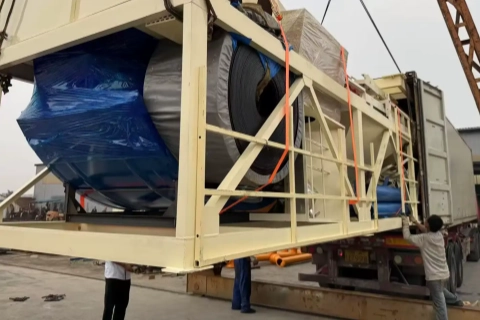
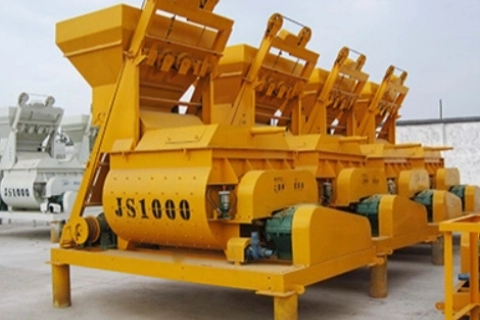
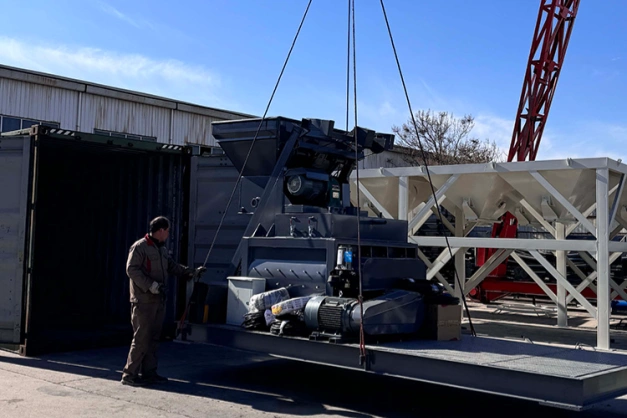
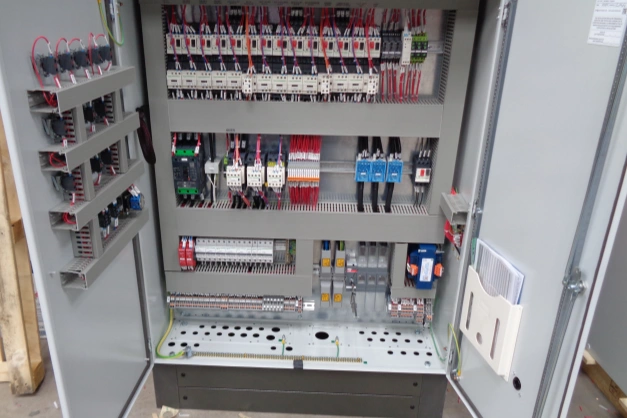
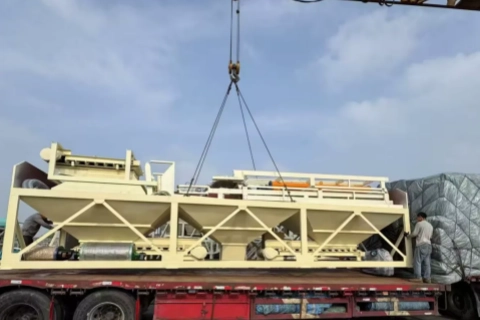
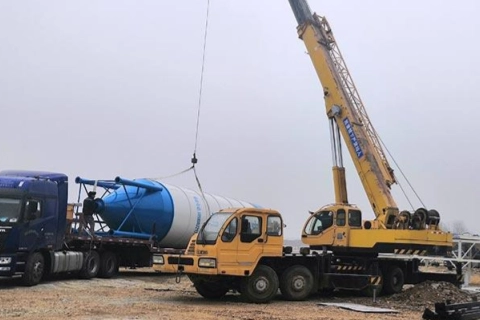
Our commissioned projects span the Philippines, Saudi Arabia, the United Arab Emirates, Pakistan, India and East Timor — and our delivery network reaches far beyond them. We also supply and support concrete batching plants across Vietnam, Indonesia, Malaysia, Thailand, Bangladesh, Sri Lanka, Kazakhstan, Uzbekistan, Qatar, Oman and Kuwait, with logistics and engineering teams familiar with each market’s ports, voltage standards and permitting requirements.
What Our Asian Clients Say
⭐⭐⭐⭐⭐
“The automated ice-dosing system is incredibly precise, keeping our concrete strictly below the Municipality’s 32°C limit. We’ve had zero discarded batches at our high-rise sites, and the heavy-duty wear liners have vastly reduced our maintenance downtime. The ROI on this plant is undeniable.”
— Project Director, High-Rise RMC Supplier (Dubai, UAE)
⭐⭐⭐⭐⭐
“We were racing against both the hot weather and an unstable grid, and this plant saved us. A fully operational 60 m³/h plant in just 3 days on a simple gravel pad — without a massive concrete foundation — was a game-changer. The automatic generator backup has saved our mixer several times.”
— Project Director, Highway Contractor (Punjab, Pakistan)
⭐⭐⭐⭐⭐
“The road conditions here are terrible, and our concrete used to harden on the truck. This dry-batch plant completely solved that. The crew tows the dry materials to remote sites and only adds water on arrival. We didn’t need a deep foundation, which saved us weeks.”
— Project Manager, Infrastructure Contractor (Dili, East Timor)
FAQ
Core machinery typically ranges from $25,000 for an entry-level mobile or compact plant to $200,000+ for a high-capacity industrial hub. Final cost depends on capacity, climate customization, shipping and foundation work.
For 45–50°C environments, we recommend stationary plants with integrated flake-ice and chilled-water dosing, full cladding and dust collection — as delivered in Saudi Arabia and Dubai — to keep placement temperature within municipal limits.
Yes. For grids prone to load-shedding, we integrate voltage stabilizers and automatic diesel-generator transfer, so a blackout never sets concrete inside the mixer (proven on our Pakistan installation).
A dry-mix (transit) plant like the HZS50G batches dry materials for in-truck mixing, eliminating transit hardening over 90-minute mountain hauls — ideal for islands and rural infrastructure.
It varies by type: a mobile plant can be running in 3 days, a compact stationary plant in about 10 days, and larger dual-plant hubs within a few weeks including foundation work and commissioning.
All major gateways, including Manila, Jeddah, Jebel Ali, Karachi, Mundra and Tibar Bay, using standard 40HQ containers to keep freight costs down.