Concrete Batching Plant Projects in Oceania — Real Case Studies & Installations
· Comprehensive Concrete Batching Plant Solutions
· 32+ Years of Engineering Heritage
Oceania is one of the most compliance-driven concrete markets on earth — and one of the most rewarding for suppliers who meet its bar. From Melbourne’s zero-discharge EPA bylaws and Sydney’s AS4024/AS3000 safety codes to New Zealand’s NZS seismic standards and the off-grid highlands of Papua New Guinea, every project here is won by matching the right plant to a strict code, a tough climate, and a demanding site. This page brings together real, commissioned projects across Australia, New Zealand and the Pacific, showing the exact plant models, capacities, and compliance-specific engineering our clients rely on.
For more than 32 years, we have manufactured and installed over 100 batching plants in 20+ countries, every one backed by full CE, ISO, SGS and BV certification and end-to-end turnkey support. Whether you face EPA audits, WorkSafe inspections, seismic design actions, or a remote site with no grid power at all, the cases below show how the right configuration is engineered for the right Oceania challenge.
🏆
32+ Years Experience
🌍
80+ Countries
🏠
100+ Plants
📚
CE·ISO·SGS·BV
Oceania at a Glance
Oceania is not a single market — it spans Australia’s strictly regulated metro hubs, New Zealand’s seismic-code regime, and the rugged, off-grid terrain of the Pacific Islands. Use the quick links below to jump to the projects most relevant to your region:
- Australia Projects — Melbourne, Sydney, Brisbane, Regional NSW
- New Zealand Projects — Auckland
- Pacific Islands Projects — Papua New Guinea
At a glance: 6 commissioned projects across 3 countries · 4 plant types (dual-tower stationary, stationary, mobile, belt-conveyor) · capacities from 50 to 240 m³/h · delivered through major gateways including the Ports of Melbourne, Port Botany, Brisbane, Auckland and Port Moresby.
Why Concrete Plant Selection Differs Across Oceania
Across Oceania, the plant that wins the contract is almost always the one that can prove compliance — then survive the site. Three forces shape nearly every configuration we deliver here. The first, and most defining, is strict, named regulatory regimes: Australia’s AS4024 (machinery safety) and AS3000 (electrical) codes enforced by WorkSafe, EPA zero-discharge and noise bylaws in Victoria and NSW, and New Zealand’s NZS 3104 (concrete production) and NZS 1170.5 (seismic design). A plant that cannot pass these audits cannot legally sell a single cubic meter.
The second is climate and seismic conditions: Melbourne’s “four seasons in one day” and Brisbane’s subtropical downpours demand active moisture compensation, while Auckland’s tectonic activity requires built-in seismic reinforcement. The third is geography and grid access: from Sydney’s premium-priced, space-constrained urban plots, to the Riverina’s vast inland distances, to Papua New Guinea’s completely off-grid highlands, the right plant ranges from a compact enclosed tower to a fully self-sufficient mobile unit.
One clear pattern emerges from our work here: in Australia’s metro markets, fully enclosed, low-emission plants dominate — enclosed towers, pulse-jet dust capture, and closed-loop water recycling are not upgrades but entry requirements.
The matrix below shows how these forces shaped the actual plants we delivered:
| Sub-Region | Real-World Conditions | What It Demands | Proven In Our Projects |
|---|---|---|---|
| Australia (Metro) | EPA zero-discharge & noise bylaws, AS4024/AS3000, premium land, volatile weather | Enclosed low-emission towers, water reclaimers, moisture sensors, compact footprint | Melbourne (Dual HZS120 zero-discharge), Sydney (HZS90 enclosed), Brisbane (YHZS75/90 mobile EPA) |
| Australia (Regional) | Long inland haul distances, hot dry inland heat, small crews | Compact, simple, reliable stationary plants for in-house supply | Regional NSW (HZS50, Wagga Wagga) |
| New Zealand | NZS 3104 production & NZS 1170.5 seismic codes, tectonic tremors | Precision dosing with auto-compensation, seismic structural reinforcement | Auckland (HZS60 belt-conveyor, NZS-compliant) |
| Pacific Islands | Off-grid sites, mountainous mud & landslides, no local support | Fully self-sufficient mobile plants, generator integration, zero-foundation | Papua New Guinea (YHZS50 off-grid highlands) |
Every project on this page is a direct illustration of these principles. Read them not just as success stories, but as a decision guide for your own Oceania market.
Featured Projects: Australia
Where Compliance Is the Price of Entry
Australia is the heart of our Oceania work — and its metro markets set a uniquely high bar. Here, passing EPA zero-discharge and noise bylaws and WorkSafe’s AS4024/AS3000 audits is not optional; it is the minimum to operate. Our four Australian projects span the full range, from a 240 m³/h zero-discharge twin-tower hub in Melbourne to a compact regional plant in the Riverina.
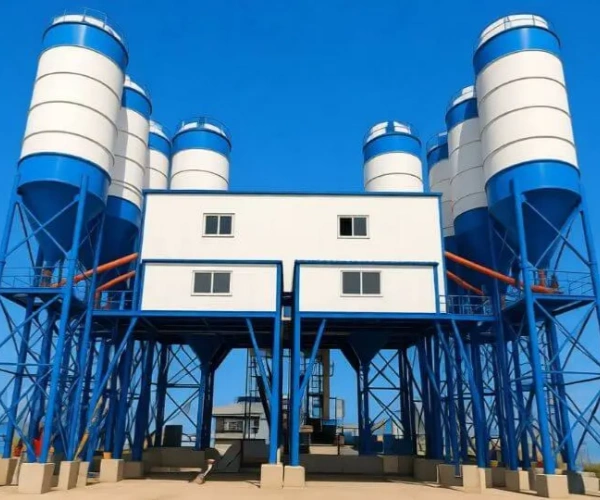
Dual HZS120 Zero-Discharge Plant — Dandenong, Melbourne
Heavy-duty commercial ready-mix (RMC) · 240 m³/h combined · commissioned Aug 2025 · via Port of Melbourne
To bid for mega-infrastructure like the Melbourne Metro Tunnel while meeting EPA Victoria’s strict zero-wastewater bylaws, this supplier needed a high-volume, fully enclosed, closed-loop hub. We delivered a dual-tower 2HZS120 (two JS2000 mixers, 240 m³/h combined) with an integrated concrete reclaimer recycling all slurry and washout water for a 100% zero-discharge footprint, rock-wool acoustic enclosure and pulse-jet collectors holding noise below 65 dB, and microwave moisture sensors for real-time water dosing. Result: passed every EPA Victoria audit, maintained supply when one tower went down for maintenance (the other held 120 m³/h), and cut cement waste 10% — installed in 14 days.
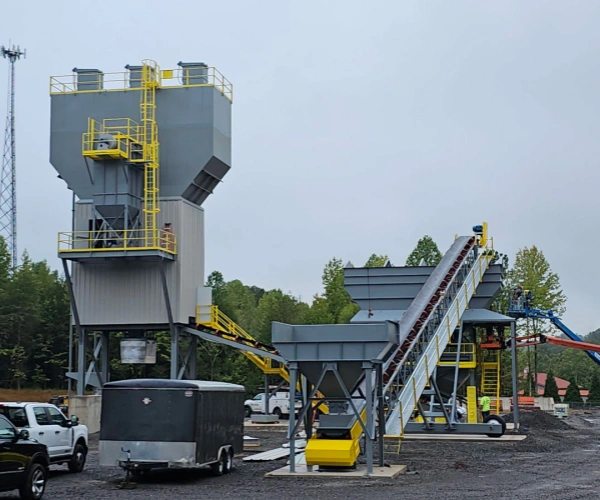
HZS90 Fully Enclosed Plant — Western Sydney, NSW
Commercial ready-mix & suburban infrastructure · 90 m³/h · commissioned Sep 2025 · via Port Botany
On a premium-priced, space-constrained plot in the Western Sydney corridor, this supplier needed to pass strict WorkSafe NSW and EPA audits in a compact footprint. We engineered a fully enclosed HZS90 with a rock-wool sound-insulated tower (boundary noise below 65 dB), AS4024 steel-mesh guarding with dual-circuit interlocks, AS3000-compliant low-smoke halogen-free wiring, and pulse-jet dust collectors capturing 99.9% of cement dust. Result: passed all WorkSafe NSW and EPA audits on the first run, freed up critical yard space, and achieved zero rejected loads — installed in 12 days.
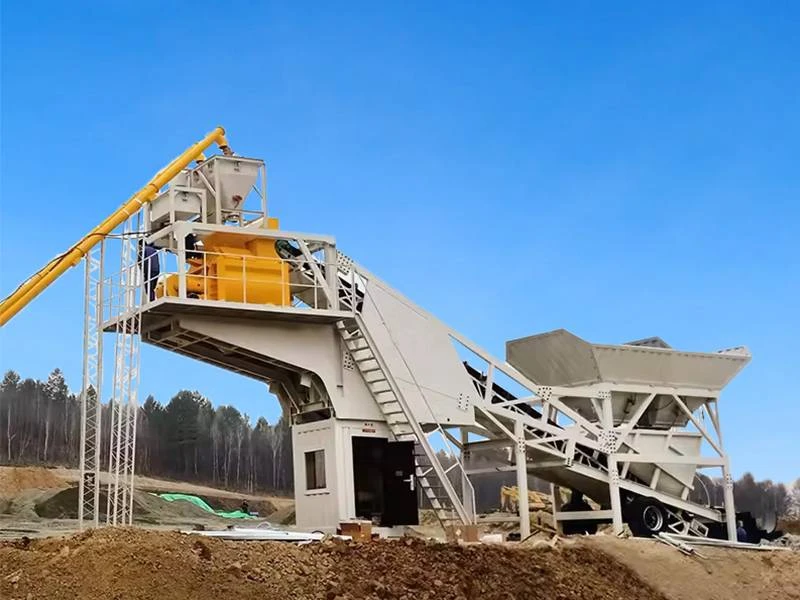
YHZS75/90 Mobile Plant — Brisbane, Queensland
Suburban pipeline & linear infrastructure · 75 m³/h · commissioned Feb 2026 · via Port of Brisbane
For a long suburban pipeline corridor racing against Brisbane’s subtropical wet season, this contractor needed mobility plus full EPA compliance — on unprepared ground. Our YHZS75/90 mounts batching, the JS1500 mixer, and control on a single towable chassis (zero foundation), upgraded with dehumidified-and-heated control cabinets for the humidity and ”stationary-grade” dust covers and pulse collectors so a mobile unit passes the same EPA audits as a permanent plant. Result: fully operational in just 5 days during a brief dry spell, zero EPA compliance issues, and the freedom to hitch up and relocate to the next site.
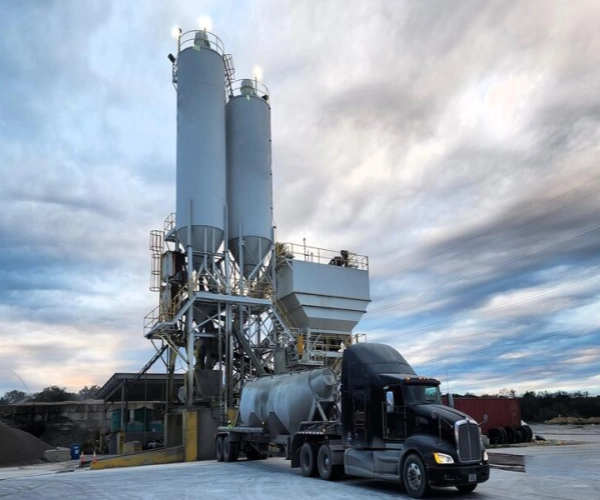
HZS50 Stationary Plant — Wagga Wagga, Riverina, NSW
Regional road & rural infrastructure · 50 m³/h · commissioned May 2025 · via Port Botany
In the Riverina, where towns are far apart and the nearest ready-mix supplier can be over an hour away, a road contractor needed to bring concrete production in-house. We delivered a compact, easy-to-run HZS50 with a JS1000 twin-shaft mixer, PLD1600 batcher, and a wet-mix design that discharges fully mixed concrete straight into the truck — critical when the next job site is a long haul away. Result: the contractor cut out long delivery runs, gained full control of their pour schedule, and lowered per-cubic-meter cost — even supplying high-strength, low-shrinkage foundations for a regional wind-turbine project.
Featured Projects: New Zealand
Precision Dosing Meets Seismic Code
New Zealand pairs two strict demands: the NZS 3104 concrete-production standard that governs every commercial cubic meter, and the NZS 1170.5 seismic code that governs every structure in this tectonically active country. Our Auckland project was engineered to satisfy both at once.
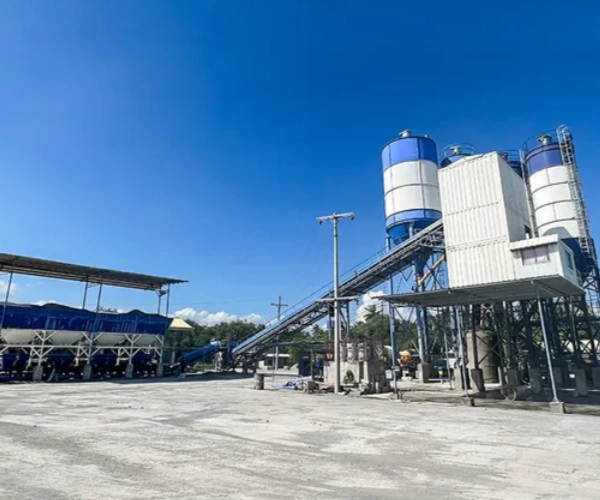
HZS60 Belt-Conveyor Plant — Auckland, North Island
Commercial ready-mix & suburban infrastructure · 60 m³/h · commissioned Sep 2025 · via Port of Auckland
An ambitious ready-mix supplier on Auckland’s industrial outskirts needed a plant that could pass independent NZS 3104 audits and withstand the region’s tectonic tremors. We delivered an HZS60 belt-conveyor plant with automatic difference compensation holding cement, water and fly ash to a strict ±1% tolerance (satisfying NZS 3104), seismic structural reinforcement — high-tensile cross-bracing and heavy anchor plates on the tower and silos per NZS 1170.5 — and a continuous inclined belt conveyor for fast-track pour schedules, plus high-chrome liners for abrasive basalt. Result: passed NZS 3104 audits on the first run, saved on land via a compact footprint, and achieved zero rejected loads — installed in 10 days.
Featured Projects: Pacific Islands
Total Self-Sufficiency, Far Beyond the Grid
In the Pacific Islands, the challenge is the opposite of metro compliance: there are no utilities, no grid power, and no local technical support for hundreds of kilometers. Here, a plant must be a completely self-contained island of production. Our Papua New Guinea project shows exactly what that takes.
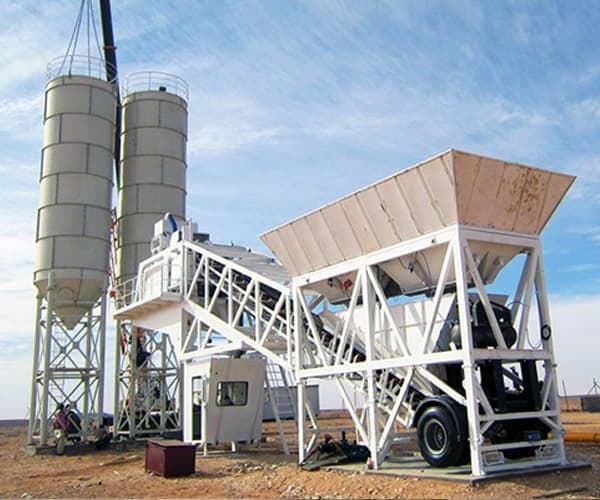
YHZS50 Off-Grid Mobile Plant — Port Moresby & Highlands, PNG
Mountainous mining-access roads & bridge piers · 50 m³/h · commissioned Sep 2025 · via Port of Port Moresby
For a gold-mining and road contractor working deep in PNG’s Highlands — completely isolated from the grid, with no local water or technical support — we delivered a fully self-sufficient YHZS50 mobile plant. It mounts the PLD1600 batcher and JS1000 mixer on a single towable chassis (zero foundation, just compacted gravel), with a heavy-duty diesel-generator power-stabilization system that filters voltage swings to protect the PLC and scales, and high-chrome liners for abrasive granite and river gravel. Result: zero downtime from utility failures, a chassis that survived over 1,000 km of unpaved roads, relocation between phases in under 4 days, and consistent off-grid output — set up in just 3 days.
Oceania Project Overview Table
Oceania Concrete Plant Projects at a Glance
| Country / City | Plant Model | Capacity | Application | Year |
|---|---|---|---|---|
| Melbourne, Australia | Dual HZS120 (Stationary) | 240 m³/h | Commercial RMC & infrastructure | 2025 |
| Sydney, Australia | HZS90 (Stationary, enclosed) | 90 m³/h | Commercial RMC & infrastructure | 2025 |
| Brisbane, Australia | YHZS75/90 (Mobile) | 75 m³/h | Pipeline & linear infrastructure | 2026 |
| Auckland, New Zealand | HZS60 (Belt-conveyor) | 60 m³/h | Commercial RMC & suburban | 2025 |
| Wagga Wagga, Australia | HZS50 (Stationary) | 50 m³/h | Regional road & rural | 2025 |
| Port Moresby, PNG | YHZS50 (Mobile) | 50 m³/h | Mining-access roads & bridges | 2025 |
Browse Oceania Projects by Plant Type
Find Your Match: Oceania Projects by Plant Type
The same six projects, organized by the type of plant — a fast way to see which configuration fits your operation.
Stationary plants anchor permanent, compliant commercial supply — the zero-discharge dual-tower HZS120 in Melbourne, the enclosed HZS90 in Sydney, and the compact HZS50 in regional NSW. Explore the full stationary concrete batching plant range.
Belt-conveyor plants deliver continuous high-speed aggregate flow for fast-track pours — like the NZS-compliant HZS60 in Auckland, built on the HZS60 platform.
Mobile plants suit relocatable and off-grid work — the EPA-compliant YHZS75/90 in Brisbane and the fully self-sufficient YHZS50 in Papua New Guinea. See all mobile concrete batching plants.
Browse Oceania Projects by Capacity
Match Your Volume: Oceania Projects by Capacity
Compact (50–60 m³/h) — Ideal for regional contractors, off-grid sites, and in-house supply: regional NSW (HZS50), Auckland (HZS60) and Papua New Guinea (YHZS50). Often built around the HZS25 and HZS60 platforms.
High-capacity (75–240 m³/h) — Built for metro commercial supply and mega-infrastructure: Brisbane (YHZS75/90), Sydney (HZS90 class) and the dual-tower HZS120 in Melbourne. For the largest demands, see the HZS240.
Capacity & Investment Guide for Oceania
Choosing the Right Plant Size & Budget in Oceania
Investment scale across our Oceania projects generally falls into three tiers. Use these as planning ranges; your final figure depends on customization (full enclosure, water reclaimers, seismic reinforcement, off-grid generator integration), shipping, and auxiliary vehicles.
| Tier | Typical Capacity | Best For | Indicative Investment* |
|---|---|---|---|
| Entry / Mobile | 25–50 m³/h | Regional, off-grid & project-based contractors | $25,000 – $50,000 |
| Commercial | 60–120 m³/h | Metro ready-mix & compliant urban supply | $60,000 – $120,000+ |
| Industrial / Mega | 150–240+ m³/h | Mega-infrastructure & dual-tower hubs | $120,000 – $200,000+ |
*Core machinery estimate only; Oceania projects often add cost for full acoustic enclosure, closed-loop water recycling, seismic reinforcement or off-grid power integration, depending on the site and local code. For a detailed breakdown, see our guide on how much a concrete plant costs and the 2026 concrete plant price list.
What Buyers in Oceania Should Know
What to Know Before Importing a Concrete Plant to Oceania
Ports & inland transport
We ship to every major regional gateway — the Ports of Melbourne, Port Botany (Sydney), Brisbane, Auckland and Port Moresby — in standard containers, then plan the full inland leg, whether that’s a long haul into the Riverina or a tractor-tow through PNG’s mountain passes.
AS/NZS code compliance
Our plants are engineered to pass the region’s named standards: AS4024 (machinery safety) and AS3000 (electrical) under WorkSafe in Australia, and NZS 3104 (concrete production) and NZS 1170.5 (seismic design) in New Zealand — all on top of CE, ISO, SGS and BV certification.
EPA & environmental compliance
For metro sites we build fully enclosed, sound-insulated towers (below 65 dB), pulse-jet dust collectors (99.9% capture), and closed-loop concrete reclaimers for 100% zero-discharge operation — meeting EPA Victoria and NSW EPA bylaws.
Climate, seismic & off-grid engineering
From microwave moisture sensors for Melbourne’s volatile weather, to seismic bracing for Auckland, to diesel-generator power stabilization for off-grid PNG, every plant is adapted to its site rather than shipped as a generic unit.
Support
On-site or remote-guided installation, operator training, and 24/7 technical support via phone or WhatsApp with cloud-based remote PLC diagnostics.
Countries We Serve Across Oceania
Equipment Delivery and Plant Installation Across Oceania
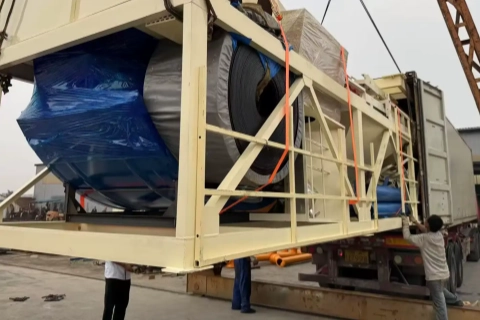
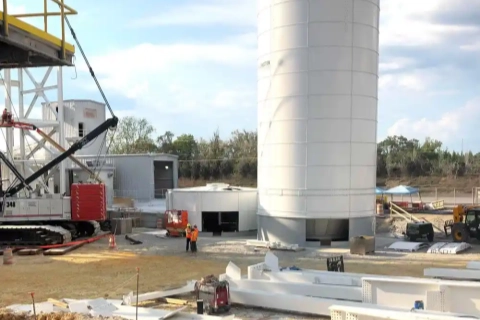
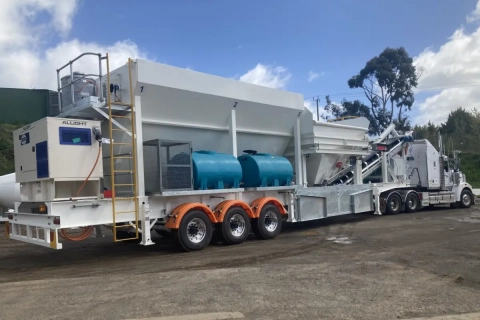
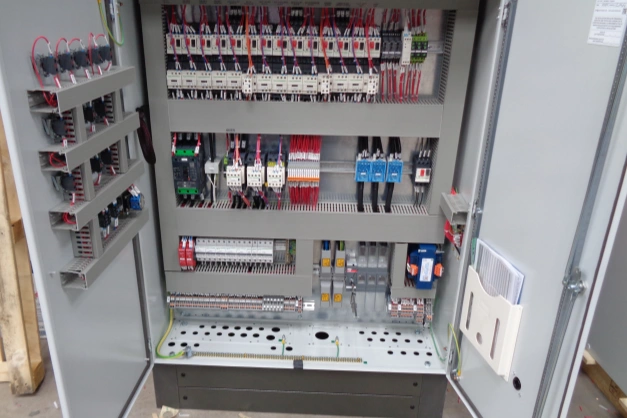
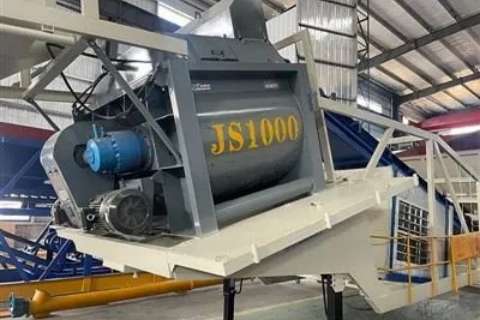
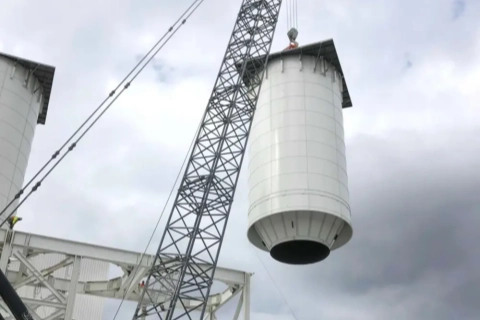
Our commissioned projects span Australia, New Zealand and Papua New Guinea — and our delivery network reaches across the wider Pacific. We also supply and support concrete batching plants in Fiji, the Solomon Islands, Vanuatu, Samoa, Tonga, New Caledonia and Timor-Leste, with logistics and engineering teams familiar with each market’s ports, inland transport, grid conditions, building codes and permitting requirements.
What Our Clients in Oceania Say
⭐⭐⭐⭐⭐
“Operating in Metro Melbourne, we faced strict zero-discharge and noise bylaws. This dual-tower enclosed plant has met all of our compliance needs. We had the entire dual facility fully operational in just 14 days without a single wiring error, and the integrated concrete reclaimer is saving us thousands in water costs and waste-disposal fees.”
— Project Director, Commercial Ready-Mix Supplier (Melbourne, VIC)
⭐⭐⭐⭐⭐
“Operating in Auckland means we had to comply with incredibly strict safety and environmental codes. This plant solved all our compliance worries — it went up in just 10 days, and the automated PLC is so precise that we easily passed our NZS 3104 audits on the first run.”
— Project Director, Ready-Mix Supplier (Auckland, New Zealand)
⭐⭐⭐⭐⭐
“Operating in the remote Highlands means we had to survive without water or grid power, and this plant met every single challenge. The automatic generator transfer has saved our mixer during sudden blackouts, and the robust chassis survived over 1,000 km of unpaved roads.”
— Project Director, Mining & Road Contractor (Port Moresby, Papua New Guinea)
FAQ
Core machinery typically ranges from $25,000 for an entry-level mobile or compact plant to $200,000+ for a high-capacity industrial hub. Oceania projects often add cost for full acoustic enclosure, closed-loop water recycling, seismic reinforcement or off-grid power integration, depending on the site and local code.
Yes. We engineer machinery guarding to AS4024 and electrical systems to AS3000, with low-smoke halogen-free wiring and dual-circuit interlocks, to pass WorkSafe audits — as delivered in Sydney and Melbourne.
Yes. For metro sites we provide fully enclosed sound-insulated towers (below 65 dB), pulse-jet dust collectors (99.9% capture) and closed-loop concrete reclaimers for 100% zero-discharge operation — proven on our Melbourne and Sydney installations.
Yes. We build to NZS 3104 (concrete production) with ±1% automatic dosing compensation and NZS 1170.5 (seismic design) with reinforced structural bracing — as delivered in Auckland.
Yes. For off-grid sites we integrate diesel-generator power stabilization to protect the PLC and scales, on a foundation-free towable chassis — as proven in Papua New Guinea’s Highlands, where the plant ran with no grid power and survived 1,000 km of unpaved roads.
It varies by type: a mobile plant can be running in 3–5 days, a stationary or belt-conveyor plant in 10–12 days, and a large dual-tower hub within roughly 14 days, including site work and commissioning.