Concrete Batching Plant Projects in Africa — Real Case Studies & Installations
· Comprehensive Concrete Batching Plant Solutions
· 32+ Years of Engineering Heritage
Africa is one of the world’s fastest-growing construction frontiers — and one of the most operationally demanding. From the Saharan dust and heat of Algiers to the unstable grids of West Africa, the remote rural roads of Tanzania, and the expansive clay soils of the Ethiopian lowlands, every project here is won by matching the right plant to a genuinely tough environment. This page brings together real, commissioned projects across Africa, showing the exact plant models, capacities, and site-specific engineering our clients rely on.
For more than 32 years, we have manufactured and installed over 100 batching plants in 20+ countries, every one backed by full CE, ISO, SGS and BV certification and end-to-end turnkey support. Whether you face desert dust, grid blackouts, or scattered remote sites with no skilled technicians nearby, the cases below show how the right configuration is engineered for the right African challenge.
🏆
32+ Years Experience
🌍
80+ Countries
🏠
100+ Plants
📚
CE·ISO·SGS·BV
Africa at a Glance
Africa is not a single market — its construction conditions swing from Saharan deserts in the north to humid Gulf-of-Guinea coasts in the west, and from dense capital cities to scattered rural road segments. Use the quick links below to jump to the projects most relevant to your region:
- East Africa Projects — Ethiopia (×2), Tanzania
- North Africa Projects — Algeria
- Southern & West Africa Projects — South Africa, Benin
At a glance: 6 commissioned projects across 5 countries · 2 plant types (stationary & mobile) · capacities from 35 to 120 m³/h · delivered through major African gateways including Djibouti, Dar es Salaam, Durban, Cotonou and the Port of Algiers.
Why Concrete Plant Selection Differs Across Africa
Across Africa, the plant that succeeds is almost never chosen on capacity alone — it is chosen on resilience. Three forces shape nearly every configuration we deliver on the continent. The first is power and infrastructure reality: grids in much of West and East Africa suffer frequent blackouts, so plants need automatic generator failover and voltage stabilization to stop a sudden outage from freezing a full mixer of concrete.
The second is environment: Saharan and semi-arid dust acts like sandpaper on moving parts and clogs electronics, while heat accelerates cement set and expansive clay soils threaten foundations — demanding sealed NEMA/IP65 cabinets, high-chromium wear parts, dust collection, and engineered foundations. The third is geography and economics: scattered rural sites, expensive or tightly-zoned urban land, tight contractor budgets, and a shortage of specialized technicians all reward mobile, compact, low-CAPEX plants that local crews can run and maintain with basic tools.
The matrix below shows how these forces shaped the actual plants we delivered across the continent:
| Sub-Region | Real-World Conditions | What It Demands | Proven In Our Projects |
|---|---|---|---|
| East Africa | Semi-arid heat & dust, expansive clay soil, voltage swings, expensive urban land, remote rural sites | Sealed electronics, stabilizers, engineered foundations; compact & mobile low-CAPEX units | Ethiopia (HZS60 Dire Dawa, HZS35 Addis Ababa), Tanzania (YHZS35 rural) |
| North Africa | Saharan dust, intense heat, 24/7 state-project volumes, strict government audits | Heavy-duty high-chrome mixers, desert-proof climate-controlled cabins, high-volume belt feed | Algeria (HZS120 state housing & highway) |
| Southern & West Africa | Long inland haul distances, unstable grids, humid salt-spray coasts, sandy soils | High-capacity stationary supply; or mobile dual-power, anti-corrosion, zero-foundation plants | South Africa (HZS90 Limpopo), Benin (YHZS50 Cotonou) |
Every project on this page is a direct illustration of these principles. Read them not just as success stories, but as a decision guide for your own African market.
Featured Projects: East Africa
Compact, Resilient Plants for Heat, Dust & Scattered Sites
East Africa is where flexibility and resilience matter most. Land in capitals like Addis Ababa is expensive and tightly zoned, rural road projects are scattered across long distances, grid voltage fluctuates, and the dry-season dust is relentless. Our three East African projects — two in Ethiopia, one in Tanzania — show how compact stationary and mobile plants solve exactly these constraints.

HZS60 Stationary Plant — Dire Dawa, Ethiopia
Ready-mix for industrial warehouse cluster · 60 m³/h · commissioned Mar 2026 · via Djibouti + Addis–Djibouti Railway
Serving the Dire Dawa Special Economic Zone — Ethiopia’s main inland gateway to the Port of Djibouti — this contractor needed centralized, automated ready-mix for a fast-growing industrial park in a hot (35–40°C), dusty, semi-arid valley. We delivered a fully enclosed HZS60 with a JS1000 mixer, pulse-jet dust collection, an IP65-sealed electrical cabinet, high-chrome blades and liners for abrasive volcanic rock, plus a water-softening unit and voltage stabilizer. Because the local soil is expansive red clay, we cast the plant on a reinforced raft with pile supports. Result: a steady 8,000–10,000 m³ per month supplying three active warehouse projects, ±1% mix consistency, and a client already discussing a second unit.
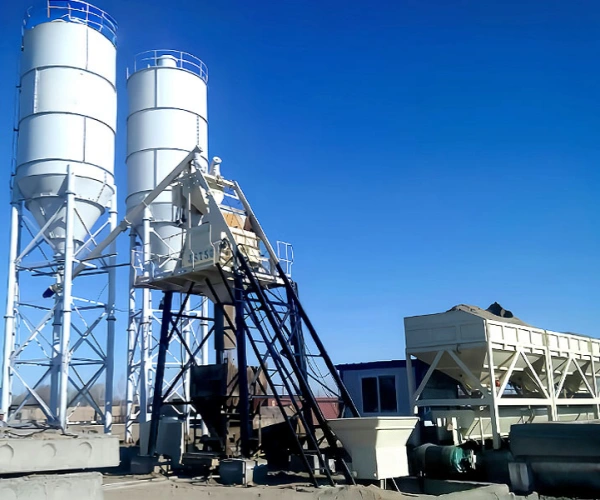
HZS35 Compact Stationary Plant — Addis Ababa, Ethiopia
Commercial buildings & local infrastructure · 35 m³/h · commissioned Nov 2025 · via Port of Djibouti
On the outskirts of Addis Ababa, where industrial land is expensive and a contractor lacked the 50-meter run needed for a belt-conveyor plant, we deployed a space-saving HZS35 skip-hoist design that fits the entire plant into just 15 m × 20 m. It pairs a heavy-duty JS750 twin-shaft mixer with high-chrome liners for abrasive basalt, a sealed NEMA cabinet, and an industrial voltage stabilizer for the unstable highland grid. Result: full supply-chain independence from third-party ready-mix, ~10% lower cement waste, and projected full capital recovery within the first year.
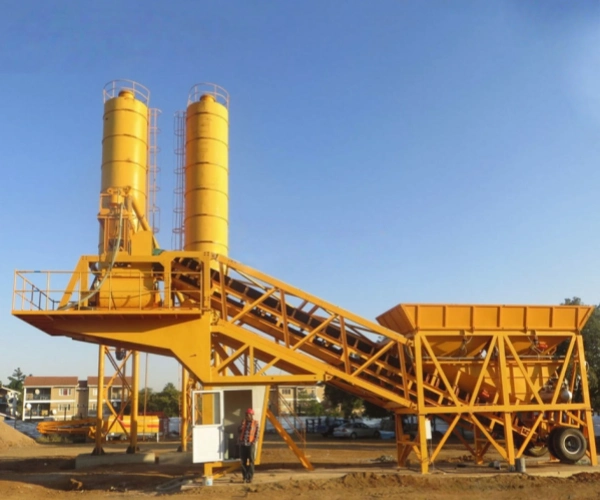
YHZS35 Mobile Plant — Dodoma, Tanzania
Rural road & small municipal infrastructure · 35 m³/h · commissioned Jun 2025 · via Port of Dar es Salaam
A growing civil contractor running decentralized rural road and water projects across Dodoma needed an affordable, ultra-portable plant that local crews could run with basic tools. Our YHZS35 mounts the PLD1200 batcher, JS750 mixer and control cabin on a single towable chassis — zero foundation, just drop the legs onto compacted earth — with a fully sealed NEMA dust-proof cabinet for the abrasive dry-season dust. Result: the contractor towed the plant between three different work zones with each relocation taking under a week, cut cement waste ~10%, and reached capital recovery ahead of schedule — all set up in 3 days.
Featured Projects: North Africa
Industrial-Scale Output Against Saharan Heat & Dust
North Africa’s signature challenge is scale under extreme conditions: state-funded housing and highway programs demand thousands of cubic meters weekly, poured non-stop, while Saharan winds drive fine silica dust into every unsealed component. Our Algerian project shows how a heavy-duty plant is hardened for exactly this.
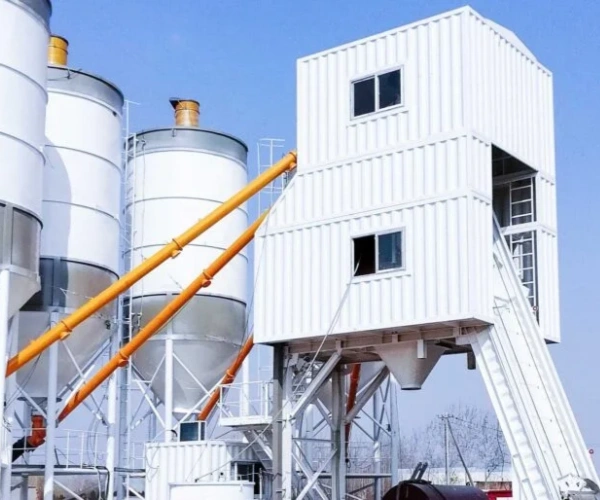
HZS120 Stationary Plant — Algiers, Algeria
State-funded housing & highway infrastructure · 120 m³/h · commissioned Apr 2025 · via Port of Algiers
Procured for a national housing initiative and highway expansion, this civil-engineering group needed industrial-scale, 24/7 production that would pass strict government quality audits despite the harsh North African climate. We engineered an HZS120 around a robust JS2000 twin-shaft mixer with high-chromium blades and liners (40% longer life against abrasive sand), a desert-proof, climate-controlled and dust-sealed PLC cabin (Siemens/Schneider), and a high-speed enclosed inclined belt conveyor with a waiting hopper for instant truck loading. Result: uninterrupted 120 m³/h mega-volume supply, zero rejected loads through state inspections, and 100% uptime with no dust-related downtime — installed in 14 days.
Featured Projects: Southern & West Africa
From High-Capacity Hubs to Grid-Proof Mobility
Across Southern and West Africa, two very different challenges dominate: long inland haul distances that make centralized ready-mix expensive (Southern Africa), and unstable grids plus corrosive coastal conditions that punish under-built equipment (West Africa). Our South African and Beninese projects answer each in turn.
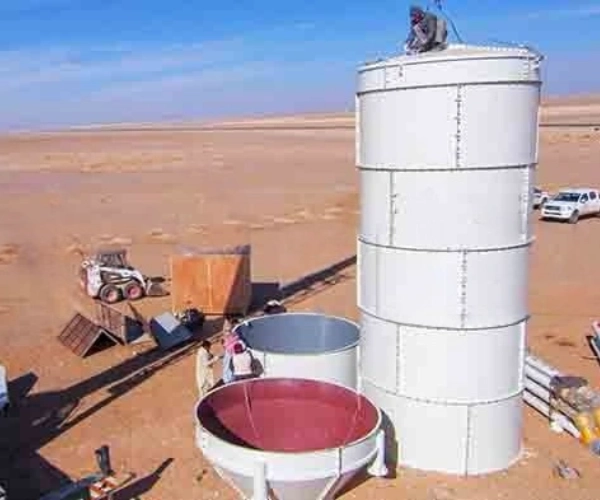
HZS90 Stationary Plant — Limpopo Province, South Africa
Residential & infrastructure construction · 90 m³/h · commissioned Feb 2026 · via Port of Durban
A well-established Limpopo contractor was losing money to long hauls from distant ready-mix suppliers and inconsistent third-party concrete quality. We delivered a high-capacity HZS90 with a JS1500 twin-shaft mixer, a 450 t/h belt conveyor, 4 × 12 m³ aggregate bins, and high-precision weighing — with a modular structure that shipped to Durban and assembled efficiently inland despite the long transport distance. Result: higher in-house production capacity, consistent concrete quality, reduced dependence on external suppliers, and lower transport costs — with headroom to grow as project demand expands.
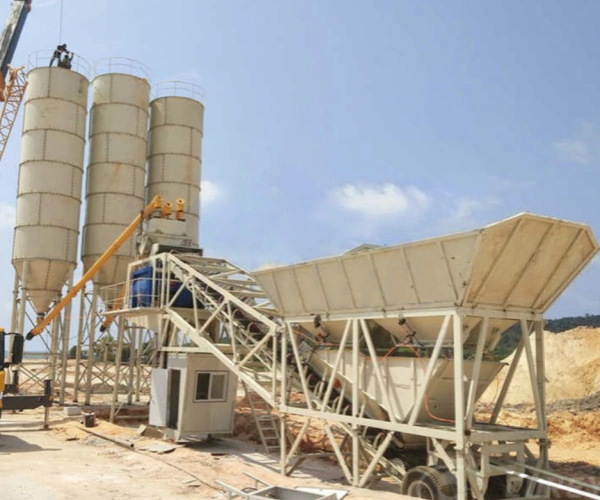
YHZS50 Mobile Plant — Cotonou, Benin
Suburban highway & bridge infrastructure · 50 m³/h · commissioned Jan 2026 · via Port of Cotonou
Working West Africa’s fast-growing commercial corridor on soft, sandy coastal soil with a high water table — and a notoriously unstable grid — this road contractor needed mobility and power resilience. Our YHZS50 mounts the PLD1600 batcher and JS1000 mixer on a single towable chassis (zero foundation), with automatic generator failover that switches power within seconds of a blackout, dual-epoxy anti-corrosion against coastal salt spray, and NEMA-sealed cabinets against Harmattan dust. Result: zero downtime from grid failures, 10–12% lower material waste, and relocation between project phases in under 4 days each — set up initially in just 3 days.
Africa Project Overview Table
Africa Concrete Plant Projects at a Glance
| Country / City | Plant Model | Capacity | Application | Year |
|---|---|---|---|---|
| Algiers, Algeria | HZS120 (Stationary) | 120 m³/h | State housing & highway | 2025 |
| Limpopo, South Africa | HZS90 (Stationary) | 90 m³/h | Residential & infrastructure | 2026 |
| Dire Dawa, Ethiopia | HZS60 (Stationary) | 60 m³/h | Industrial warehouse RMC | 2026 |
| Cotonou, Benin | YHZS50 (Mobile) | 50 m³/h | Highway & bridge | 2026 |
| Addis Ababa, Ethiopia | HZS35 (Stationary) | 35 m³/h | Commercial & infrastructure | 2025 |
| Dodoma, Tanzania | YHZS35 (Mobile) | 35 m³/h | Rural road & municipal | 2025 |
Browse Africa Projects by Plant Type
Find Your Match: Africa Projects by Plant Type
The same six projects, organized by the type of plant — a fast way to see which configuration fits your operation.
Stationary plants anchor permanent, higher-capacity supply — the mega-volume HZS120 in Algeria, the HZS90 in South Africa, the HZS60 in Dire Dawa, and the compact skip-hoist HZS35 in Addis Ababa. Explore the full stationary concrete batching plant range.
Mobile plants suit contractors who relocate between scattered sites and face unstable grids — the dual-power YHZS50 in Benin and the ultra-portable YHZS35 in Tanzania. See all mobile concrete batching plants.
Browse Africa Projects by Capacity
Match Your Volume: Africa Projects by Capacity
Compact (35–60 m³/h) — Ideal for startups, rural roadwork, tight urban plots, and supply-chain independence: Tanzania (YHZS35), Addis Ababa (HZS35), Benin (YHZS50) and Dire Dawa (HZS60). Often built around the HZS25 and HZS60 platforms.
High-capacity (90–120 m³/h) — Built for commercial supply and state infrastructure: the HZS90 in South Africa and the HZS120 in Algeria. For the largest demands, see the HZS240.
Capacity & Investment Guide for Africa
Choosing the Right Plant Size & Budget in Africa
Investment scale across our African projects generally falls into three tiers. Use these as planning ranges; your final figure depends on customization (dust sealing, generator integration, engineered foundations), shipping, and auxiliary vehicles.
| Tier | Typical Capacity | Best For | Indicative Investment* |
|---|---|---|---|
| Entry / Mobile | 25–50 m³/h | Rural contractors, scattered sites, low CAPEX | $25,000 – $50,000 |
| Commercial | 60–90 m³/h | Regional ready-mix & industrial parks | $50,000 – $120,000+ |
| Industrial / Mega | 120–240+ m³/h | State housing & highway programs | $120,000 – $200,000+ |
*Core machinery estimate only; African projects often add cost for dust-sealing, voltage stabilization, generator integration or pile foundations. For a detailed breakdown, see our guide on how much a concrete plant costs and the 2026 concrete plant price list.
What African Buyers Should Know
What to Know Before Importing a Concrete Plant to Africa
Ports & inland logistics
We ship to every major African gateway — Djibouti (with onward Addis–Djibouti railway to landlocked Ethiopia), Dar es Salaam, Durban, Cotonou and the Port of Algiers — packing components into standard 40HQ containers and planning the full inland truck or rail route to your site.
Power resilience
For grids prone to blackouts, we integrate voltage stabilizers and automatic diesel-generator transfer so an outage never freezes concrete inside the mixer — as proven in Benin.
Dust & heat engineering
Saharan and dry-season dust is hard on machinery, so we seal control cabinets to NEMA/IP65 standards, fit high-chromium wear parts for abrasive aggregates, and add dust collection and climate-controlled cabins for desert sites.
Foundations & soil
Where expansive clay or sandy coastal soil is a risk, we engineer the right base — from reinforced raft-and-pile foundations to fully foundation-free mobile chassis.
Local crews & support
Our plants use intuitive PLC controls and easily serviced wear parts; we train local operators and maintenance staff on-site (in local languages where needed) and back it with 24/7 support via phone or WhatsApp and cloud-based remote diagnostics.
Countries We Serve Across Africa
Equipment Delivery and Plant Installation Across Africa
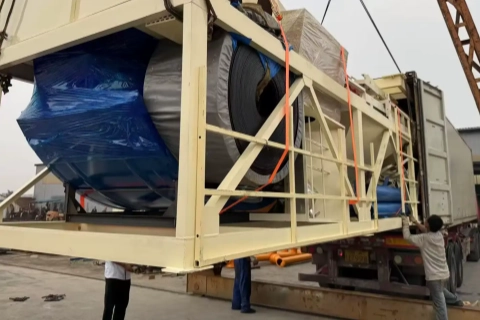
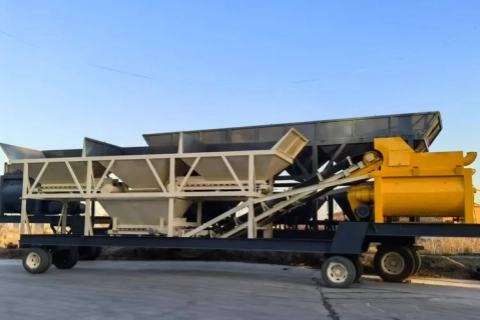
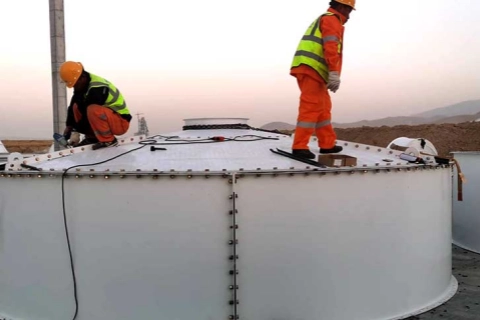
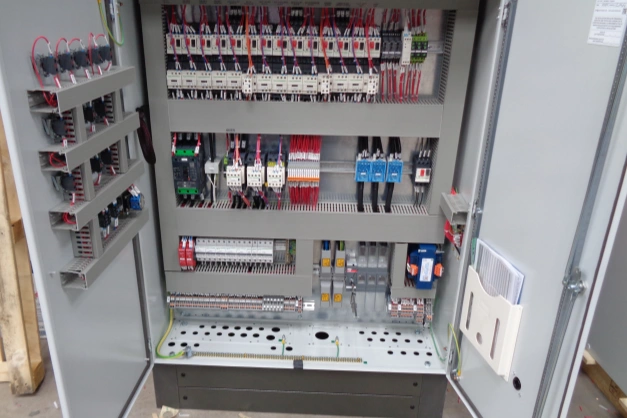
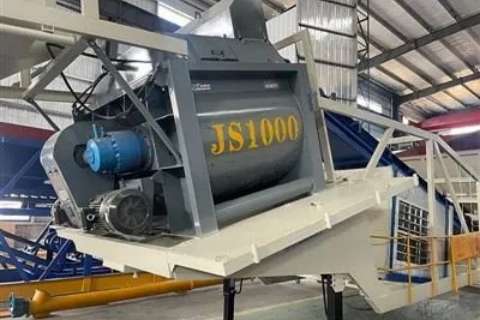
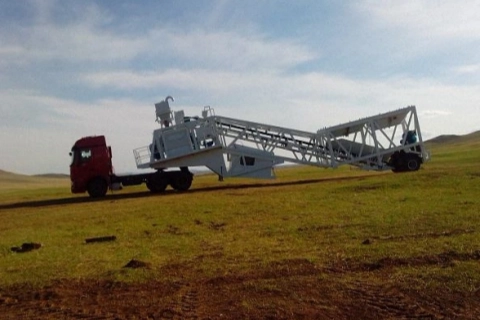
Our commissioned projects span Algeria, South Africa, Ethiopia, Benin and Tanzania — and our delivery network reaches far beyond them. We also supply and support concrete batching plants across Kenya, Nigeria, Ghana, Uganda, Rwanda, Zambia, Mozambique, Egypt, Morocco, Senegal and Côte d’Ivoire, with logistics and engineering teams familiar with each market’s ports, inland transport, voltage standards and permitting requirements.
What Our African Clients Say
⭐⭐⭐⭐⭐
“To handle this massive government housing project, we needed a plant that wouldn’t fail in the heat and dust. This HZS120 is an absolute workhorse — the JS2000 mixer handles our intense daily volumes effortlessly, and the automated precision allowed us to pass all state quality audits on the first try.”
— Operations Director, Civil Engineering Group (Algiers, Algeria)
⭐⭐⭐⭐⭐
“The grid power here is highly unstable, but this mobile plant has ensured production continuity with its automatic generator backup. We had it fully operational in just three days on a compacted gravel surface, and we’re now pouring entirely on our own schedule.”
— Project Director, Road & Bridge Contractor (Cotonou, Benin)
⭐⭐⭐⭐⭐
“Land is expensive here in Addis Ababa, and we didn’t have space for a massive belt-fed plant. This compact skip-hopper design was exactly what we needed — the installation was incredibly fast, and our local team mastered the PLC within days. We’re now producing commercial-grade concrete at a fraction of what we used to pay.”
— Managing Director, Civil Engineering Firm (Addis Ababa, Ethiopia)
FAQ
Core machinery typically ranges from $25,000 for an entry-level mobile or compact plant to $200,000+ for a high-capacity industrial hub. European projects often add cost for winterization, full enclosure or CE-grade emission control, depending on the climate and local regulations.
Yes. For climates down to –40°C, we provide insulated rock-wool cladding, steam-heated aggregate bins, heated silos and low-temperature-rated components — as delivered in Moscow, where the plant ran with zero cold-weather downtime.
All plants meet CE, ISO, SGS and BV standards. For EU-funded and urban projects we add enclosed towers, pulse-jet dust collectors (99.9% capture) and noise cladding below 65 dB to pass environmental and safety audits — as proven on our Romania and Italy projects.
A foundation-free mobile plant like the YHZS60 is classified as temporary equipment and requires only a compacted gravel pad, letting you bypass the permanent-foundation permit process — the approach that worked under Italy’s strict landscape-protection laws.
Besides sea freight to ports like Constanța, Genoa, Bergen and Ambarli, we use the China–Europe Railway for fast overland delivery — the route we used to reach Moscow ahead of the winter season.
It varies by type: a mobile plant can be running in 3 days, a containerized or compact stationary plant in about 10 days, and a fully winterized HZS120 within roughly 14 days including foundation work and commissioning.