Concrete Batching Plant Chile: FHZS-75 Foundation-Free Plant Built for Puerto Montt’s Seismic Coast
· Comprehensive Concrete Batching Plant Solutions
· 32+ Years of Engineering Heritage
Project Overview
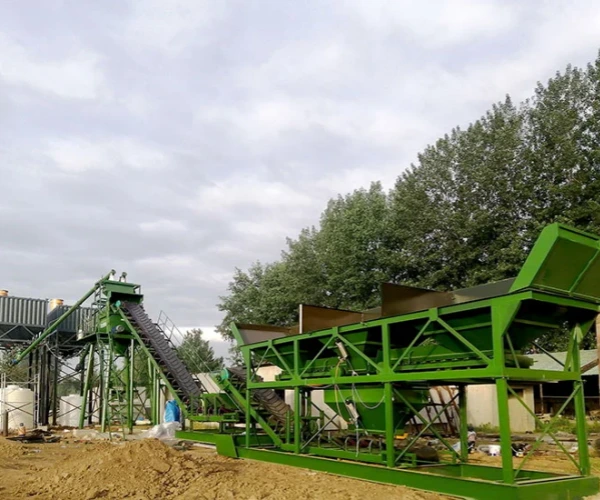
In February 2026, a customized FHZS-75 foundation-free concrete batching plant was successfully commissioned and delivered for a regional transportation and infrastructure contractor near Puerto Montt, in the rainy Los Lagos Region of southern Chile. Operating at sea level in one of the world’s most seismically active coastal zones — within the rupture area of the historic 1960 magnitude 9.5 Valdivia earthquake, the most powerful ever recorded — and on wet, unstable clay soils where traditional concrete foundations are economically and structurally risky, the client required a highly stable, rapid-deployment concrete solution. Rated at a steady 75 m³/h, the plant provides the reliable, high-spec precision required to keep up with demanding highway and bridge contracts under persistent coastal rain. This successful project highlights our capability to deliver a premier concrete batching plant Chile contractors can rely on for both outstanding structural integrity and turnkey operational mobility.
| Parameter | Specification |
| Location | Puerto Montt, Los Lagos Region, Chile |
| Application | Coastal Highway & Bridge Infrastructure (Seismic Zone) |
| Plant Model | FHZS-75 Foundation-Free Concrete Batching Plant |
| Mixer Discharging Volume | 1500 L (JS1500 Twin-shaft Compulsory Mixer) |
| Mixer Motor Power | 30 x 2 kW (Dual-Drive Power) |
| Rated Output | 75 m³/h |
| Aggregate Material Quantity | 12 m³ x 3 Bins (PLD2400) |
| Cycle Period | 60 Seconds (Rapid Batching) |
| Weighing Accuracy | Powder ±1% / Aggregate ±2% / Water & Additive ±1% |
| Silo Configuration | 100 Tons x 2 (Bolted Type) |
| Installation Period | 6 Days (Ultra-Fast Setup) |
| Commissioning Date | February 18, 2026 |
Decoding the Client’s Core Requirements
Before recommending the FHZS-75 configuration, our technical team analyzed the strict regulatory and geological challenges along Chile’s seismic southern coast. The contractor defined three non-negotiable purchasing criteria:
Compliance with NCh433 Seismic Codes
Chile sits on the Pacific “Ring of Fire” and experiences intense, frequent tremors. The plant structure — specifically one without deep concrete pilings — had to be engineered to dissipate seismic energy safely and comply fully with the national NCh433 seismic standard.
Zero-Foundation Setup on Wet, Unstable Soil
Excavating and pouring deep concrete foundations into the region’s soft, water-saturated coastal clay is slow, expensive, and structurally risky. The client needed a self-supporting plant that could sit directly on a pre-compacted flat surface.
Rapid Mobilization to Minimize Downtime
With multiple highway and bridge segments to serve, the plant had to be modular enough to be dismantled, transported, and re-erected in under a week during future site transitions.
Environmental & Geological Challenges on Chile’s Southern Coast
The Los Lagos coastline around Puerto Montt presents a demanding combination of seismic risk, saturated ground, and a damp maritime climate that standard concrete equipment cannot withstand:
- Extreme Seismic Activity: Puerto Montt lies within the rupture zone of the 1960 magnitude 9.5 Valdivia earthquake — the strongest ever recorded by instruments. Recurring tremors can crack and shift permanent concrete foundations, causing dangerous misalignment of the main mixing tower and weighing hoppers.
- Persistent Rainfall & Saturated Clay Soils: The region’s temperate oceanic climate brings heavy, year-round rainfall and high humidity. The resulting soft, water-logged clay makes deep poured foundations slow to cure and prone to settlement, while damp, salt-laden coastal air accelerates corrosion on unprotected steel and electronics.
Tailored Solutions Based on the FHZS-75
To solve these multi-layered challenges, we engineered specific upgrades to customize our FHZS-75 for the rigorous southern-Chilean market:
Heavy-Duty Steel Skid Frame (No Foundation)
We engineered the FHZS-75 with a massive, self-supporting steel skid frame that distributes the dynamic loads of the mixing process evenly across pre-compacted ground. By eliminating the need for deep-poured concrete foundations, the contractor sidestepped the slow curing and settlement risks of building on saturated coastal clay — and saved weeks of site-preparation time.
Built-in Seismic Bracing (NCh433 Compliant)
Because the plant deliberately avoids deep foundations, its earthquake resistance is engineered directly into the steel structure. We reinforced the mixing tower and the two 100-ton bolted cement silos with structural cross-bracing and high-tensile connection bolts, fully certified to meet Chile’s stringent NCh433 seismic standard so the plant can flex with tremors rather than crack.
Powerful Dual-Drive JS1500 Mixer with Corrosion Protection
To handle the abrasive local aggregates and the demanding pour schedule, we equipped the plant with our robust JS1500 twin-shaft compulsory mixer, powered by a 30 × 2 kW dual-motor drive and fitted with in-house cast high-chromium liners for extended wear life. Every structural component received a heavy-duty anti-corrosion coating, and the control cabinet was sealed against the persistent damp and salt air of the Reloncaví coast, protecting the precision weighing electronics for the long term.
Cross-Ocean Delivery and Erection Record
Every major modular component of the FHZS-75 was packed efficiently into standard 40HQ shipping containers to minimize ocean freight costs from our factory directly to the Port of Valparaíso, and then transported south along the Pan-American Highway (Ruta 5) — which terminates at Puerto Montt — directly to the project site.
Upon arrival, because no deep foundations or heavy cranes were required, the setup progressed with remarkable speed. Under the remote guidance of our technical support team, the local crew completed the mechanical erection, connected the pre-wired cables via plug-and-play fittings, and assembled the two 100-ton bolted silos on the steel base frames in just 6 days, passing the final trial mix with flying colors ahead of schedule on February 18, 2026.
listen to customer

“The terrain here is incredibly challenging, and with the high seismic risk, we were worried about foundation settlement on the wet ground. This foundation-free plant saved us,” the Project Director noted. “We had it fully operational in just 6 days on a simple compacted pad, with no massive civil-works project. The fact that the plant is compliant with Chile’s strict NCh433 seismic codes gives us complete peace of mind. The equipment is robust, easy to run, and has brought down our operational cost significantly.”
Project Value
Since its commissioning in February 2026, the plant has operated continuously, keeping the client’s coastal highway and bridge projects strictly on schedule. The operational and economic advantages of this foundation-free, seismic-ready setup were realized immediately across three critical areas:
- Complete Seismic Peace of Mind: By meeting the strict NCh433 seismic standard through built-in structural reinforcement, the plant passed local government audits and rode out minor tremors with zero structural deformation, ensuring uninterrupted production.
- Significant Foundation & Labor Savings: By eliminating deep, poured concrete foundations on difficult wet clay, the contractor saved over 15% on site-preparation costs and bypassed weeks of curing time, starting revenue-generating production ahead of schedule.
- Unrivaled Concrete Quality & Consistency: Featuring high-precision weighing (±1% for cement and water) and a robust dual-drive JS1500 twin-shaft mixer, the plant minimized material waste and delivered perfectly homogeneous concrete, ensuring zero rejected loads on the client’s bridge contracts.
This Puerto Montt project shows how a foundation-free plant meets strict NCh433 seismic codes. Browse more concrete plant case studies in the Americas, or explore our worldwide concrete plant projects from every continent.
Why Choose Us
Benefits of Our Concrete Plants.
Local & Regional Expertise
We design every plant around your local operating conditions—whether that means managing highly abrasive desert sand, tropical humidity, or alpine cold. Our logistics and engineering teams are deeply familiar with key regional shipping hubs and diverse regulatory frameworks, ensuring your equipment meets international quality standards like CE and ISO while easily securing local operating and environmental permits.
Turnkey Reliability
No hidden costs or unexpected surprises. Our comprehensive proposals include everything from customized 3D site layout design to final on-site commissioning. To minimize your downtime, we provide 24/7 technical assistance via phone or WhatsApp and cloud-based remote PLC diagnostics.
Proven Track Record
With over 32 years of dedicated manufacturing mastery, we have successfully commissioned over 100 batching plants in more than 20 countries. Thanks to our precise weighing systems and low-maintenance designs, over 90% of our commercial ready-mix clients achieve full capital recovery within 8 to 12 months of operation.
Scalable Project Matching
We don’t believe in “one-size-fits-all.” We offer a comprehensive product portfolio covering capacities from 25m³/h compact plants to 240m³/h industrial hubs. This technical range ensures we can match the exact scale of your project—whether you are launching a lean, regional ready-mix startup or executing a major government-funded highway, bridge, or dam contract—saving you from over-investing in unused capacity.
Are you managing a linear or short-term project and need a flexible, fast-deploying concrete solution? Contact our team today to discuss how our concrete plants can be tailored to your specific site requirements.