Concrete Batching Plant Projects in the Americas — Real Case Studies & Installations
· Comprehensive Concrete Batching Plant Solutions
· 32+ Years of Engineering Heritage
The Americas demand more from a concrete plant than almost anywhere else — and reward the contractors who get the engineering right. From Gulf Coast hurricanes and Florida salt spray to Calgary’s –30°C winters, Vancouver’s strict urban emission limits, Brazil’s NR12 safety code, and Chile’s NCh433 seismic standards, every project here is won by matching the right plant to a specific climate, soil, and regulatory reality. This page brings together real, commissioned projects across North and South America, showing the exact plant models, capacities, and site-specific engineering our clients rely on.
For more than 32 years, we have manufactured and installed over 100 batching plants in 20+ countries, every one backed by full CE, ISO, SGS and BV certification and end-to-end turnkey support. Whether you face hurricane wind loads, frozen ground, seismic tremors, or some of the world’s toughest environmental audits, the cases below show how the right configuration is engineered for the right American challenge.
🏆
32+ Years Experience
🌍
80+ Countries
🏠
100+ Plants
📚
CE·ISO·SGS·BV
The Americas at a Glance
The Americas are not one market — conditions swing from subtropical hurricane coasts to sub-Arctic prairie winters, and from North America’s containerized fast-track culture to South America’s foundation-free, code-driven sites. Use the quick links below to jump to the projects most relevant to your region:
- United States Projects — Texas, Florida
- Canada Projects — Alberta, British Columbia
- South America Projects — Brazil, Chile
At a glance: 6 commissioned projects across 4 countries · 4 plant types (containerized, stationary, mobile, foundation-free) · capacities from 35 to 120 m³/h · delivered through major gateways including the Ports of Houston, Tampa, Vancouver, Santos and Valparaíso, with onward rail and Pan-American Highway transport.
Why Concrete Plant Selection Differs Across the Americas
Across the Americas, the plant that succeeds is the one engineered for a very specific combination of climate, ground, and code. Three forces shape nearly every configuration we deliver here. The first is extreme and opposite climates: the same continent demands hurricane-proof structures and marine anti-corrosion on the Gulf Coast, yet –30°C insulation, steam heating and arctic-grade pneumatics on the Canadian prairie.
The second is soil and seismic conditions: expansive Houston clay, Vancouver’s constrained riverside plots, Brazil’s bumpy interior, and Chile’s wet, tremor-prone ground all push contractors toward containerized, compact, or fully foundation-free plants that avoid risky deep foundations. The third — and most distinctly American — is strict, named regulatory regimes: TCEQ and the Florida Building Code’s hurricane zones in the US, CSA and Metro Vancouver air-quality bylaws in Canada, and NR12 safety and NCh433 seismic codes in South America. A plant that cannot pass these audits cannot legally operate.
One clear pattern emerges from our work here: across North America, containerized plants dominate — three of our four US and Canadian installations are containerized — because their pre-wired, enclosed, relocatable design simultaneously beats the weather, slashes foundation work, and passes strict local codes.
The matrix below shows how these forces shaped the actual plants we delivered:
| Sub-Region | Real-World Conditions | What It Demands | Proven In Our Projects |
|---|---|---|---|
| United States | Gulf/Atlantic hurricanes, humidity, salt spray, expansive clay; TCEQ & Florida HVHZ codes | Containerized weather-enclosed or hurricane-proof stationary; marine anti-corrosion | Houston (HZS120C, clay + storms), Florida (HZS90, 150 mph wind + salt) |
| Canada | –30°C winters, 1.5 m frost line, short build season; CSA & Metro Vancouver bylaws | Winterized & insulated containerized plants; compact, low-emission urban units | Calgary (HZS90C, –30°C), Vancouver (HZS60C, urban compliance) |
| South America | Seismic zones, wet/unstable soils, remote agri terrain, scarce skilled labor; NR12 & NCh433 codes | Foundation-free & mobile plants; seismic bracing; automation for lean crews | Brazil (YHZS35, NR12 + mobility), Chile (FHZS-75, NCh433 seismic) |
Every project on this page is a direct illustration of these principles. Read them not just as success stories, but as a decision guide for your own American market.
Featured Projects: United States
Beating Hurricanes, Humidity & Expansive Clay
In the US Gulf and Atlantic markets, the enemy is the weather — sudden downpours, suffocating humidity, hurricane-force winds, corrosive salt air — compounded by difficult clay soils and some of the strictest state environmental codes in the country. Our two US projects answer these with two different strategies: a relocatable containerized plant and a hardened hurricane-zone stationary plant.
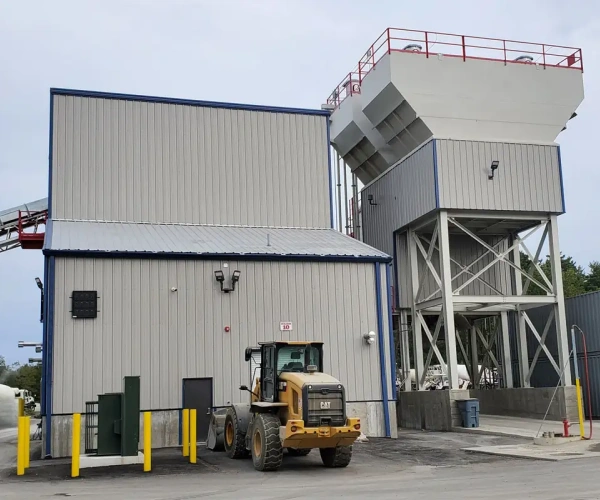
HZS120C Containerized Plant — Houston, Texas
Commercial & infrastructure construction · 120 m³/h · commissioned Oct 2025 · via Port of Houston
Serving a large suburban expansion near the Grand Parkway, this contractor needed high output on Houston’s expansive black clay — where deep foundations crack and shift — under unpredictable Gulf Coast storms and strict TCEQ dust limits. We delivered an HZS120C containerized plant with all core modules pre-wired inside shipping containers, allowing setup on a simple compacted gravel pad instead of a deep foundation, a fully climate-controlled, enclosed structure that keeps mixing through downpours, and a 4.3 m discharge height for high-clearance US trucks. Result: roughly three weeks saved on foundation work alone, uninterrupted production through spring storms, and zero rejected loads for bad slump — installed in 15 days.
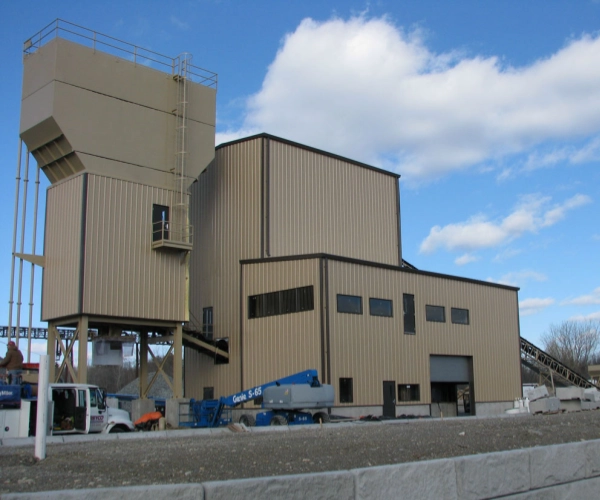
HZS90 Stationary Plant — Tampa Bay, Florida
Commercial ready-mix & municipal infrastructure · 90 m³/h · commissioned Jul 2025 · via Port of Tampa
A commercial ready-mix supplier on Florida’s subtropical coast needed a certified plant that could survive hurricane season and corrosive marine air. We engineered an HZS90 with hurricane-proof structural reinforcement (larger cross-bracing, heavy anchor plates, double-flange 100-ton silos) certified against high winds, a marine-grade double-epoxy zinc-rich primer plus polyurethane topcoat, and a fully enclosed belt conveyor with rain covers to keep aggregates dry. Result: zero weather-related interruptions (it kept running through a tropical storm that shut down nearby open-frame plants), a 0% rejection rate at bridge sites, and 10% lower cement waste via Siemens PLC and Toledo load cells.
Featured Projects: Canada
Engineered to Conquer the Cold — and the Code
Canada pairs two distinct pressures: brutal prairie winters that freeze water lines in minutes, and dense, highly regulated urban markets where land is scarce and emission rules are strict. Our two Canadian projects — both containerized — show how the same modular philosophy solves cold in Calgary and compliance in Vancouver.
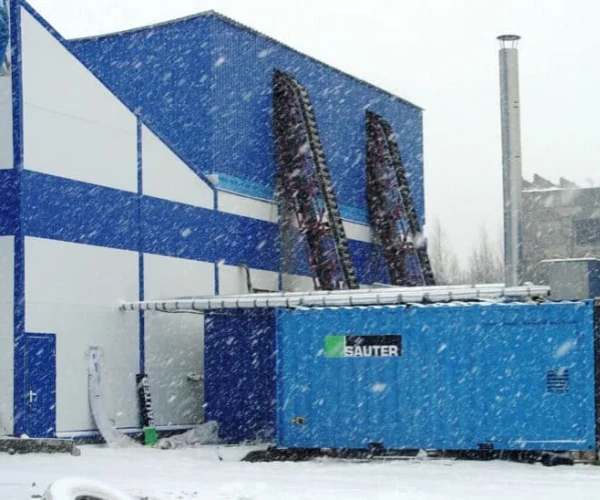
Winter-Ready HZS90C Containerized Plant — Calgary, Alberta
Commercial & infrastructure construction · 90 m³/h · commissioned Nov 2025 · via Port of Vancouver + Canadian Pacific Railway
Facing a –30°C winter, a 1.5 m frost line, and a closing construction window, this Alberta contractor needed continuous cold-weather production without pouring deep foundations into freezing ground. We delivered an HZS90C lined with 100 mm rock wool and heated by 15 kW duct heaters to hold +10°C inside at –30°C outside, with steam-heated aggregate bins, 60°C heated mixing water, and arctic-grade pneumatics, all placed on a simple slab-on-grade. Result: zero downtime from frozen lines, CSA-compliant air-entrainment for freeze-thaw resistance, and a 12-day install — inside the client’s 14-day window — with a 4.1 m discharge height sized for snow-tire trucks.
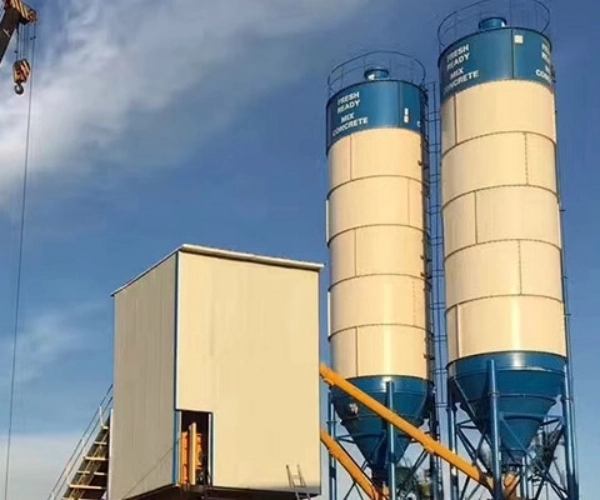
HZS60C Containerized Plant — Vancouver, British Columbia
Urban commercial ready-mix (RMC) · 60 m³/h · commissioned Mar 2026 · via Port of Vancouver
On a constrained plot in the Fraser River corridor — where land is among the priciest in North America and Metro Vancouver enforces strict dust and noise limits — this RMC contractor needed a clean, quiet, compact plant. Our HZS60C uses sound-insulated enclosed cladding (noise below 65 dB), pulse-jet dust collectors capturing 99.9% of cement dust under negative pressure, and a highly integrated layout that cut the footprint by 40%. Result: passed Metro Vancouver environmental audits on the first run with zero regulatory interruptions, freed up critical yard space for truck movement, and maintained all-weather output through the region’s persistent rain — installed in 10 days.
Featured Projects: South America
Foundation-Free Mobility Meets Strict Safety & Seismic Codes
In South America, the decisive factors are regulatory and geological: rigorous national codes — Brazil’s NR12 machinery safety standard and Chile’s NCh433 seismic code — combined with remote terrain, wet or tremor-prone soils, and a shortage of specialized technicians. Both our projects here avoid risky deep foundations entirely and build compliance into the structure.
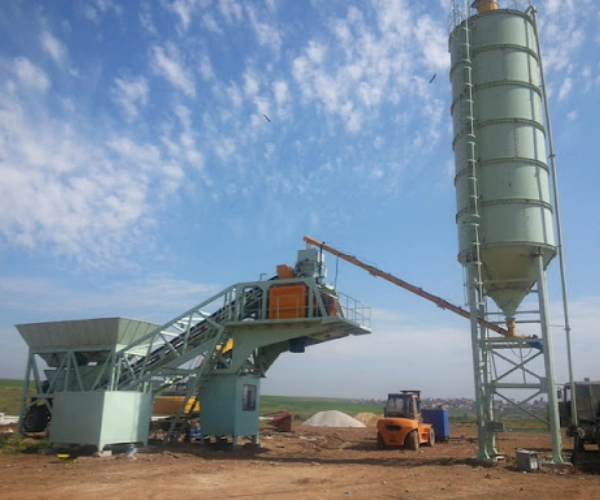
YHZS35 Mobile Plant — Sorriso, Mato Grosso, Brazil
Agricultural storage & regional road infrastructure · 35 m³/h · commissioned Aug 2025 · via Port of Santos
In Brazil’s agricultural heartland, a contractor building grain-storage silos and farm-to-market roads across vast, unpaved terrain needed a plant that could move easily, run with a lean crew, and pass Brazil’s strict NR12 safety audits. Our YHZS35 mounts the PLD1200 batcher and JS750 mixer on a single towable chassis (zero foundation), upgraded with full NR12-compliant safety engineering — double-circuit interlocks, mesh guardrails, multiple e-stops, and a NEMA-sealed cabinet — plus high-chrome liners for abrasive aggregate. Result: passed local labor audits with zero penalty risk, 15% lower site-prep cost, operation by just 1–2 operators, and zero rejected loads — set up in 3 days.
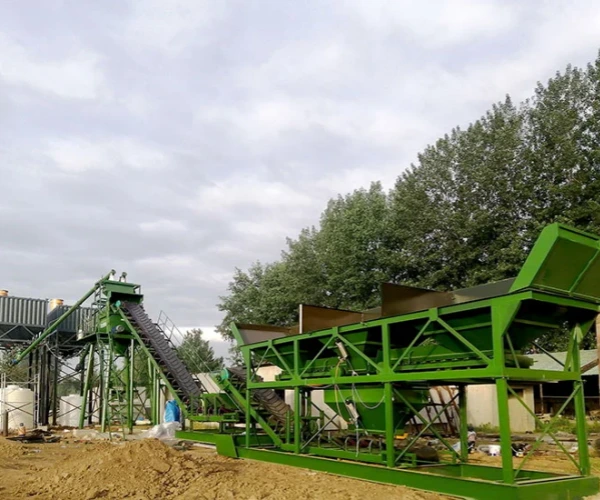
FHZS-75 Foundation-Free Plant — Puerto Montt, Los Lagos, Chile
Seismic-zone highway, bridge & infrastructure · 75 m³/h · commissioned Feb 2026 · via Port of Valparaíso + Pan-American Highway (Ruta 5)
On the seismically active “Ring of Fire” with wet, unstable clay soils where permanent foundations crack and shift under tremors, this contractor needed a stable, rapid-deployment plant compliant with Chile’s strict NCh433 seismic code. We engineered the FHZS-75 on a massive self-supporting steel skid frame — no deep foundation — with seismic bracing built directly into the structure (reinforced cross-bracing and high-tensile bolts on the tower and 100-ton silos), powered by a robust dual-drive JS1500 mixer (30×2 kW) with high-chrome liners. Result: passed NCh433 audits and survived minor tremors with zero structural deformation, 15% lower site-prep cost, and zero rejected loads — installed in 6 days.
Americas Project Overview Table
Concrete Plant Projects in the Americas at a Glance
| Country / City | Plant Model | Capacity | Application | Year |
|---|---|---|---|---|
| Houston, USA | HZS120C (Containerized) | 120 m³/h | Commercial & infrastructure | 2025 |
| Tampa Bay, USA | HZS90 (Stationary) | 90 m³/h | Ready-mix & municipal | 2025 |
| Calgary, Canada | HZS90C (Containerized) | 90 m³/h | Commercial & infrastructure | 2025 |
| Vancouver, Canada | HZS60C (Containerized) | 60 m³/h | Urban ready-mix | 2026 |
| Chile (Puerto Montt) | FHZS-75 (Foundation-free) | 75 m³/h | Seismic-zone infrastructure | 2026 |
| Brazil (Mato Grosso) | YHZS35 (Mobile) | 35 m³/h | Agricultural & road | 2025 |
Browse Americas Projects by Plant Type
Find Your Match: Americas Projects by Plant Type
The same six projects, organized by the type of plant — a fast way to see which configuration fits your operation.
Containerized plants dominate our North American work for fast, weather-proof, relocatable deployment — the HZS120C in Houston, the winterized HZS90C in Calgary, and the compact HZS60C in Vancouver. Many are built on the stationary concrete batching plant platform in a containerized configuration.
Stationary plants anchor permanent, hardened commercial supply — like the hurricane-zone HZS90 in Florida. Explore the full stationary concrete batching plant range.
Mobile plants suit contractors crossing vast, remote terrain — the NR12-compliant YHZS35 in Brazil. See all mobile concrete batching plants.
Foundation-free plants are ideal for seismic and unstable-soil sites — like the NCh433-compliant FHZS-75 in Chile, which sits on a self-supporting skid frame with no deep foundation.
Browse Americas Projects by Capacity
Match Your Volume: Americas Projects by Capacity
Compact (35–60 m³/h) — Ideal for remote, agricultural, or land-constrained urban sites: Brazil (YHZS35) and Vancouver (HZS60C). Often built around the HZS25 and HZS60 platforms.
Mid-to-high capacity (75–120 m³/h) — Built for commercial ready-mix and infrastructure: Chile (FHZS-75), the HZS90 plants in Florida and Calgary, and the HZS120 in Houston. For the largest demands, see the HZS240.
Capacity & Investment Guide for the Americas
Choosing the Right Plant Size & Budget in the Americas
Investment scale across our American projects generally falls into three tiers. Use these as planning ranges; your final figure depends on customization (winterization, hurricane bracing, containerization, seismic reinforcement), shipping, and auxiliary vehicles.
| Tier | Typical Capacity | Best For | Indicative Investment* |
|---|---|---|---|
| Entry / Mobile | 25–50 m³/h | Remote, agricultural & project-based contractors | $25,000 – $50,000 |
| Commercial | 60–120 m³/h | Ready-mix, urban & infrastructure supply | $60,000 – $120,000+ |
| Industrial / Mega | 150–240+ m³/h | High-volume commercial & state programs | $120,000 – $200,000+ |
*Core machinery estimate only; American projects often add cost for winterization, hurricane-rated bracing, full containerization or seismic reinforcement, depending on the site. For a detailed breakdown, see our guide on how much a concrete plant costs and the 2026 concrete plant price list.
What Buyers in the Americas Should Know
What Buyers in the Americas Should Know
Ports & inland transport
We ship to every major gateway in the region — the Ports of Houston, Tampa, Vancouver, Santos and Valparaíso — in standard 40HQ containers, and plan the full inland leg, whether that’s the Canadian Pacific Railway to Calgary or the Pan-American Highway (Ruta 5) through Chile.
Local code compliance
Our plants are engineered to pass the region’s named codes: TCEQ and the Florida Building Code’s HVHZ wind requirements in the US, CSA air-entrainment and Metro Vancouver emission bylaws in Canada, and NR12 safety and NCh433 seismic standards in South America — all on top of CE, ISO, SGS and BV certification.
Climate & soil engineering
From hurricane bracing and marine-grade epoxy on the Gulf Coast, to 100 mm rock-wool insulation and steam heating for –30°C winters, to foundation-free skid frames for expansive clay and seismic ground, every plant is adapted to its site rather than shipped as a generic unit.
US/Canada truck compatibility
We size discharge heights (4.1–4.3 m) for high-clearance North American mixer trucks and snow-tire-equipped winter fleets, preventing spillage and loading delays.
Support
On-site or remote-guided installation, operator training, and 24/7 technical support via phone or WhatsApp with cloud-based remote PLC diagnostics.
Countries We Serve Across the Americas
Equipment Delivery and Plant Installation Across The Americas
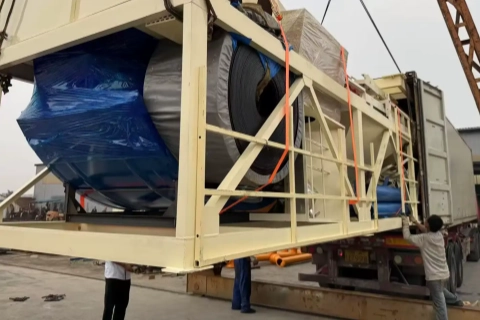
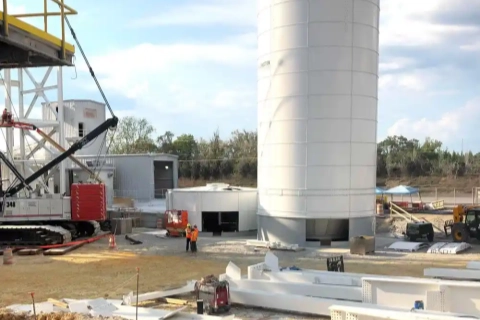
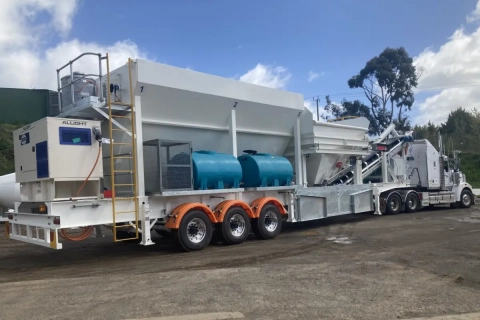
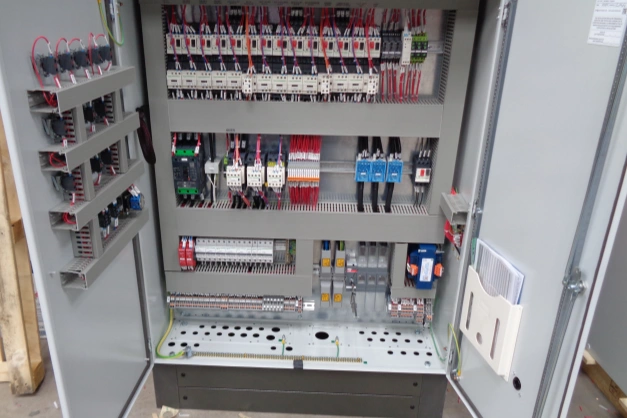
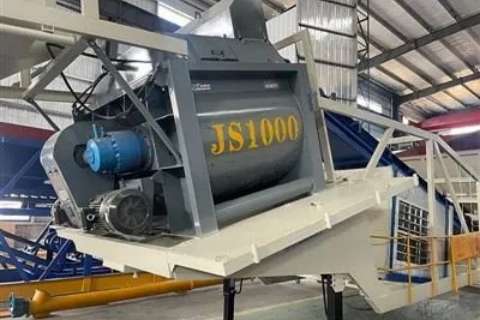
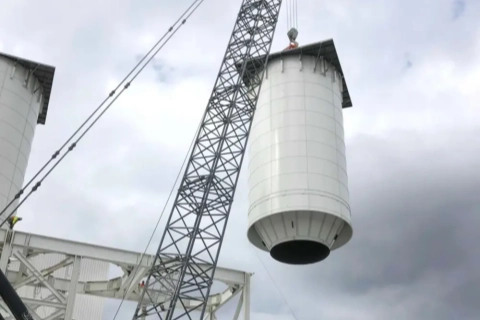
Our commissioned projects span the United States, Canada, Brazil and Chile — and our delivery network reaches far beyond them. We also supply and support concrete batching plants across Mexico, Peru, Colombia, Argentina, Bolivia, Ecuador, Panama, the Dominican Republic, Guyana and Suriname, with logistics and engineering teams familiar with each market’s ports, inland transport, voltage standards, building codes and permitting requirements.
What Our Clients in the Americas Say
⭐⭐⭐⭐⭐
“We saved at least three weeks just on the foundation work alone. With the black clay here, that would have been a nightmare with a traditional plant. And when those spring storms hit, the plant didn’t skip a beat — the containers kept everything dry, and we haven’t had a single load rejected for bad slump.”
— Project Manager, Commercial Contractor (Houston, Texas)
⭐⭐⭐⭐⭐
“Installing a traditional plant here would have meant pouring massive foundations and still risking frozen pipes by November. The HZS90C went up in 12 days on a simple pad. The insulation is incredible — we’ve had zero downtime due to frozen lines, and the air-entrainment accuracy keeps us strictly within CSA standards. This plant is a winter warrior.”
— Project Director, Infrastructure Contractor (Calgary, Alberta)
⭐⭐⭐⭐⭐
“The terrain here is incredibly challenging, and with the high seismic risk, we were worried about foundation settlement. This foundation-free plant saved us — fully operational in just 6 days on a simple compacted pad, and full compliance with Chile’s strict NCh433 seismic codes gave us complete peace of mind.”
— Project Director, Infrastructure Contractor (Puerto Montt, Chile)
FAQ
Core machinery typically ranges from $25,000 for an entry-level mobile or compact plant to $200,000+ for a high-capacity industrial hub. American projects often add cost for winterization, hurricane bracing, containerization or seismic reinforcement, depending on the site and local code.
Yes. For climates down to –30°C we provide insulated containerized structures, duct heaters, steam-heated aggregate bins and heated mixing water — as delivered in Calgary, where the plant ran with zero frozen-line downtime while meeting CSA standards.
Our plants are engineered to meet TCEQ and Florida Building Code (HVHZ) requirements in the US and CSA and Metro Vancouver bylaws in Canada, on top of CE, ISO, SGS and BV certification — proven on our Houston, Florida and Vancouver installations.
A hardened stationary plant with reinforced hurricane bracing and marine-grade double-epoxy coating, or a fully enclosed containerized plant — as delivered in Florida and Houston — keeps producing through storms and resists salt-spray corrosion.
Yes. We build NCh433 seismic bracing directly into foundation-free plants for Chile, and engineer full NR12 safety systems (interlocks, guardrails, e-stops) for Brazil — both proven on commissioned projects.
It varies by type: a mobile plant can be running in 3 days, a foundation-free plant in about 6 days, a containerized plant in 10–15 days, and a hardened stationary plant in roughly 12 days, including site work and commissioning.