Concrete Batching Plant in Ethiopia: HZS60 Stationary Plant Commissioned in Dire Dawa
· Comprehensive Concrete Batching Plant Solutions
· 32+ Years of Engineering Heritage
Project Overview
In early 2026, we delivered one HZS60 stationary concrete batching plant in Ethiopia to a construction contractor serving the Dire Dawa Special Economic Zone. The client needed a reliable ready-mix supply for a new industrial warehouse cluster. Our team completed on-site installation in 18 days, followed by a 72-hour continuous trial run. The plant passed all performance checks and began full production in March 2026.

| Specification | Details |
|---|---|
| Location | Dire Dawa, Eastern Ethiopia |
| Application | Ready-mix concrete for industrial warehouse construction |
| Plant Model | HZS60 Stationary |
| Mixer Type | JS1000 Twin-Shaft |
| Rated Output | 60 m³/h |
| Discharge Volume | 1,000 L per batch |
| Aggregate Bins | 4 bins × 8.38 m³ |
| Weighing Accuracy | Aggregate ±2%; Cement / Water / Additive ±1% |
| Discharge Height | 4.1 m |
| Installation Time | 18 days on site |
| Commissioning Date | March 2026 |
Project Background: Why Dire Dawa?
Dire Dawa sits in eastern Ethiopia at roughly 1,200 meters above sea level—far lower than Addis Ababa. This location matters for two practical reasons: logistics and climate.
Logistics and demand Dire Dawa is the main inland gateway between Ethiopia and the Port of Djibouti. The Addis–Djibouti railway and the Dire Dawa dry port handle a large share of the country’s import and export cargo. Because of this, the Dire Dawa Industrial Park and the surrounding Special Economic Zone have expanded quickly. New factories, roads, and storage facilities need large volumes of consistent, high-quality concrete. Small on-site manual mixing cannot keep up with that scale. The client needed a centralized, automated batching plant to meet construction schedules inside the zone.
Climate and environment Dire Dawa is hot and semi-arid. Summer temperatures often pass 35°C, and dry winds carry dust from the surrounding lowlands. Without proper equipment design, concrete can set too quickly, and open weighing systems can lose accuracy from sand and dust. The client chose a fully enclosed stationary batching plant with dust collection and covered aggregate storage to handle these conditions. The enclosed design also protects the control cabinet and load cells during the windy, dry season.
Site Conditions & Technical Adaptations
Dire Dawa sits in a semi-arid valley roughly 1,200 meters above sea level. Daytime temperatures regularly reach 35°C and can climb past 40°C in the hottest months. That heat speeds up cement hydration, so we adjusted the admixture formula to slow initial set and allow adequate transport time to nearby sites.
The area is also windy and dusty for much of the year. We kept the aggregate bins fully enclosed and added a pulse-jet dust collector over the weighing platform. The electrical cabinet was sealed to IP65 to protect the PLC and load-cell transmitters from fine dust.
Local aggregate is mostly hard volcanic rock and limestone, which is abrasive. The JS1000 mixer on this concrete batching plant in Ethiopia was fitted with high-chrome alloy blades and liners to extend wear-part life. We also installed a water-softening unit and a voltage stabilizer, because local groundwater has high hardness and grid voltage can fluctuate.
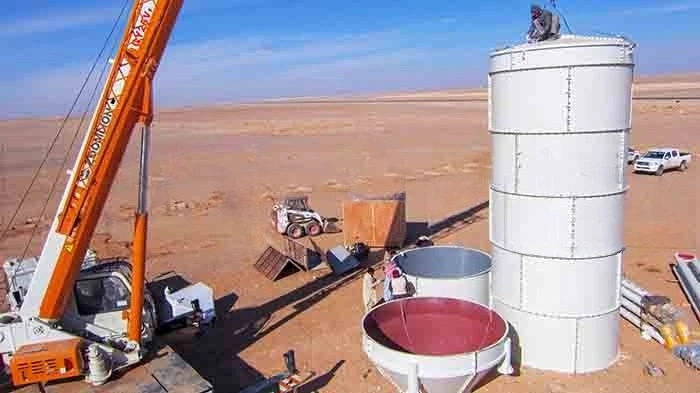
“On-site erection of a heavy-duty bolted cement silo in Ethiopia. CCS engineers supervise the precise mechanical assembly and safe lifting of every modular section to ensure maximum wind and structural resistance.”
Local Context & Project Execution
Dire Dawa is home to Amhara, Oromo, Somali, and Afar communities. On site we worked in Amharic, Oromiffa, and English, and translated the daily operation checklists into local languages so the crew could follow them without confusion.
Ethiopia uses its own calendar, which runs roughly seven to eight years behind the Gregorian calendar, and major holidays such as Meskel and Eid can pause work for several days. We built these breaks into the schedule from the start to avoid unrealistic deadlines.
We also trained six local operators and two maintenance technicians during commissioning. That skills transfer satisfied the client and aligned with Ethiopian government priorities on local hiring. Equipment arrived at the Port of Djibouti and moved inland by the Addis–Djibouti railway to the Dire Dawa dry port, then by truck to the site. Coordinating with local customs and the industrial park management kept the handover on track.
Installation & Commissioning
The local soil is reddish, expansive clay. To prevent foundation movement between the dry and rainy seasons, we cast the plant on a reinforced concrete raft with pile supports rather than simple slab footings.
Mechanical and electrical installation took 18 days on site. We then ran a five-day commissioning program: two days of empty-load testing, followed by three days of continuous batching. The plant averaged 95% of its rated 60 m³/h output during the trial. Slump and compressive-strength tests on C25 and C30 mixes met Ethiopian building standards, and the weighing error stayed within the design limits of ±2% for aggregate and ±1% for cement.
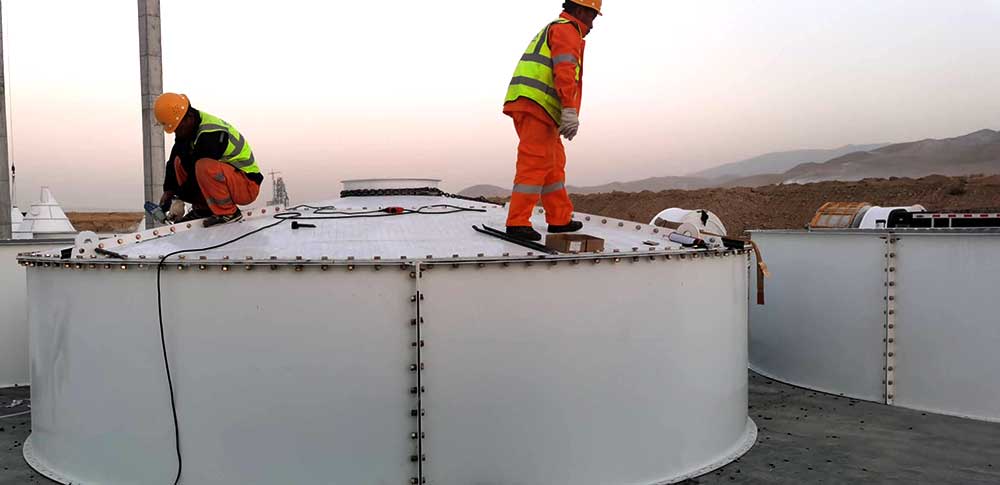
“CCS installation team securing the top roof of a bolted cement silo on-site. Every high-strength bolted joint is meticulously tightened under strict safety protocols to guarantee airtight, long-lasting storage.”
Results & Performance
Since going live in March 2026, the concrete batching plant in Ethiopia has supplied roughly 8,000 to 10,000 cubic meters of ready-mix concrete per month. That output supports three active warehouse projects inside the Special Economic Zone.
Batch-to-batch consistency has been strong. Mix proportion error stays within ±1%, and every strength test batch has passed. The plant runs on Ethiopia’s low industrial power tariff, so energy cost per cubic meter is lower than the client originally estimated.
Direct employment on the plant stands at twelve local staff, with additional drivers and aggregate suppliers benefiting downstream. The client has already discussed adding a second mobile unit when the zone expands.
listen to customer

“Your plant has performed reliably through the hot season, and your team trained our operators with patience—God willing, we look forward to working with you again on our next project.”
Conclusion
Running a successful concrete batching plant in Ethiopia means respecting three things: the heat and dust of the eastern lowlands, the local calendar and workforce, and the rail-and-port logistics chain that connects the site to global supply lines. The Dire Dawa project shows that when equipment, training, and planning are matched to these realities, a stationary plant can deliver consistent, cost-effective ready-mix from day one.
If you are planning a batching plant project in Ethiopia and need a supplier who understands the local site conditions, contact us for a tailored proposal and quotation.
Want a plant engineered for heat, dust and difficult soils? Browse our full collection of concrete batching plant projects across Africa, or explore our global concrete plant case studies from more than 20 countries.
Why Choose Us
Benefits of Our Concrete Plants.
Local & Regional Expertise
We design every plant around your local operating conditions—whether that means managing highly abrasive desert sand, tropical humidity, or alpine cold. Our logistics and engineering teams are deeply familiar with key regional shipping hubs and diverse regulatory frameworks, ensuring your equipment meets international quality standards like CE and ISO while easily securing local operating and environmental permits.
Turnkey Reliability
No hidden costs or unexpected surprises. Our comprehensive proposals include everything from customized 3D site layout design to final on-site commissioning. To minimize your downtime, we provide 24/7 technical assistance via phone or WhatsApp and cloud-based remote PLC diagnostics.
Proven Track Record
With over 32 years of dedicated manufacturing mastery, we have successfully commissioned over 100 batching plants in more than 20 countries. Thanks to our precise weighing systems and low-maintenance designs, over 90% of our commercial ready-mix clients achieve full capital recovery within 8 to 12 months of operation.
Scalable Project Matching
We don’t believe in “one-size-fits-all.” We offer a comprehensive product portfolio covering capacities from 25m³/h compact plants to 240m³/h industrial hubs. This technical range ensures we can match the exact scale of your project—whether you are launching a lean, regional ready-mix startup or executing a major government-funded highway, bridge, or dam contract—saving you from over-investing in unused capacity.